If you want a trusted brand, a Russell Hobbs does the job for less; on the tightest budget a Warmlite heats for around £15; and a model with precise temperature control and a remote adds convenience. But first, the honest truth: a fan heater is not cheaper to run than a convector or oil-filled radiator, all electric heaters cost the same per kW, it just heats and stops faster. So buy it for instant, portable spot heat, not all-day whole-room heating. Below we explain the running cost truth, why a thermostat matters, and what to skip.
Last reviewed 14 October 2026
Prices and stock on this page are pulled live from each listing and refresh several times a day. A fan heater is the fast, portable way to warm a person or a small space quickly, but here is the honest bit: it is not cheaper to run than other electric heaters, because all electric heaters are essentially 100% efficient, so they cost the same per kW. Buy a fan heater for instant, portable spot heat, and get one with a thermostat. A Dreo is our pick. How we choose: we compare the live Amazon listings, the makers' published specs and the owner reviews, including the 1 to 3 star ones, and we don't test hands-on, so we never claim to.
The top 4, ranked
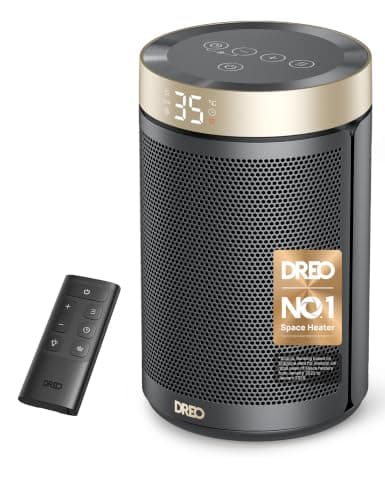 ★ Our pick · Best overallDreo Electric Fan Heater (1500W, Ceramic, Thermostat)A ceramic element and a proper thermostat for fast, even, controllable spot heat.£49.99In stockBuy on Amazon
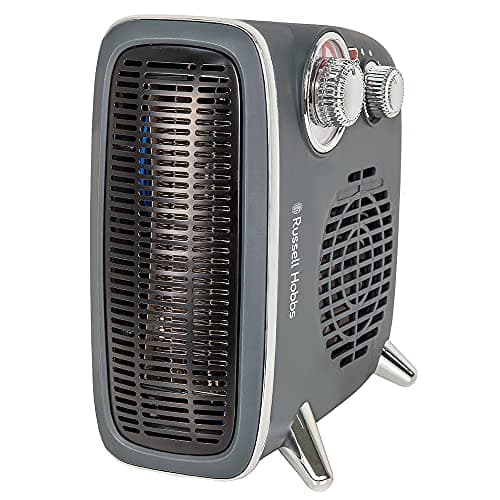 Best valueRussell Hobbs 1800W Electric Fan Heater (Retro, Horizontal/Vertical)A trusted-brand 1800W fan heater that sits horizontally or vertically, at a keen price.£19.06£21.49Save 11%In stockBuy on Amazon
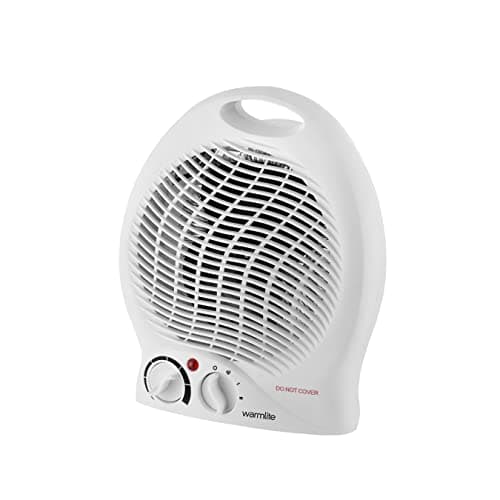 Best budgetWarmlite Thermo Fan Heater (2 Heat Settings, Overheat Protection)A simple fan heater with two heat settings and overheat protection for around £15.£13.29£14.99Save 11%In stockBuy on Amazon
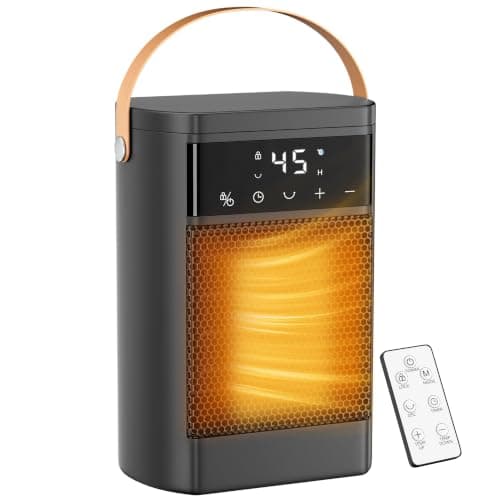 Best for controlElectric Fan Heater (1500W, Precise Temperature Control & Remote)Precise thermostat control and a remote, so you can set and hold an exact temperature from the sofa.£25.48£29.98Save 15%In stockBuy on Amazon
Compare the specs
| Product | Element | Thermostat | Power | Best for | Price |
|---|---|---|---|---|---|
| Dreo Electric Fan Heater (1500W, Ceramic, Thermostat)★ Best Overall | Ceramic (PTC) | Yes | 1500W | Controllable instant spot heat | £49.99 |
| Russell Hobbs 1800W Electric Fan Heater (Retro, Horizontal/Vertical)Best Value | Standard | Basic | 1800W | Value, fast warmth | £19.06 |
| Warmlite Thermo Fan Heater (2 Heat Settings, Overheat Protection)Best Budget | Standard | Basic | 2000W | Budget, occasional spot heat | £13.29 |
| Electric Fan Heater (1500W, Precise Temperature Control & Remote)Best for Control | Standard/ceramic | Precise | 1500W | Precise control, convenience | £25.48 |
Prices are live from Amazon and refresh through the day; last page update 14 October 2026.
The honest truth: a fan heater is not cheaper to run
Fan heaters are sometimes marketed as cheap to run, and this needs clearing up. All electric resistive heaters, fan heaters, convector heaters, oil-filled radiators, halogen heaters, are essentially 100% efficient (Energy Saving Trust): they turn all the electricity they use into heat. That means a 2kW fan heater costs exactly the same to run as a 2kW oil-filled radiator or a 2kW convector heater.
- Running cost depends on wattage and time, not heater type. A 2kW heater of any kind uses 2kWh an hour, which at the Ofgem cap of 26.32p per kWh is about 53p an hour, flat out.
- A fan heater is not a money-saver, it just heats faster and stops faster. Do not buy one expecting lower running costs than another electric heater.
- What actually saves money is a thermostat (so it does not run flat out), heating only the room or person you need, and not leaving it on longer than necessary.
What a fan heater is actually for
Given they all cost the same to run, choose a heater type by how it heats, and a fan heater's strength is speed and portability:
- Instant heat. It blows warm air immediately, so it is great for quickly taking the chill off, warming a bathroom before a shower, or warming yourself at a desk.
- Portable and cheap to buy. Light, small and inexpensive, so you can move it room to room.
- Spot heating. Best aimed at a person or used in a small space you want warm fast.
Its weaknesses: it is noisier than other heaters (the fan), and it retains no heat, so the moment it switches off, the warmth goes. For steady, quiet, all-day background warmth in a room, a convector or oil-filled radiator is better. So use a fan heater for fast, portable spot heat, not as your main room heater.
A thermostat is the feature that matters
- A thermostat lets the heater reach a set temperature and then cut out, cycling on and off to hold it, rather than running flat out the whole time. Since running cost is all about how long it draws full power, a thermostat genuinely saves money and is more comfortable. Prioritise it.
- A ceramic (PTC) element heats quickly and evenly, is more durable and runs a little safer than cheap bare-coil elements. Worth having.
- Heat settings and a timer give more control over output and how long it runs.
- Safety cut-outs: overheat protection and a tip-over switch (turns it off if knocked over) are important, especially around children and pets.
Our picks in detail
Dreo Electric Fan Heater (1500W, Ceramic, Thermostat)
A ceramic element and a proper thermostat for fast, even, controllable spot heat.
A well-rated ceramic fan heater.
The Dreo is the fan heater most people should buy. It uses a ceramic (PTC) heating element, which heats quickly and evenly and is more durable and safer than cheap bare-coil heaters, and crucially it has a proper thermostat so it maintains a set temperature and cuts out when warm, rather than blasting flat out and running up the cost. It heats a person or small space fast, runs more quietly than basic heaters, and includes the overheat and tip-over safety cut-outs you want.
It costs more than the cheapest fan heaters, and like all electric heaters it is not cheaper to run per kW than any other type. But the ceramic element, the thermostat (which genuinely saves money by not running constantly) and the better build and safety make it the balanced pick for instant, controllable warmth. If you want a trusted brand for less, the Russell Hobbs is below; on a budget, the Warmlite. For the best all-round fan heater, this is the one.
Russell Hobbs 1800W Electric Fan Heater (Retro, Horizontal/Vertical)
A trusted-brand 1800W fan heater that sits horizontally or vertically, at a keen price.
The Russell Hobbs 1800W is the value pick: a trusted household brand, a strong 1800W output to warm a space quickly, and a design that sits either horizontally or vertically to suit where you put it, all at a keen price. It has heat settings and the basic safety features, and the retro styling looks a bit nicer than a plain white box, making it a sensible, affordable fan heater for quick warmth from a name you know.
It is a more basic heater than the ceramic Dreo, so the thermostat and element are simpler and it may run a touch louder, and as always it is not cheaper to run per kW than any other electric heater. But for fast, portable warmth from a trusted brand at a low price, it does the job well. If you want the best element, thermostat and quietness, the Dreo is worth more; for affordable, dependable fan heat, this is a strong value pick.
Warmlite Thermo Fan Heater (2 Heat Settings, Overheat Protection)
A simple fan heater with two heat settings and overheat protection for around £15.
If you want a fan heater for as little as possible, the Warmlite Thermo does the job for around £15. It has two heat settings for a bit of control, a fan-only mode, overheat protection for safety, and it blows warm air quickly to take the chill off a small space or warm you at a desk. It is compact, cheap and cheerful, which is all a lot of people need from a backup or occasional heater.
At this price it is a basic heater without a precise thermostat or a ceramic element, so it offers less fine control and may run louder, and it is strictly for spot heating rather than warming a whole room. But the fundamentals, fast warm air and overheat safety, are there for very little money. If you want a thermostat, ceramic element or quieter running, the Dreo or Russell Hobbs are worth more; as the cheapest capable fan heater, this covers quick, occasional warmth.
Electric Fan Heater (1500W, Precise Temperature Control & Remote)
Precise thermostat control and a remote, so you can set and hold an exact temperature from the sofa.
If you want to set and hold a precise temperature, this 1500W fan heater adds accurate thermostat control and a remote, so you can dial in an exact target temperature and let it maintain it, adjusting from across the room without getting up. The precise control means it runs only as much as needed to hold the temperature rather than blasting flat out, which is both more comfortable and kinder to your bill, and the remote is a genuine convenience for a heater you adjust through an evening.
It costs a little more than the basic heaters for the precise control and remote, and it is still a fan heater, so not cheaper to run per kW than other types and best for spot or small-room heating. But the accurate thermostat and remote make it the most controllable and convenient option here. If you want the best ceramic build, the Dreo is the pick; if precise temperature control and a remote matter most to you, this is the one.
Fan heater or convector / oil-filled radiator?
They cost the same to run per kW, so choose by how you want the heat:
- Fan heater: fast, instant, portable, cheap to buy. Noisier, and no retained heat (cold the moment it is off). Best for quick spot heating.
- Convector heater: quiet, steady background warmth that rises through a room. Slower than a fan but more comfortable for sitting in a room for a while.
- Oil-filled radiator: quiet, retains heat so it keeps warming after switching off, good for steady all-evening warmth. Slow to heat up and heavy to move.
Use a fan heater for a fast blast of heat and portability, and a convector or oil-filled radiator for quiet, steady, longer-term warmth in a room. Many homes have a fan heater for quick jobs and a convector or oil radiator for the main warmth. See our convector heater and oil-filled radiator guides.
Common myths, corrected
- "Fan heaters are cheap to run." No. All electric heaters are about 100% efficient, so a fan heater costs the same per kW as any other. It heats faster, not cheaper. What saves money is a thermostat and heating only what you need.
- "A fan heater can heat the whole house." It is for spot or small-room heating. It is noisy and retains no heat, so it is poor for steady whole-room warmth, use a convector or oil radiator for that.
- "More watts is better." More watts heats faster but costs more per hour to run. Match the wattage to the space, and use the thermostat to control it.
- "You do not need safety features." You do. Overheat protection and a tip-over switch matter, especially around children and pets, as fan heaters get hot and can be knocked over.
What we’d skip
- Buying a fan heater expecting it to be cheaper to run than other electric heatersAll electric heaters are about 100% efficient, so a fan heater costs the same per kW as a convector or oil-filled radiator. It heats faster, not cheaper. What saves money is a thermostat, heating only the space or person you need, and not leaving it on longer than necessary.
- Using a fan heater as your main all-day room heaterIt is noisy and retains no heat, so the warmth vanishes the moment it switches off. For steady, quiet, longer-term warmth in a room, a convector or oil-filled radiator is better. Use a fan heater for fast, portable spot heating instead.
- Buying one without a thermostatA thermostat lets the heater cut out once warm rather than running flat out, which genuinely saves money and is more comfortable. A fan heater with no thermostat just blasts at full power and full cost the whole time it is on.
- Ignoring the safety cut-outsFan heaters get hot and are easily knocked over, so overheat protection and a tip-over switch matter, especially around children and pets. Do not buy the cheapest heater that lacks them, and never cover a fan heater or leave it running unattended for long.
- Over-sizing the wattage for the spaceA higher-wattage heater warms faster but costs more per hour to run. Match the wattage to the size of the space you are heating, and use the thermostat and settings to control the output rather than running a big heater flat out.
Frequently asked questions
Are fan heaters cheap to run?
No cheaper than any other electric heater. All electric resistive heaters, fan heaters, convectors, oil-filled radiators, are essentially 100% efficient, turning all the electricity into heat, so a 2kW fan heater costs exactly the same to run as a 2kW heater of any other type, about 53p an hour at the Ofgem cap of 26.32p per kWh when running flat out. A fan heater heats faster and stops faster, but it is not a money-saver. What saves money is a thermostat and only heating the space or person you need.
What is a fan heater best used for?
Fast, portable spot heating. A fan heater blows warm air immediately, so it is great for quickly taking the chill off, warming a bathroom before a shower, or warming you at a desk, and it is light and cheap to move room to room. Its weaknesses are noise (the fan) and that it retains no heat, so the warmth goes the moment it is off. So use it for a quick blast of heat and portability, not as your main heater for steady, all-day room warmth, where a convector or oil-filled radiator is better.
Fan heater or oil-filled radiator, which is better?
They cost the same to run per kW, so it comes down to how you want the heat. A fan heater gives fast, instant, portable warmth but is noisier and goes cold the moment it is off, so it suits quick spot heating. An oil-filled radiator is quiet, heats more slowly but retains heat so it keeps warming after switching off, which suits steady all-evening warmth in a room, though it is heavy to move. Choose a fan heater for speed and portability, an oil radiator for quiet, steady, longer-term warmth.
Does a fan heater need a thermostat?
It is the feature most worth having. A thermostat lets the heater reach a set temperature and then cut out, cycling on and off to maintain it, rather than running at full power the whole time. Since running cost depends on how long it draws full power, a thermostat genuinely saves money and keeps the room more comfortable. A fan heater without one simply blasts flat out at full cost until you turn it off, so prioritise a model with a proper thermostat.
What is a ceramic (PTC) fan heater?
A ceramic, or PTC, fan heater uses a ceramic heating element instead of a bare metal coil. It heats up quickly and evenly, is more durable, and runs a little safer because the ceramic self-regulates its temperature rather than glowing red hot like a coil. Ceramic fan heaters also tend to run a touch quieter and more efficiently in use. They cost a little more than basic coil heaters but are worth it for the faster, more even, safer heat, which is why our top pick uses a ceramic element.
Can a fan heater heat a whole room?
It can take the chill off a small room quickly, but it is not ideal for steadily heating a whole room for long periods. Fan heaters are noisy and retain no heat, so the room cools as soon as they switch off, and running one flat out all day is costly and loud. For steady, quiet, all-day warmth in a room, a convector heater or oil-filled radiator is more comfortable and better suited. Use a fan heater for fast, portable spot heating, and a convector or oil radiator for the main room warmth.
Are fan heaters safe to leave on?
They should not be left running unattended for long periods or overnight. Fan heaters get hot, and good ones have overheat protection and a tip-over switch that turns them off if knocked over, which are important safety features to look for, especially around children and pets. Never cover a fan heater or place it against furniture or curtains, keep it on a stable surface, and switch it off when you leave the room or go to sleep. Used sensibly and attended, it is safe.
How many watts does a fan heater need?
Most domestic fan heaters are 1.5kW to 2kW, which warms a person or a small space quickly. A higher wattage heats faster but costs more per hour to run, so match it to the space: 1.5kW is plenty for spot heating a person or a small room, while 2kW warms a small-to-medium room faster. Remember a thermostat lets the heater cut out once warm rather than running at full wattage constantly, so the thermostat matters more for running cost than the headline wattage.