
The Best Heated Airer (UK, 2026)
Updated 14 October 2026 · 5 products compared · live prices · how we pick
If you want one heated airer that gets a family wash dry for pennies, buy the BLACK+DECKER 3-tier with cover. It has 21 metres of heated rail space rated for 15kg of washing, it draws 300W, which is 7.9p an hour at the current Ofgem rate, and critically the cover comes in the box: a covered airer traps its own warmth and dries a load in roughly 2 to 3 hours instead of 4 to 6. Most rivals make the cover an optional extra, which is like selling a kettle with an optional lid.
On a tighter budget the Status winged airer does the essential job at 230W for about £45, and if you want the famous name, the Lakeland Dry:Soon remains the category classic, just without the cover or a timer at a higher price. Whichever you choose, know the physics: the water leaving your washing goes into your air, so the full answer for a damp-free house is an airer plus ventilation or a dehumidifier. We explain the real running costs, the cover trick and the damp question below.
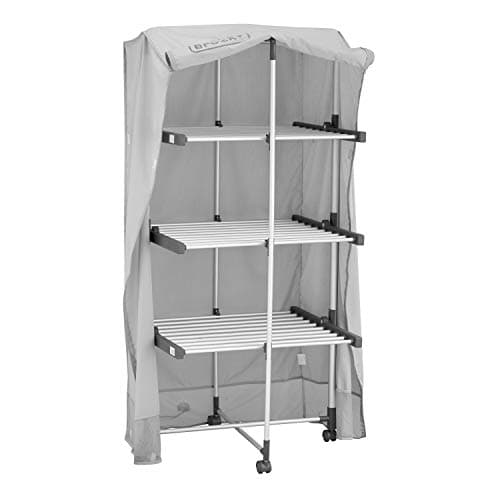
The winner · Best Overall
BLACK+DECKER 3-Tier Heated Airer with Cover
The full package: 21m of heated rails, a 15kg rating, wheels, and the drying-time-halving cover included rather than sold separately.
Price checked live · updated 14 October 2026 · we may earn a commission
In this guide +
- The winner
- The top picks, ranked
- Compare the specs
- How to choose: format first, then what is in the box
- What a heated airer really costs to run
- The cover is not an accessory, it is the method
- Our picks in detail
- Heated airer, tumble dryer or dehumidifier?
- The damp question nobody prints on the box
- Getting the most from whichever airer you buy
- What we’d skip
- FAQs
The top 5, ranked
 ★ Our pick · Best OverallBLACK+DECKER 3-Tier Heated Airer with CoverThe full package: 21m of heated rails, a 15kg rating, wheels, and the drying-time-halving cover included rather than sold separately.Why we picked it ↓£119.00● In stockCheck price
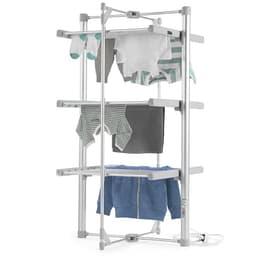 The Category ClassicLakeland Dry:Soon 3-TierThe name that built the category, with the same 300W and 21m of rails as our winner, minus the included cover.Why we picked it ↓£159.99● In stockCheck price
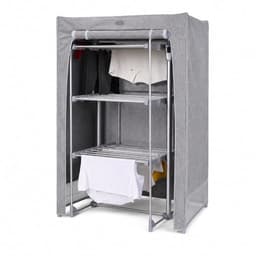 Best Fully LoadedAddis Superdry+ Heated AirerCover and timer both included on a 300W, 21m three-tier: the set-and-forget option for overnight drying.Why we picked it ↓£159.99● In stockCheck price
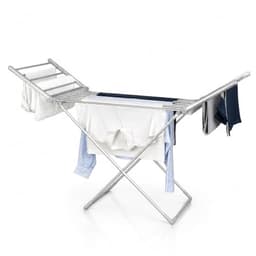 Best BudgetStatus 230W Winged AirerA simple winged airer from an established brand at around £45, drawing 230W: the cheap, light way into heated drying.Why we picked it ↓£45.00● In stockCheck price
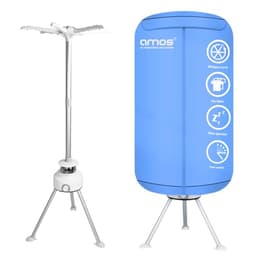 Fastest FormatAMOS Eezy Dry PodA 1000W enclosed drying pod rated for 10kg: much faster than rail airers, at a running cost to match.Why we picked it ↓£56.99● In stockCheck price
Compare the specs
| # | Product | Best for | Format | Power | Cost per hour | Capacity | Price |
|---|---|---|---|---|---|---|---|
| BLACK+DECKER 3-Tier Heated Airer with Cover | Best Overall | 3-tier, cover included | 300W | ~7.9p | 21m / 15kg | £119.00 | |
| 2 | Lakeland Dry:Soon 3-Tier | The Category Classic | 3-tier, cover extra | 300W | ~7.9p | 21m of rails | £159.99 |
| 3 | Addis Superdry+ Heated Airer | Best Fully Loaded | 3-tier, cover + timer | 300W | ~7.9p | 21m of rails | £159.99 |
| 4 | Status 230W Winged Airer | Best Budget | Winged | 230W | ~6p | Small loads | £45.00 |
| 5 | AMOS Eezy Dry Pod | Fastest Format | Enclosed pod | 1000W | ~26p | 10kg | £56.99 |
Prices are live from Amazon and refresh through the day; last page update 14 October 2026.
How to choose: format first, then what is in the box
Heated airers come in three shapes, and the right one is mostly a question of how much washing you make.
- 3-tier towers (around 21m of rails, 15kg ratings) take a full family machine load including small bedding. They are the default for households of three or more, and the bulkiest when up.
- Winged airers are the traditional clothes horse with warm bars: cheaper, lighter, lower wattage, and right for one to two people or as a second airer.
- Enclosed pods zip the washing into a heated cabinet: fastest drying and the smallest footprint, but higher wattage and better for hangers than duvet covers.
Then check what is included, because the accessories are where value hides. A cover roughly halves drying time (more below), yet most brands sell it separately; a timer stops the airer warming already-dry towels for hours. Our winner includes the cover, the Addis includes both, and the famous-name Lakeland includes neither.
What a heated airer really costs to run
Running cost is deterministic: wattage times the current Ofgem price cap rate of 26.32p per kWh (Direct Debit, October to December 2026). No estimates needed.
| Airer | Power | Cost per hour | Typical load* |
|---|---|---|---|
| Winged (Status) | 230W | ~6p | 25 to 36p |
| 3-tier, uncovered | 300W | ~7.9p | 32 to 47p |
| 3-tier, covered | 300W | ~7.9p | 16 to 24p |
| Drying pod | 1000W | ~26p | roughly 50p |
*At 26.32p/kWh. Load times from our sister site UK Home Energy’s fact-checked airer testing: a 300W 3-tier takes about 4 to 6 hours uncovered and 2 to 3 hours covered.
And the myth to kill: the "3p an hour" claim that stalks this category online. That figure belongs to little 100W ladder racks, not to any 3-tier on this page. A 300W airer costs just under 8p an hour, which is still excellent, and pretending otherwise is how people end up distrusting the honest numbers too.
The cover is not an accessory, it is the method
An uncovered heated airer warms the clothes and donates most of that warmth to the room. Put the cover over it and the warm air stays trapped against the washing, which is why the tested drying time falls from 4 to 6 hours to 2 to 3 for the same 300W draw. Same electricity per hour, half the hours: the cover effectively halves the cost per load.
That is why "cover included" weighed so heavily in our ranking, and why the classic Dry:Soon slips to second despite its deserved reputation: its cover is a separate purchase. If you already own an airer without one, buy the brand’s cover or improvise with a clean bedsheet draped to the floor, leaving a small gap at the bottom for air to enter. Do not use plastic sheeting, which traps moisture against warm fabric rather than letting it leave.
Our picks in detail
BLACK+DECKER 3-Tier Heated Airer with Cover
The full package: 21m of heated rails, a 15kg rating, wheels, and the drying-time-halving cover included rather than sold separately.
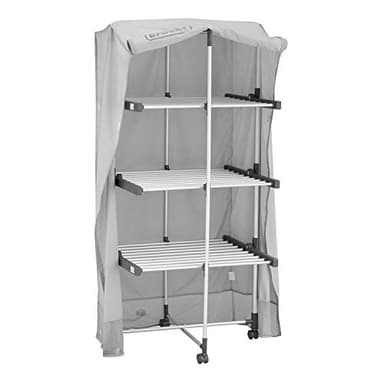
This is the heated airer we would buy, and the reason is the box contents as much as the airer. The cover is the single biggest performance upgrade in this category: trap the warm air around the rails and a load that took 4 to 6 hours dries in roughly 2 to 3, cutting the cost per load to 16 to 24p at the current Ofgem rate. BLACK+DECKER includes it as standard, where most brands, including Lakeland, sell it separately for another chunk of money.
The airer itself is the right spec for a family: three tiers giving 21 metres of rail space, a 15kg laundry rating that swallows a full machine load, 300W of draw (7.9p an hour), wheels to roll it to the warmest room, and a flat fold for the cupboard. Nothing exotic, everything you actually use.
What we like
- Cover included, which roughly halves drying time
- 21m of rails and a 15kg rating take a full load
- Wheels and a flat fold for real houses
What we'd change
- Bulky when up, like every 3-tier
- No timer at this price, so pair it with a plug-in one
Buy this if: you want the best all-round heated airer and the cheapest cost per dry load without buying accessories separately.
Lakeland Dry:Soon 3-Tier
The name that built the category, with the same 300W and 21m of rails as our winner, minus the included cover.
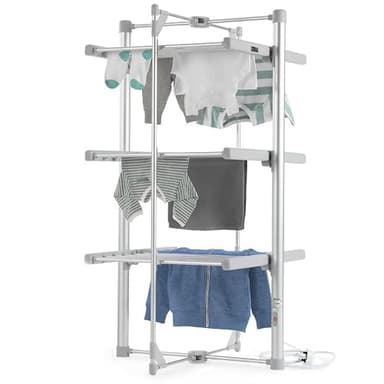
Ask anyone British about heated airers and they will say Dry:Soon. Lakeland has sold these for years, the build quality reputation is deserved, and the spec matches our winner: 300W, three tiers, 21 metres of drying space, the same 7.9p an hour to run. If you want the airer your mum recommends, this is it and it will not disappoint.
The reason it is not our winner is value, not quality. At this price the cover is still not in the box, and the cover is where the drying-time magic lives; add Lakeland’s own and the total climbs well past the BLACK+DECKER. This standard model also has no timer. As the famous-name option bought in a Lakeland sale, it is excellent. At full price next to our winner, you are paying for the badge.
What we like
- The category’s best-known name with a strong build reputation
- Same 300W / 21m spec as our winner
- Folds flat, no assembly drama
What we'd change
- Cover costs extra, and the cover matters
- No timer on this standard model
Buy this if: you trust the Dry:Soon name and can catch it discounted, or you already own a cover.
Addis Superdry+ Heated Airer
Cover and timer both included on a 300W, 21m three-tier: the set-and-forget option for overnight drying.
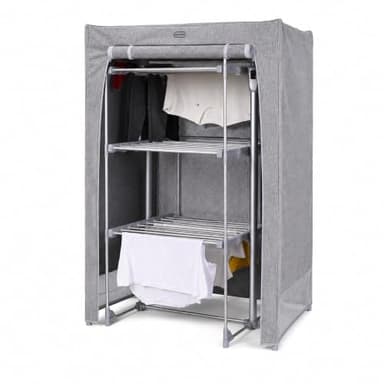
Addis is one of the old names of British housewares, and the Superdry+ is the most complete package here: the same 300W, 21 metre, 3-tier format as the winner, with the cover in the box and, the bit the others lack, a built-in timer. Set it before bed and the airer switches itself off once the load is done, rather than warming dry towels until morning.
The timer is worth real money in practice, because the covered drying window is 2 to 3 hours and nobody stays up to unplug at hour three. Against the BLACK+DECKER you pay roughly a cover’s worth more for that convenience. If overnight and out-at-work drying is your routine, that is a fair trade; if you are around when the washing dries, save the difference.
What we like
- Cover and timer both included
- Same 300W / 21m / 3-tier working spec as the winner
- Timer stops it heating dry clothes at 3am
What we'd change
- Costs meaningfully more than the winner
- Same bulk-when-up caveat as every 3-tier
Buy this if: you dry overnight or while out and want the airer to switch itself off.
Status 230W Winged Airer
A simple winged airer from an established brand at around £45, drawing 230W: the cheap, light way into heated drying.
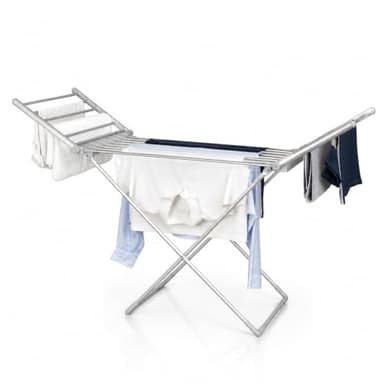
The winged format is the classic clothes horse with warm bars: lighter, cheaper and easier to stash than a 3-tier tower, at the cost of hanging space. The Status draws 230W, about 6p an hour at the cap rate, and handles the everyday wash of a one or two person household, though a family-sized load will overwhelm it.
At this price nothing is included and nothing needs to be: drape a clean bedsheet over it and you get most of the cover effect for free. It is aluminium, it folds flat, and Status is an established budget brand rather than a marketplace mystery. The honest pitch: this is 80% of the heated-airer benefit for a third of the premium prices.
What we like
- Around £45 from a known brand
- Lowest running cost here at about 6p an hour
- Light, folds flat, stores anywhere
What we'd change
- Much less hanging space than a 3-tier
- No cover or timer, improvise with a bedsheet
Buy this if: you are drying for one or two people and want heated drying at the lowest possible buy-in.
AMOS Eezy Dry Pod
A 1000W enclosed drying pod rated for 10kg: much faster than rail airers, at a running cost to match.
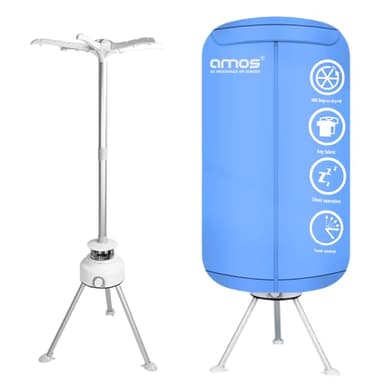
The pod is a different machine: a zip-up fabric cabinet with a heater in the base, closer to a soft tumble-dryer-without-the-tumble than to a clothes horse. Enclosing the heat is what the cover trick approximates, and the pod takes it to its conclusion, so loads hung inside on hangers dry fastest of anything on this page. The 10kg rating covers a full wash.
The honest costs: it draws 1000W, which is 26p an hour at the cap rate, so a couple of hours costs around what a covered 300W airer spends on a whole load, and hanging space inside suits hangers and smalls better than bedding. Buy it for speed in a small home, not for economy; for economy the covered 3-tiers win.
What we like
- Fastest drying here thanks to the enclosed design
- 10kg capacity on hangers
- Small floor footprint for a full load
What we'd change
- 1000W means 26p an hour, three times the 3-tier rate
- Awkward for bedding and bulky knitwear
Buy this if: speed matters more than pennies and floor space is tight.
Heated airer, tumble dryer or dehumidifier?
The per-load maths at the current cap rate, using our estimates and UK Home Energy’s tested times: a covered 300W airer dries a load for 16 to 24p, a heat pump tumble dryer for around 55p, a condenser dryer for around 90p, and a dehumidifier next to a normal airer in a closed room does it overnight at about 5p an hour of actual compressor time.
When each wins: the tumble dryer on speed and towels, the heated airer on cost and gentleness to clothes, the dehumidifier on total house benefit, because it is the only option that removes the moisture from your air rather than adding to it, and it keeps working on the house all winter. Our indoor drying guide walks the full decision, and the dehumidifier roundup covers the machines.
The strongest budget setup we know pairs two of them: a covered heated airer with a dehumidifier in the same closed room. The airer pushes water out of the fabric fast, the dehumidifier catches it, and the load is done in a couple of hours with dry air left behind.
The damp question nobody prints on the box
Every litre of water that leaves your washing on a heated airer enters your indoor air, and a household drying indoors pushes past 20 litres of airborne moisture a day on the standard council-guidance figures. That moisture reappears as streaming windows and, eventually, mould, which is a health matter rather than a cosmetic one.
So run the airer like you mean it: in one room with the door shut, with either the window cracked, the trickle vent open, or a dehumidifier running alongside. What you should not do is dry a covered airer load in a sealed room and let 4 litres of water tour the house. Our condensation guide covers what happens when that routine goes wrong, and how to put it right.
Getting the most from whichever airer you buy
- Spin twice before you hang. An extra spin cycle removes water mechanically for pennies and takes an hour off the drying time.
- Space beats heat. Air gaps between garments matter more than rail temperature. Overlapping items on a rammed airer stay wet in the folds.
- Heavy items on the warmest rails. Jeans and towels go low and central where the heat rises past them; shirts dry happily on the cooler outer rails or on hangers hooked to the frame.
- Respect the weight rating. The 15kg figure on our winner is a structural limit, not a target. An overloaded airer dries slowly and bends.
- Rotate once. Turning everything at half time evens out the damp folds, covered or not.
What we’d skip
- Anything advertising "3p an hour" on a full-size airer. That is 100W ladder-rack maths applied to a 300W product; the honest figure is just under 8p an hour, which is good enough not to need the fib.
- No-name 1800W "rapid" airers. At 47p an hour you are approaching tumble dryer running costs without the tumble dryer, and the speed claims are unverifiable. If you need speed, the pod format or a heat pump dryer is the honest route.
- DIY plastic-sheet covers. Plastic traps moisture against warm fabric instead of letting it escape upward. Use the designed cover or a breathable bedsheet.
- Buying a pod expecting an airer. Pods are brilliant for hangers and smalls, awkward for bedding, and triple the hourly cost. Know which machine you are buying.
- Skipping the airer and using radiators. It feels free and is the most expensive option in the house: it blocks radiator heat, makes the boiler work harder and pumps moisture into your walls. Our indoor drying guide has the numbers.
Frequently asked questions
How much does a heated airer cost to run?
A standard 300W three-tier costs about 7.9p an hour at the current Ofgem rate of 26.32p per kWh, so a covered load at 2 to 3 hours costs 16 to 24p and an uncovered one 32 to 47p. Winged models around 230W run nearer 6p an hour, and 1000W pods about 26p.
How long does washing take to dry on a heated airer?
Tested figures for a 300W three-tier: roughly 4 to 6 hours uncovered and 2 to 3 hours with the cover on, for a normally spun load with space between garments. Heavy cottons and denim sit at the top of those ranges; an extra spin cycle before hanging shortens everything.
Is a heated airer cheaper than a tumble dryer?
Per load at the current cap rate, clearly: 16 to 24p for a covered 300W airer against around 55p for a heat pump dryer and 90p for a condenser, on our estimates. The dryer buys speed and fluffed towels; the airer buys economy and is far gentler on elastics and knitwear.
Do heated airers cause damp and condensation?
They can: the water leaving your clothes goes into your air, and an indoor-drying household passes 20 litres of airborne moisture a day on standard council-guidance figures. Dry in one closed room with a cracked window, open trickle vent or a dehumidifier alongside and the problem largely disappears.
Do I really need the cover?
If you care about speed or cost per load, yes. The cover traps the warm air against the washing and roughly halves drying time in testing, which halves the electricity per load too. It is the main reason our winner includes one in the box, and a draped bedsheet imitates most of the effect.
Can I leave a heated airer on overnight?
The surface temperatures are low compared with a space heater and overnight drying is how many people use them, but follow the manufacturer guidance: load within the weight rating, keep the airer clear of curtains and bedding, and prefer a model with a timer so it switches off once the 2 to 3 hour covered dry is done.
Ready to choose?
Our one clear winner is the BLACK+DECKER 3-Tier Heated Airer with Cover.