
The Best Dehumidifier (UK, 2026)
Updated 7 October 2026 · 5 products compared · live prices · how we pick
If you want one dehumidifier to kill condensation, dry laundry indoors and keep a family home free of damp, buy the MeacoDry Arete Two 20L. Expert Reviews named it Dehumidifier of the Year 2026, it runs at a genuinely bedroom-friendly 38 dB, it doubles as a HEPA air purifier, and at around 5p an hour on the current Ofgem rate it costs less to run than a single lightbulb did a decade ago. It is the rare product that every serious UK reviewer agrees on.
On a tighter budget, the Pro Breeze 12L does the essential job for a fraction of the price and carries a Which? Best Buy award on its listing. And if you are drying a cold garage, boat or unheated conservatory, compressor machines are the wrong tool entirely: get the desiccant EcoAir DD1 Simple MK3 instead. We explain the difference, the sizing, and the marketing tricks to ignore below.
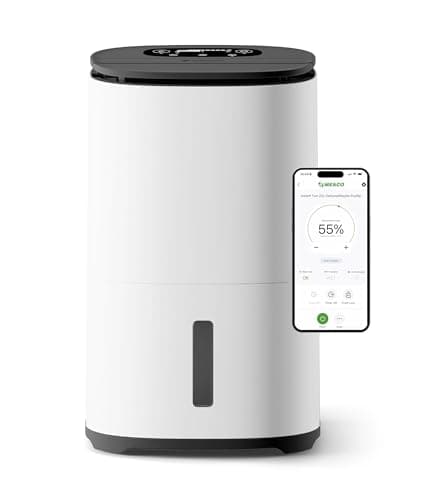
The winner · Best Overall
MeacoDry Arete Two 20L
The one the whole UK review industry agrees on: quiet, cheap to run, and it purifies the air while it dries your home.
Price checked live · updated 7 October 2026 · we may earn a commission
In this guide +
- The winner
- The top picks, ranked
- Compare the specs
- Do you actually need a dehumidifier?
- Compressor vs desiccant: pick by room temperature
- What size do you need?
- What they actually cost to run
- Our picks in detail
- Drying laundry with a dehumidifier: the cheapest method that works
- Where to put it, and how to run it
- Why the litres on the box are misleading
- Common myths, corrected
- What we’d skip
- FAQs
The top 5, ranked
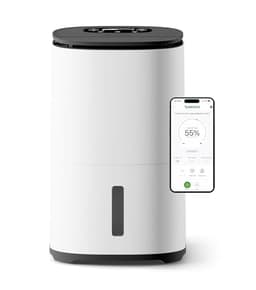 ★ Our pick · Best OverallMeacoDry Arete Two 20LThe one the whole UK review industry agrees on: quiet, cheap to run, and it purifies the air while it dries your home.Why we picked it ↓£299.00● In stockCheck price
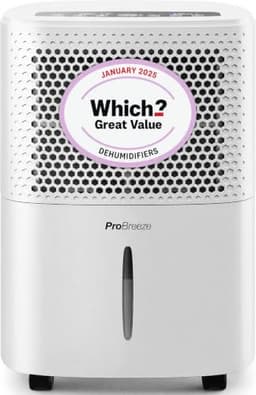 Best BudgetPro Breeze 12LThe sensible-money pick: a Which? Best Buy that handles condensation and laundry in a typical two to three bed home.Why we picked it ↓£134.99● In stockCheck price
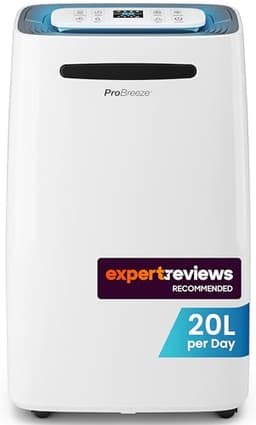 Best Budget for LaundryPro Breeze 20LTwenty litres of rated extraction at a budget price, for households that dry washing indoors all winter.Why we picked it ↓£179.99● In stockCheck price
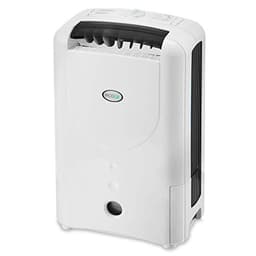 Best for Garages & Cold RoomsEcoAir DD1 Simple MK3The right technology for cold spaces: a desiccant machine that works from 1C, where every compressor on this list gives up.Why we picked it ↓£179.99● In stockCheck priceBest for Large or Very Damp HomesMeacoDry Arete Two 25LThe winner’s bigger sibling, sized for four to five bed houses and homes with a genuine damp problem.Why we picked it ↓● Out of stockCheck price
Compare the specs
| # | Product | Best for | Type | Rated extraction | Noise | Running cost | Price |
|---|---|---|---|---|---|---|---|
| MeacoDry Arete Two 20L | Best Overall | Compressor | 20L/day | 38 to 40 dB | ~5p/hr | £299.00 | |
| 2 | Pro Breeze 12L | Best Budget | Compressor | 12L/day | Moderate | ~5 to 6p/hr | £134.99 |
| 3 | Pro Breeze 20L | Best Budget for Laundry | Compressor | 20L/day | Moderate | ~7 to 9p/hr (est.) | £179.99 |
| 4 | EcoAir DD1 Simple MK3 | Best for Garages & Cold Rooms | Desiccant | 7.5L/day | 34 dB (low) | ~8 to 15p/hr | £179.99 |
| 5 | MeacoDry Arete Two 25L | Best for Large or Very Damp Homes | Compressor | 25L/day | ~40 dB | ~6p/hr (est.) | Out of stock |
Prices are live from Amazon and refresh through the day; last page update 7 October 2026.
Do you actually need a dehumidifier?
If your windows stream with condensation on cold mornings, if dried laundry smells musty, or if black mould spots are appearing around window frames and in corners, then yes, and sooner is better: mould spreads while you decide. A dehumidifier is also one of the few damp fixes a renter can deploy with zero landlord permission, since it is just an appliance with a plug.
- Condensation on windows, musty laundry, mould around frames? Classic excess-humidity symptoms. A dehumidifier fixes the cause. This guide is for you.
- A damp patch on one wall or ceiling that is there in summer too? That pattern suggests a leak, failed pointing or rising damp. A dehumidifier will mask it, not fix it: find the water source first.
- One musty cupboard or a single cold corner? A £10 moisture-absorber tub is enough for an enclosed space that small. Do not buy a £300 machine for a wardrobe.
The UK problem is simple physics: modern draught-proofed homes trap the 10 to 15 litres of moisture a family breathes, cooks and showers into the air every day, and winter window glass is the cold surface it condenses on. A dehumidifier pulls that moisture out of the air before it becomes streaming glass and mould.
Compressor vs desiccant: pick by room temperature
There are two technologies and the right one is decided by one question: is the space heated?
- Compressor (our winner and both Pro Breeze picks): cools a coil, condenses moisture onto it, drains it to a tank. Efficient and cheap to run in rooms above about 15C, which means normal living spaces. Below about 10C extraction falls off a cliff, and the machine spends its time defrosting itself instead of drying your home.
- Desiccant (the EcoAir): soaks moisture into an absorbent wheel and heats it back out. Works identically at 1C or 20C, weighs half as much, and blows out slightly warm air. The cost is electricity: 300 to 580W against roughly 200W for a good compressor.
So: heated house, buy a compressor. Garage, boat, caravan, conservatory or unheated spare room, buy the desiccant. A compressor machine in a 5C garage is money down the drain, whatever its rating says.
What size do you need?
Dehumidifier sizes are quoted in litres per day, and the honest translation for UK homes is:
- 10 to 12L rating: flats and two to three bed houses with ordinary condensation. The Pro Breeze 12L sits here.
- 20L rating: three to four bed family homes, regular indoor laundry drying, or persistent condensation. The sweet spot for most buyers, and where our winner sits.
- 25L and up: large houses, or drying out a genuine damp event such as a leak or new plaster.
Two sizing truths the boxes skip. First, those litre figures are measured in tropical test conditions, not a Manchester January; the real number is much lower for every brand (more on that below). Second, upsizing is not wasteful the way it is with air conditioners: a bigger machine hits the target humidity faster, then its humidistat switches it off. If you are between sizes and dry laundry indoors, size up.
Whatever you buy, run it at 50 to 55% relative humidity. Below 40% wastes electricity and dries your throat; above 60% is mould territory.
What they actually cost to run
Here is the pleasant surprise of this category: at the current Ofgem price-cap rate of 26.32p per kWh (Direct Debit, October to December 2026), a good compressor dehumidifier costs around 5p an hour. Run our winner for six hours a day right through a four-month condensation season and you have spent roughly £37. The mould damage it prevents costs more than that to repaint one wall.
| Machine | Power draw | Cost per hour* |
|---|---|---|
| MeacoDry Arete Two 20L (our winner) | 207W at 20C/60% (published) | ~5p |
| Pro Breeze 12L | ~200 to 220W | ~5 to 6p |
| Pro Breeze 20L | not published; our estimate | ~7 to 9p (est.) |
| EcoAir DD1 Simple MK3 (desiccant) | 300 to 580W by mode | ~8 to 15p |
*At the Ofgem cap rate of 26.32p/kWh (Oct to Dec 2026). Compressor machines cycle off once the humidistat hits its target, so real daily costs are lower than continuous-running maths.
Credit where due: Meaco publishes power figures at realistic UK conditions (207W at 20C and 60% humidity) rather than only the flattering lab number. Most brands do not, which is why two rows above carry our estimates rather than specs.
Our picks in detail
MeacoDry Arete Two 20L
The one the whole UK review industry agrees on: quiet, cheap to run, and it purifies the air while it dries your home.
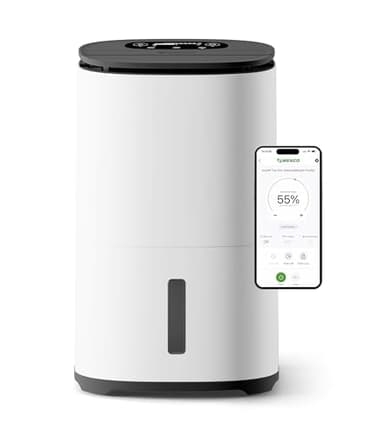
Meaco is the closest thing the UK has to a specialist national dehumidifier brand, and the Arete Two is its best work. Expert Reviews named it Dehumidifier of the Year 2026, calling it the best dehumidifier you can buy, and Trusted Reviews, T3 and Ideal Home all reached the same verdict. The new DC motor brings noise down to 38 to 40 dB, which is quiet-library territory and a level you can genuinely sleep near, and it carries Quiet Mark certification to back that up.
Two things justify the price over the budget picks. First, running cost: Meaco publishes honest power figures, 207W at a realistic 20C and 60% humidity, which works out around 5p an hour on the current Ofgem rate of 26.32p per kWh. Second, it is also a proper HEPA H13 air purifier, so the machine that dries your washing in winter cleans your pollen-filled air in spring rather than going back in a cupboard. App control, Alexa and Google support, a dedicated laundry mode and a true night mode round it out. If the budget stretches, buy this and be done.
What we like
- Expert Reviews Dehumidifier of the Year 2026
- Very quiet at 38 to 40 dB, Quiet Mark certified
- About 5p an hour to run on the current Ofgem rate
- Doubles as a HEPA H13 air purifier, useful year-round
- Honest published specs at realistic UK conditions
What we'd change
- Costs roughly double the budget picks
- Overkill for a single small flat with mild condensation
Buy this if: you want the best machine for a whole house and only plan to buy once.
Pro Breeze 12L
The sensible-money pick: a Which? Best Buy that handles condensation and laundry in a typical two to three bed home.
Thousands of Amazon reviews at our last count.
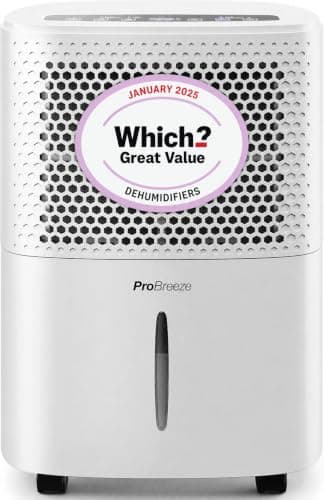
The Pro Breeze 12L is the budget dehumidifier the UK actually buys, and the listing carries a Which? Best Buy award, which matters because Which? lab-tests extraction rather than taking the box figure on trust. You get a proper humidistat so it holds your target humidity automatically, a laundry mode, a 24-hour timer and continuous-drain option, which is the full feature set that matters at a fraction of the winner’s price.
The compromises are fair rather than fatal. At roughly 200 to 220W it costs about the same per hour as the Meaco, but it is louder in normal use and the plastics feel like the price. The 12-litre rating also means it works harder in a larger or very damp home, so match it to a flat or an average two to three bed house with condensation rather than a serious damp problem. Within that brief, nothing touches it for the money.
What we like
- Which? Best Buy award on the listing
- Proper humidistat, laundry mode and continuous drain
- One of the most popular dehumidifiers on Amazon UK
- Around 5 to 6p an hour to run
What we'd change
- Noticeably louder than the Meaco
- Works hard in large or seriously damp homes
- Build quality matches the price
Buy this if: you want condensation handled in a typical flat or terrace for the least money.
Pro Breeze 20L
Twenty litres of rated extraction at a budget price, for households that dry washing indoors all winter.
More than 4,000 Amazon reviews at our last count.
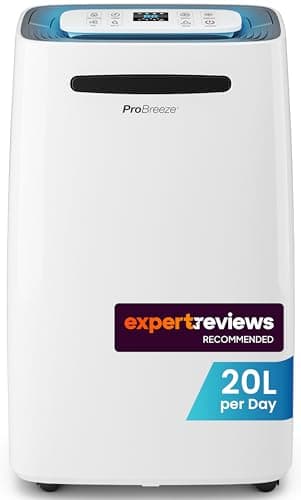
If your radiators wear drying racks from October to March, extraction rate is the spec that matters, and this is the cheapest way to get a 20-litre rating from a brand with a real track record. The review history is deep, the laundry mode is genuinely effective in a closed room, and the digital humidity display plus continuous drainage cover the practical essentials.
What you give up against the Arete Two is refinement: it is louder, the power draw is not published as transparently (expect around 7 to 9p an hour, our estimate), and there is no app, no purifier and no night mode. But as a workhorse that pulls litres out of a utility room full of wet washing, it earns its place. If the laundry is your main problem and £300 is not happening, this is the pick.
What we like
- High rated extraction for the price
- Deep review history on Amazon UK
- Effective laundry mode and continuous drain
What we'd change
- Louder than the Meaco machines
- Power consumption not published transparently
- No app, purifier or night mode
Buy this if: you dry laundry indoors all winter and want maximum extraction per pound.
EcoAir DD1 Simple MK3
The right technology for cold spaces: a desiccant machine that works from 1C, where every compressor on this list gives up.
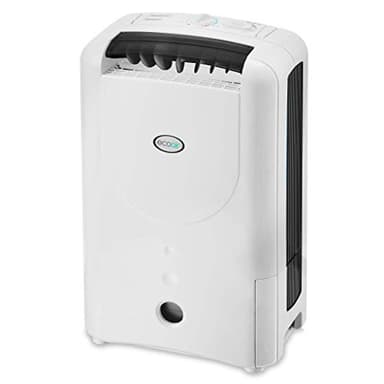
Here is the thing the listings do not tell you: compressor dehumidifiers, which is everything else on this page, lose most of their extraction below about 15C and become nearly useless near 5C. If you are drying a garage, boat, caravan, conservatory or any unheated room, you need a desiccant machine, and the EcoAir DD1 has been the UK default answer for years. It extracts its rated 7.5 litres a day all the way down to 1C, weighs just 6 kg, and at 34 dB on low it is actually one of the quietest machines here.
The trade-off is running cost. Desiccant technology draws 300 to 580W depending on mode, roughly 8 to 15p an hour on the current Ofgem rate, which is two to three times the compressor machines. The silver lining is that desiccants blow out gently warm air as a by-product, which in a cold garage in January is a feature, not a bug. Buy it for cold spaces; in a heated living room, the compressor picks above do the job for less.
What we like
- Works from 1C, where compressor machines fail
- Light at 6 kg and quiet at 34 dB on low
- Gently warms the space as it dries, welcome in winter
- A long-standing UK favourite for garages and boats
What we'd change
- Costs two to three times more per hour to run
- Lower rated extraction than the big compressors
- Basic rotary controls, no humidistat display
Buy this if: the space you are drying is unheated; this is the only type that works there.
MeacoDry Arete Two 25L
The winner’s bigger sibling, sized for four to five bed houses and homes with a genuine damp problem.
More than 110 Amazon reviews at 4.6 stars at our last count.
Same platform as our winner, same quiet DC motor, same HEPA H13 purifier and app control, with the extraction stepped up to a 25-litre rating. That extra capacity is for two situations: houses of four bedrooms and up, where one machine on a landing has to serve the whole floor, and homes recovering from a real damp event, a leak, a flood, new plaster drying out, where you want moisture gone fast.
Be honest with yourself about whether you need it. In an average home the 20L hits the target humidity and cycles off, so the bigger unit saves you little and costs more upfront. It is also a newer listing with a shorter review history than the rest of this page, though the 20L’s reputation and Meaco’s record close that gap. Right house, right machine.
What we like
- Winner-grade platform with more extraction headroom
- Quiet enough to live on a bedroom landing
- HEPA purifier and app control included
What we'd change
- Unnecessary for average-sized homes
- Newer listing with a shorter review history
- The dearest machine on this page
Buy this if: your house is large, or you are drying out a genuine damp problem rather than managing condensation.
Drying laundry with a dehumidifier: the cheapest method that works
This is the use case that converts most UK buyers, so here are the real numbers. A condenser tumble dryer uses roughly 2 to 4.5 kWh per load, which is 53p to £1.18 per load at the current Ofgem rate; even an efficient heat-pump dryer runs around 1.5 kWh, or about 40p. A dehumidifier in laundry mode next to a clothes airer draws roughly 200W for four to six hours: 22 to 33p per load, with no creased shrinkage risk and the whole room dried as a side effect.
Three rules make it work properly:
- Close the door. Laundry mode dries the room the machine is in. An open door means it is trying to dry the whole house.
- Point the airflow at the airer and leave space between garments. Moving air matters as much as dry air.
- Expect four to six hours for a typical load, or overnight on a quiet machine like our winner. It is slower than a tumble dryer; it is also a quarter of the cost and far kinder to clothes.
And the myth to retire: drying washing on radiators is not free. It dumps litres of moisture into the air, which becomes condensation and mould, and the evaporation actively cools the radiator so the boiler works harder. A dehumidifier and an airer is the cheap version, not the compromise.
Where to put it, and how to run it
- Central and open is best. For whole-home condensation control, a hallway or landing with doors ajar lets one machine serve several rooms. For a specific problem room, put it in that room with the door closed.
- Give it 20 cm of breathing space from walls and curtains; it needs to pull air through itself.
- Use the humidistat, not the on switch. Set 50 to 55% and let the machine cycle itself. Running flat out around the clock is for drying floods, not managing condensation.
- Empty the tank when prompted, or go continuous. Every pick here takes a drain hose; if the machine lives near a sink or outside wall, continuous drainage means never carrying a tank again.
- Night running: our winner at 38 dB is sleepable-near; the budget picks are better run in the evening and switched to a timer overnight.
- Mould already on the walls? The dehumidifier stops it coming back, but it does not kill what is there. Clean existing mould with a dedicated mould spray first, then let the machine keep the humidity below 60% so it stays gone.
Why the litres on the box are misleading
That "20L per day" headline is measured at 30C and 80% relative humidity, which is Singapore in monsoon season, not a UK winter. It is the dehumidifier industry's version of the inflated BTU figures we called out in our air conditioner guide: every brand quotes the tropical number because every other brand does.
In a realistic UK winter room, about 20C and 60% humidity, real extraction is a fraction of the headline figure; a machine rated 20L might pull 7 to 10 litres in a hard day's work, and that is entirely normal and entirely enough. The deceit only bites when you compare a cheap no-name unit's tropical rating against an honest brand's realistic one and think they are equivalent.
This is also why Meaco earns its premium: it publishes both numbers. When a brand tells you what its machine does at 20C and 60%, it is telling you the truth about your actual living room. Treat any listing that only quotes the 30C figure, and especially any that buries the test conditions entirely, with appropriate suspicion.
Common myths, corrected
- "Opening windows fixes condensation." Brief ventilation after showers helps, but in winter you are swapping warm damp air for cold air your heating must reheat. A dehumidifier removes the moisture without throwing the heat away.
- "Dehumidifiers are expensive to run." A decade out of date. A modern compressor machine costs about 5p an hour at the current Ofgem rate, and its humidistat means it is not even running most of the time.
- "A dehumidifier will fix my damp wall." Only if the damp is condensation. If water is coming through the wall from outside or below, the machine is a £300 plaster over a building problem. Find the source.
- "Bigger litre ratings mean a better machine." They mean a bigger tropical-test number. Noise, running cost, humidistat accuracy and honest specs matter more for UK conditions.
- "It heats the room too." Mostly true for desiccants, marginal for compressors. A compressor machine returns slightly warmed air, but it is a dehumidifier, not a heater; size your expectations accordingly.
What we’d skip
- Mini "500ml" and Peltier dehumidifiers sold for £30 to £50. They extract a few tablespoons a day in UK winter conditions and cannot touch condensation in a real room. If it weighs less than a bag of sugar, it is a toy.
- Any listing that only quotes extraction at 30C/80% humidity, or hides the test conditions entirely. The honest brands publish realistic UK-condition figures alongside; the silent ones know their number halves.
- Compressor machines marketed "for garages and conservatories". Compressor extraction collapses in the cold; that use case needs a desiccant, whatever the listing claims.
- Fake RRP anchoring, which is rife in this category every autumn. A £130 machine permanently "reduced" from £299 was never £299. Judge the price you pay against the reviews behind it.
- Moisture-absorber tubs as a room solution. They are fine inside a wardrobe or caravan cupboard; as condensation control for a lived-in room they are homeopathy.
Frequently asked questions
How much does a dehumidifier cost to run in the UK?
A good compressor model costs around 5p an hour at the current Ofgem rate of 26.32p per kWh, and its humidistat cycles it off once the air hits your target, so a typical condensation-season day costs 20 to 30p. Desiccant models cost roughly two to three times more per hour.
What humidity level should I set?
Aim for 50 to 55% relative humidity. Below 40% wastes electricity and can dry your skin and throat; above 60% is where condensation, dust mites and mould thrive. Set the humidistat once and let the machine manage itself.
Compressor or desiccant: which type do I need?
Decide by temperature. Heated living spaces suit a compressor machine, which is cheaper to run. Unheated spaces such as garages, boats, caravans and conservatories need a desiccant, which keeps working down to 1C where compressor extraction collapses.
Will a dehumidifier get rid of mould?
It stops mould returning by holding humidity below 60%, but it does not kill growth already on walls. Clean existing mould with a dedicated mould remover first, then run the dehumidifier to keep the conditions it needs from coming back. If the damp source is a leak, fix that first.
Can I dry clothes with a dehumidifier instead of a tumble dryer?
Yes, and it is the cheapest effective method: roughly 22 to 33p per load against 40p for a heat-pump dryer and up to £1.18 for a condenser dryer at current rates. Use laundry mode, close the room door, and allow four to six hours on an airer.
How many litres per day do I actually need?
A 10 to 12L-rated machine suits flats and smaller houses, a 20L rating covers most family homes and regular indoor laundry, and 25L and up is for large or genuinely damp houses. Remember the ratings are measured in tropical test conditions, so real UK extraction is lower for every brand.
Are dehumidifiers noisy?
The gap is wide. Our winner runs at 38 to 40 dB, which is quiet enough to sleep near, while typical budget compressors are nearer normal-conversation volume. If the machine will live in a bedroom or lounge, noise is worth paying for; in a utility room it is not.
Should I just open the windows instead?
Short, sharp ventilation after cooking or showering genuinely helps. As a winter strategy, though, open windows swap warm damp air for cold air your boiler must reheat, which costs more than the 5p an hour a dehumidifier uses to remove the moisture while keeping the heat.
Ready to choose?
Our one clear winner is the MeacoDry Arete Two 20L.