For a wider or draughtier gap a heavy weighted fabric tube seals it well; for an internal door where looks matter a decorative fabric sausage is smarter; and on the tightest budget a one-sided bottom-of-door stopper does a basic job for pennies. But first the useful context: the Energy Saving Trust says draught-proofing could save roughly 55 pounds a year, this is a cheap job that pays for itself fast, and there is one safety rule you must not break. Below we cover the savings, the one thing you must never block, the types and where each goes, and what to skip.
Last reviewed 21 October 2026
Prices and stock on this page are pulled live from each listing and refresh several times a day. A draught excluder is one of the cheapest, highest-return jobs in the house: the Energy Saving Trust says draught-proofing gaps around windows, floors and doors could save roughly 55 pounds a year. The honest bit: this is a few-pounds category, so spend about 7 to 15 pounds, not 100, and never block a vent or a flue that the house needs. A twin-sided slide-on excluder is our pick. How we choose: we compare the live Amazon listings, the makers' published specs and the owner reviews, including the 1 to 3 star ones, and we don't test hands-on, so we never claim to.
In this guide
The top 5, ranked
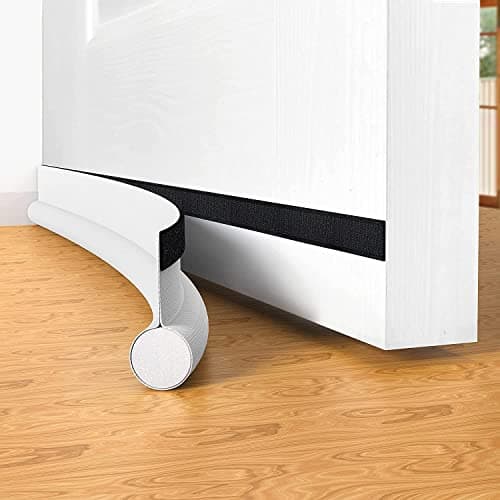
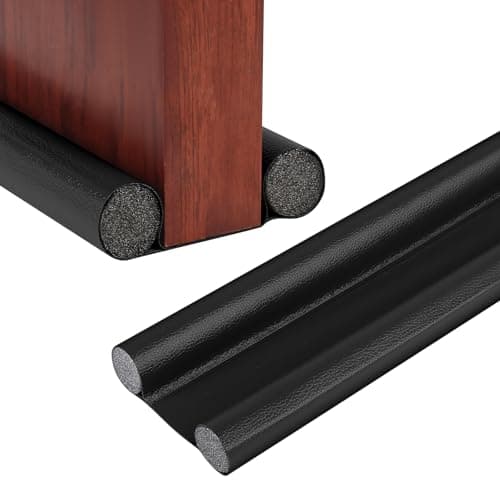 ★ Our pick · Best overallDouble Under-Door Draught Excluder (Adjustable, Twin-Sided)Slides onto the door and seals both sides of the gap at once, adjustable to the door width.£6.99In stockBuy on Amazon
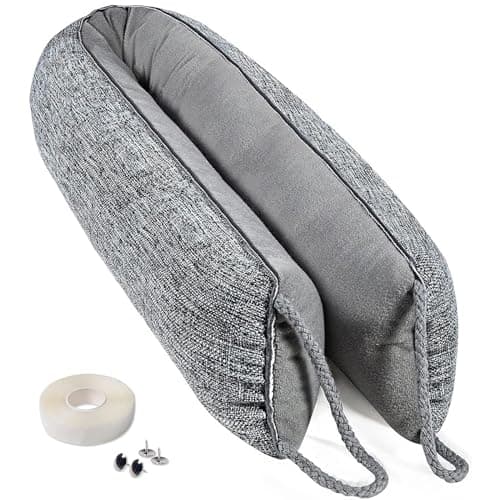 Best for big gapsCNMTCCO Heavy Under-Door Draught Excluder (91cm)A heavy, dense fabric tube that holds its position across a wider or draughtier gap.£13.99In stockBuy on Amazon
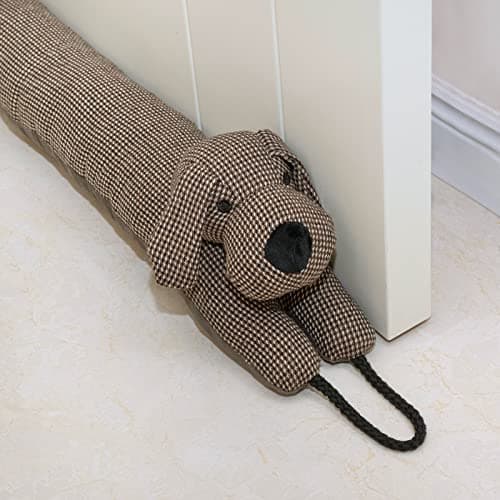 Best lookingMarwood Decorative Under-Door Draught Excluder (91cm)A smart decorative fabric sausage for internal doors where you do not want an ugly black tube.£17.99£24.99Save 28%In stockBuy on Amazon
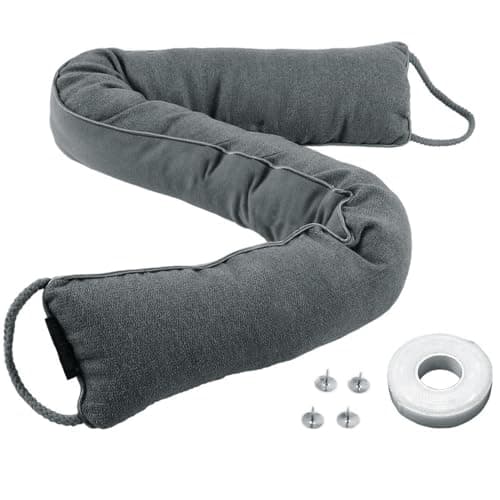 Also greatHongbaite Heavy Under-Door Draught Excluder (91 x 8cm)Another solid heavy fabric tube, a good second excluder for another door in the house.£15.98In stockBuy on Amazon
 Best budgetOne-Sided Door Draught StopperA cheap one-sided bottom-of-door stopper for the tightest budget or an occasional door.£5.99In stockBuy on Amazon
Compare the specs
| Product | Type | Fits | Fixing | Best for | Price |
|---|---|---|---|---|---|
| Double Under-Door Draught Excluder (Adjustable, Twin-Sided)★ Best Overall | Twin-sided slide-on | Adjustable door width | Slides on, no tools | The gap under a door | £6.99 |
| CNMTCCO Heavy Under-Door Draught Excluder (91cm)Best for Big Gaps | Weighted fabric tube | 91cm (trim to fit) | Free-standing | Wide or very draughty gaps | £13.99 |
| Marwood Decorative Under-Door Draught Excluder (91cm)Best Looking | Decorative fabric tube | 91cm | Free-standing | Internal doors, appearance | £17.99 |
| Hongbaite Heavy Under-Door Draught Excluder (91 x 8cm)Also Great | Weighted fabric tube | 91 x 8cm | Free-standing | A heavy backup/second door | £15.98 |
| One-Sided Door Draught StopperBest Budget | One-sided stopper | Not stated | Self-adhesive/free-standing | Cheapest quick fix | £5.99 |
Prices are live from Amazon and refresh through the day; last page update 21 October 2026.
How much can draught-proofing actually save?
Draught-proofing is one of the cheapest, highest-return jobs you can do in a house, and the numbers back that up. The Energy Saving Trust says draught-proofing the gaps around windows, floors and doors could save roughly 55 pounds a year in Great Britain (about 80 a year in Northern Ireland), for an outlay of only a few pounds.
- An unused chimney is often the biggest single draught in the house. The Energy Saving Trust says draught-proofing an unused chimney can save around another 45 pounds a year.
- The bigger win is comfort. Once a home is draught-free it feels comfortable at a lower temperature, so the Energy Saving Trust says turning the thermostat down from 22C to 21C can save about 120 pounds a year. Stopping the draughts is what lets you do that without feeling cold.
- It is cheap. This is a 7 to 15 pound job per door, not a 100 pound one. The payback is fast, which is why it is usually the first thing worth doing before any bigger energy upgrade.
The one safety rule: never block ventilation
This is the one thing you must get right. Never block airbricks, trickle vents, extractor fans, under-floor vents, or any flue or air vent for a fuel-burning appliance such as a gas fire, boiler or wood burner. Those vents are there deliberately, and the draught excluders in this guide are for door and window gaps, not for the ventilation the house needs.
- Damp and condensation. Block the air a room needs and moisture has nowhere to go, so you get condensation, damp and mould instead of a dry, healthy home.
- Carbon monoxide. With any fuel-burning appliance, blocking a vent or flue risks a dangerous build-up of carbon monoxide, which is colourless, odourless and can be fatal. This is the one draught you must leave alone.
- The rule. Draught-proof the gaps you choose, around doors and windows, not the ventilation the house is built with. If in doubt about a vent near an appliance, leave it and ask a Gas Safe engineer.
Types of draught excluder and where each one goes
Different gaps need different products, and using the right one for the right gap is what makes draught-proofing work. Here is where each type belongs:
- Twin-sided slide-on (under-door). Slides onto the bottom of the door and seals both sides of the under-door gap at once. The best all-round fix for external and much-used doors, because it moves with the door and stays put.
- Weighted fabric sausage (under-door). A cheap, free-standing tube laid along the bottom of the door. It works, but it only seals the one side it rests against and gets knocked out of place when the door opens over it.
- Self-adhesive foam or brush strips (frames). These go around the door and window frames, not under the door, to seal the gaps where the door or window closes against its frame.
- Brush strip screwed to the door bottom (permanent). A brush strip fixed to the bottom of the door is the most permanent under-door fix, better than a loose tube if you want a job that stays done.
- Letterbox and keyhole covers. Letterboxes and keyholes have their own brush or flap covers. They are small gaps but they let in a surprising amount of cold air, so they are worth doing.
Our picks in detail
Double Under-Door Draught Excluder (Adjustable, Twin-Sided)
Slides onto the door and seals both sides of the gap at once, adjustable to the door width.
A well-rated twin-sided under-door excluder.
This adjustable double under-door excluder is the one most people should buy. It slides onto the bottom of the door and seals both sides of the gap at once, rather than only the side it is sitting against, and it adjusts to the width of your door so it fits properly instead of hanging off the ends. Because it is fixed to the door it moves with it, so it never gets kicked aside or left behind when you open the door, which is the main annoyance with a loose fabric sausage. For the gap under a door, the single biggest and easiest draught in most homes, it is the most effective of the simple fixes.
It costs a little more than a basic fabric sausage, and you do need to measure and trim it to your door width, so it takes five minutes to set up rather than nothing. But for the under-door gap it seals far better than a one-sided stopper and stays put, which is exactly what you want on an external or much-used door. If you want to spend as little as possible, the one-sided stopper is below; for a very wide gap, the heavy weighted tube. For the best all-round under-door excluder, this is the one.
CNMTCCO Heavy Under-Door Draught Excluder (91cm)
A heavy, dense fabric tube that holds its position across a wider or draughtier gap.
If the gap under your door is wide or especially draughty, this heavy under-door excluder is the one to reach for. It is a dense, weighted fabric tube at 91cm that you can trim to fit, and the extra weight matters: a light sausage gets blown about or knocked aside, whereas a heavy one sits down into the gap and stays put, blocking more of the cold air. It is a free-standing tube, so there is nothing to fix or measure to the door, you just lay it along the threshold and it works straight away.
Because it is free-standing it only seals the one side it rests against, and like any loose tube it gets moved when the door swings over it, so you nudge it back now and then. But for sheer gap-filling on a wide or very draughty threshold it does more than a thin stopper, and the weight keeps it honest. If you want something that stays attached to the door and seals both sides, the twin-sided slide-on above is better; for blocking a big, cold gap cheaply, this heavy tube is the pick.
Marwood Decorative Under-Door Draught Excluder (91cm)
A smart decorative fabric sausage for internal doors where you do not want an ugly black tube.
The Marwood is the one to buy when looks matter, typically on an internal door in a room you actually sit in. It is a decorative fabric sausage at 91cm that blocks the under-door draught like any tube, but it is finished to look like a deliberate soft furnishing rather than a strip of foam, so it suits a living room, bedroom or hallway where a plain black excluder would stick out. It is free-standing, so there is nothing to fit, you just lay it along the bottom of the door.
Being a free-standing tube it seals one side only and gets moved when the door opens over it, so it is better on a door you do not open constantly. It is also not the one for an external door, where a twin-sided slide-on seals far more of the cold out. But as a tidy, good-looking way to stop the draught under an internal door, it does the job and looks the part. If you need maximum sealing on a front or back door, choose the twin-sided slide-on; for a smart internal-door excluder, this is the pick.
Hongbaite Heavy Under-Door Draught Excluder (91 x 8cm)
Another solid heavy fabric tube, a good second excluder for another door in the house.
The Hongbaite is a dependable heavy fabric excluder in much the same mould as our big-gap pick: a weighted tube at 91 by 8cm that sits down into the gap and blocks the cold, free-standing so there is nothing to fit. It is the sort of thing worth buying as a second or third excluder once you have done the main door, for a back door, a utility room or a bedroom, because draughts are rarely limited to one doorway and these are cheap enough to buy a couple of.
As with any free-standing tube it seals one side and gets moved when the door swings over it, so it is for doors you do not open every few minutes. It does not seal both sides the way the twin-sided slide-on does, so it is not our first choice for the busiest external door. But as a solid, well-weighted backup for a second door, it does exactly what is asked of it. For the main door buy the twin-sided slide-on; for the other draughty doors in the house, this is a sensible also-great.
One-Sided Door Draught Stopper
A cheap one-sided bottom-of-door stopper for the tightest budget or an occasional door.
If you want to stop an under-door draught for as little money as possible, this one-sided stopper is the pick. It sits along the bottom of the door, self-adhesive or free-standing depending on how you use it, and blocks the cold air coming under on the side it faces. It is the cheapest capable fix in the category, so it is ideal when you just need to take the edge off a draught quickly, or for a door that is not your main priority.
As the name says it seals one side only, so it does less than the twin-sided slide-on on a door with a real draught both ways, and the basic build is not as heavy or as neat as the fabric tubes. But the fundamentals, a barrier across the bottom of the door for pennies, are there. If you want proper two-sided sealing on an external door, spend a little more on the twin-sided slide-on; as the cheapest way to block an under-door draught, this does the job.
A quick draught-proofing plan for one cold evening
You can do most of a house in an evening for very little money. Target the biggest, easiest gaps first, because that is where the 55 pounds a year the Energy Saving Trust talks about mostly comes from:
- External doors first. The front and back doors are usually the biggest draught, so start with a twin-sided slide-on under-door excluder here.
- The letterbox and keyhole. Fit a brush or flap cover to the letterbox and a cover over any keyhole. Small gaps, surprising amount of cold.
- Window frames. Run self-adhesive foam or brush strip around the gaps where the window closes against its frame.
- Floorboards and skirting. Gaps between floorboards and between the floor and the skirting let cold air up from below. A gap filler or sealant closes these.
- Unused chimney. If you have an open, unused fireplace, a chimney draught excluder (a balloon or sheep) saves around another 45 pounds a year, but remove it before lighting any fire.
Do not touch the airbricks, trickle vents, extractor fans or any appliance flue while you work. Those stay open.
Common myths, corrected
- "Block every vent and you will stay warmer." No, and it is dangerous. Airbricks, trickle vents, extractor fans and appliance flues are there deliberately. Blocking them causes condensation and damp, and with a fuel-burning appliance risks a carbon monoxide build-up. Draught-proof the gaps you choose, not the ventilation the house needs.
- "You need expensive kit." You do not. This is a 7 to 15 pound job per door. A draught excluder, a bit of foam strip and a letterbox brush cost a few pounds and save around 55 pounds a year, so do not spend 100.
- "A sausage on the inside does everything." It only seals one side of the gap and gets knocked out of place every time the door opens. For a door you use a lot, a twin-sided slide-on that seals both sides and moves with the door does far more.
- "Draught-proofing is only about the heating bill." The bigger win is comfort. A draught-free room feels warm at a lower thermostat setting, and the Energy Saving Trust says dropping from 22C to 21C saves about 120 pounds a year. Stopping the draughts is what makes that comfortable.
What we’d skip
- Blocking airbricks, trickle vents, extractor fans, under-floor vents or any appliance flueThis is the one rule you must not break. Those vents are there deliberately, and blocking them causes damp and condensation, and with a fuel-burning appliance (gas fire, boiler, wood burner) it risks a dangerous carbon monoxide build-up. Draught-proof the gaps you choose, around doors and windows, never the ventilation the house needs.
- Spending a lot of money on itDraught-proofing is a 7 to 15 pound job per door, not a 100 pound one. The Energy Saving Trust puts the saving at around 55 pounds a year, so a few cheap excluders, some foam strip and a letterbox cover pay for themselves fast. You do not need expensive kit to do this well.
- Relying only on a loose fabric sausage for a busy external doorA free-standing tube gets kicked aside every time you open the door, and it only seals the one side it rests against. On a door you use a lot, a twin-sided slide-on that moves with the door and seals both sides does a far better job.
- Doing only the door and ignoring everything elseThe under-door gap is the obvious one, but the letterbox, keyhole, gaps around window frames and gaps between floorboards and skirting all let cold air in too. Do them all in one go, as a set, to get the full saving rather than a fraction of it.
- Buying a decorative fabric sausage for an external doorA smart decorative tube is for an internal door where looks matter. On a front or back door it seals only one side and gets moved constantly, where a twin-sided slide-on would seal far more of the cold out. Match the type to the door.
Frequently asked questions
How much money does a draught excluder save?
The Energy Saving Trust says draught-proofing the gaps around windows, floors and doors could save roughly 55 pounds a year in Great Britain, and about 80 a year in Northern Ireland, for an outlay of only a few pounds. Draught-proofing an unused chimney saves around another 45 pounds a year on top. The bigger win is comfort: once a home is draught-free it feels warm at a lower temperature, and the Energy Saving Trust says turning the thermostat down from 22C to 21C saves about 120 pounds a year. It is one of the cheapest, highest-return jobs in the house.
What should I never block when draught-proofing?
Never block airbricks, trickle vents, extractor fans, under-floor vents, or any flue or air vent for a fuel-burning appliance such as a gas fire, boiler or wood burner. Those vents are there deliberately. Blocking them causes damp and condensation, and with any fuel-burning appliance it risks a dangerous build-up of carbon monoxide, which is colourless, odourless and can be fatal. Draught-proof the gaps you choose, around doors and windows, not the ventilation the house needs. If you are unsure about a vent near an appliance, leave it and ask a Gas Safe engineer.
What is the best type of draught excluder for under a door?
For the gap under a door, a twin-sided slide-on excluder is the best all-round fix. It slides onto the bottom of the door and seals both sides of the gap at once, it adjusts to the door width, and because it is fixed to the door it moves with it and never gets kicked out of place. A loose weighted fabric sausage is cheaper and works, but it only seals the one side it rests against and gets knocked aside when the door opens. For an external or much-used door, the slide-on is worth the small extra cost.
Do foam strips go under the door?
No. Self-adhesive foam strips and brush strips go around the door and window frames, to seal the gaps where the door or window closes against its frame. For the gap under a door you need a different product: a twin-sided slide-on excluder, a weighted fabric tube, or a brush strip screwed to the bottom of the door. Matching the right product to the right gap is what makes draught-proofing work, so use frame strips on the frames and an under-door excluder under the door.
Where should I start draught-proofing?
Target the biggest, easiest gaps first. Start with the external doors, which are usually the biggest draught, then do the letterbox and keyhole, then the gaps around window frames, then the gaps between floorboards and skirting. An unused open chimney is often the single biggest draught and is worth a chimney draught excluder. Doing the big, easy gaps first is where most of the roughly 55 pounds a year the Energy Saving Trust quotes comes from, and it is a job you can get through in an evening.
Is draught-proofing worth it, or do I need a professional?
For the common gaps, around doors, windows, letterboxes, keyholes and floorboards, it is a simple DIY job that pays for itself fast. The Energy Saving Trust puts the saving at around 55 pounds a year for a few pounds of materials. The one job to be careful with is a chimney or anything near a fuel-burning appliance: never block a vent or flue an appliance relies on, and if you are unsure, ask a Gas Safe engineer. For the straightforward door and window gaps, you do not need a professional.
Will a draught excluder cause damp or condensation?
Not if you use it correctly. Sealing the gaps around doors and windows is fine and is exactly what these products are for. The problem comes if you block the ventilation a room needs, airbricks, trickle vents, extractor fans or appliance flues, because then moisture has nowhere to go and you get condensation, damp and mould. Draught-proof the door and window gaps, keep the deliberate vents open, and keep using your extractor fans in the kitchen and bathroom. Done that way, draught-proofing makes a home more comfortable, not damper.
How much should I spend on draught-proofing?
Very little. This is a 7 to 15 pound job per door, not a 100 pound one. A draught excluder for the door, some self-adhesive foam strip for the window frames and a letterbox brush cover come to a few pounds, and together they can save around 55 pounds a year according to the Energy Saving Trust. You do not need expensive kit, so skip anything pricey and put the money into covering more of the gaps instead: the door, the letterbox, the keyhole, the window frames and the floorboards.