
The Best Coffee Machine for Home (UK, 2026)
By Niko Moustoukas, Founder & Editor
Published 14 October 2026
If you drink coffee daily and want café-quality drinks at home without fuss, buy a bean-to-cup machine, and the Philips 3300 Series LatteGo is our pick. It grinds fresh beans for every cup, makes espresso through to a one-touch latte, and its LatteGo milk system is the one genuine advance here: two click-together parts, no tubes, that rinse in seconds, where most milk systems are a pain to clean. For the quality-to-effort balance most households want, it is the sweet spot.
The right machine depends entirely on how you drink coffee. Bean-to-cup suits regular drinkers who want fresh coffee at a touch; pod machines are cheap to buy but expensive and wasteful per cup over time; manual espresso machines make superb coffee but demand skill and patience; and a filter machine is the cheap, simple answer if you mainly drink black coffee by the mug. Below we match the type to you, explain why "20 bar" is a marketing number not a quality one, and cover the cleaning no one mentions.
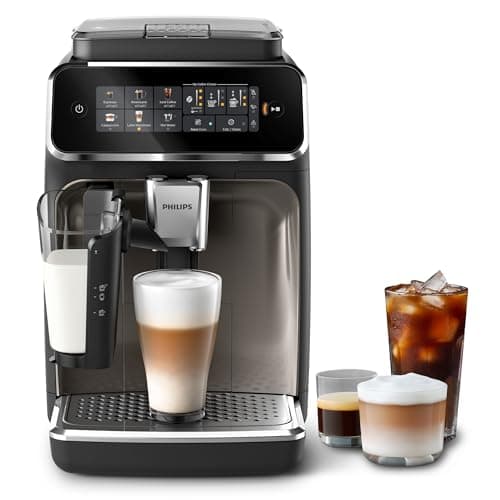
The winner · Best Overall
Philips 3300 Series Bean-to-Cup (LatteGo)
Fresh-ground coffee at one touch with the easy-clean LatteGo milk system: the best balance of quality and fuss for most homes.
Price checked live · updated 14 October 2026 · we may earn a commission
The top 5, ranked
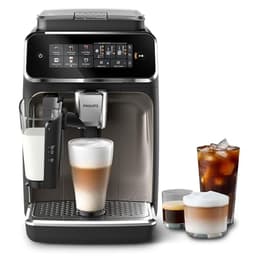 ★ Our pick · Best OverallPhilips 3300 Series Bean-to-Cup (LatteGo)Fresh-ground coffee at one touch with the easy-clean LatteGo milk system: the best balance of quality and fuss for most homes.Why we picked it ↓£369.00● In stockCheck price
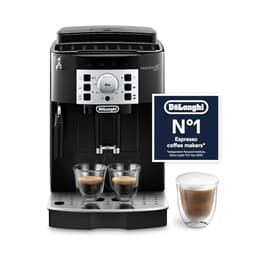 Best ValueDe'Longhi Magnifica S Bean-to-CupThe long-running benchmark affordable bean-to-cup, with a manual steam wand for those who want to froth their own.Why we picked it ↓£289.22● In stockCheck price
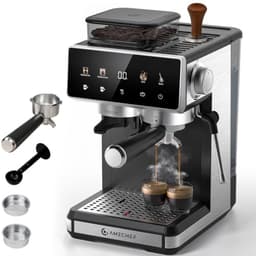 Best Budget Bean-to-CupAMZCHEF Bean-to-Cup Machine with GrinderThe cheapest route into bean-to-cup, with a built-in grinder, for under £200.Why we picked it ↓£189.99● In stockCheck price
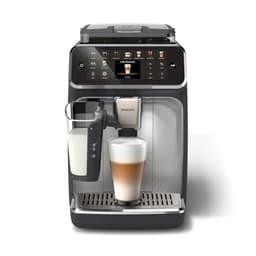 Best PremiumPhilips 5400 Series Bean-to-Cup (LatteGo, 12 Drinks)Twelve one-touch drinks, saved profiles and the easy-clean LatteGo system, for coffee-lover households.Why we picked it ↓£453.00● In stockCheck price
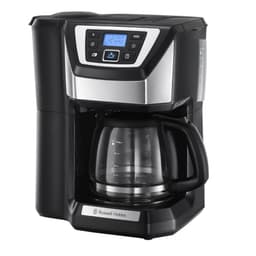 Best for Black CoffeeRussell Hobbs Chester Filter Coffee Machine (with Grinder)If you mainly drink black coffee by the mug, a grind-and-brew filter machine does it cheaply and simply.Why we picked it ↓£59.99● In stockCheck price
Compare the specs
| # | Product | Best for | Type | Milk system | Drinks | Best for | Price |
|---|---|---|---|---|---|---|---|
| Philips 3300 Series Bean-to-Cup (LatteGo) | Best Overall | Bean-to-cup | LatteGo, easy-clean | 6 hot/iced | Most daily coffee drinkers | £369.00 | |
| 2 | De'Longhi Magnifica S Bean-to-Cup | Best Value | Bean-to-cup | Manual steam wand | Espresso-based | Value, hands-on frothing | £289.22 |
| 3 | AMZCHEF Bean-to-Cup Machine with Grinder | Best Budget Bean-to-Cup | Bean-to-cup | Frother | Espresso-based | Cheapest way into bean-to-cup | £189.99 |
| 4 | Philips 5400 Series Bean-to-Cup (LatteGo, 12 Drinks) | Best Premium | Bean-to-cup | LatteGo, easy-clean | 12 one-touch | Coffee-lover households | £453.00 |
| 5 | Russell Hobbs Chester Filter Coffee Machine (with Grinder) | Best for Black Coffee | Filter (grind & brew) | None | Black filter | Black coffee drinkers | £59.99 |
Prices are live from Amazon and refresh through the day; last page update 14 October 2026.
Which type of coffee machine is right for you?
Match the machine to how you actually drink coffee. This matters far more than the brand:
- Bean-to-cup: grinds fresh beans and makes espresso and milk drinks at a touch. Best quality-to-convenience for regular drinkers who want café-style coffee without the faff. Higher upfront cost, cheapest per cup over time. (Our main picks.)
- Pod / capsule: cheapest machine to buy and very convenient, but the pods are expensive per cup and create waste. Fine for light, occasional drinkers; a false economy if you drink a lot.
- Manual espresso: cheapest route to genuinely top-tier coffee if you learn the skill, but it takes practice, time and patience. For hobbyists, not for a quick cup before work.
- Filter (drip): cheap and simple, great for black coffee by the mug or jug and for serving several people. No espresso or milk drinks. (Our black-coffee pick.)
Why "15 bar" and "20 bar" are marketing, not quality
Coffee machines love to shout a big "bar" number. Here is the honest version: around 9 bar is the ideal pressure for extracting espresso. The "15 bar" or "20 bar" on the box is the pump's maximum, not the brewing pressure, and more is not better, a machine does not make nicer coffee because its pump can hit 20 bar.
So do not choose between machines on the bar number. What actually affects the coffee in your cup is the grinder quality, fresh beans, the right grind and dose, water temperature and the machine's consistency. Treat a high bar figure as a sticker, not a spec that matters.
Milk systems and the cleaning no one mentions
- Automatic milk (carafe or LatteGo): pours frothed milk at a touch. The easiest to use. Philips' LatteGo is the standout because it is just two tube-free parts that rinse in seconds, where many carafe systems are fiddly to clean.
- Manual steam wand: you froth the milk yourself. More control and a hands-on feel, but it takes practice and effort.
- Cleaning and descaling is the part no one mentions. Every bean-to-cup needs the milk circuit rinsed regularly and the machine descaled periodically, or it clogs and the coffee suffers. Easy-clean milk systems make this far less of a chore, which is why they are worth prioritising.
Our picks in detail
Philips 3300 Series Bean-to-Cup (LatteGo)
Fresh-ground coffee at one touch with the easy-clean LatteGo milk system: the best balance of quality and fuss for most homes.
A popular mid-range bean-to-cup.
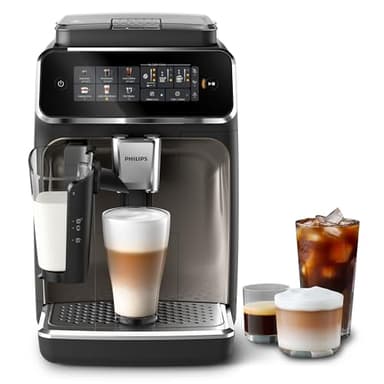
The Philips 3300 Series is the bean-to-cup most people should buy because it gets the balance right. It grinds fresh beans for every cup and makes six hot and iced drinks at a touch, so you get genuine café-style coffee without weighing, tamping or steaming by hand. The standout is the LatteGo milk system: just two parts that click together with no tubes or nozzles to clear, and they rinse clean in seconds under the tap, which quietly solves the thing people hate most about automatic machines, cleaning the milk circuit.
It is a proper investment next to a pod machine, and it is a sizeable unit that needs counter space and regular descaling like any bean-to-cup. But spread over the cups you will pull from it, and against the long-run cost of pods, it pays back, and the fresh-grind quality is a clear step up. If you want the simplest, cheapest route into decent coffee and only drink black, a filter machine is enough; for everyday fresh coffee and milk drinks with minimal hassle, this is the pick.
What we like
- Grinds fresh beans for every cup
- LatteGo milk system, genuinely easy to clean
- Six hot and iced drinks at one touch
- Best quality-to-effort balance
What we'd change
- A real investment versus a pod machine
- Large, needs regular descaling
Buy this if: you drink coffee daily and want fresh café-style drinks with minimal fuss.
De'Longhi Magnifica S Bean-to-Cup
The long-running benchmark affordable bean-to-cup, with a manual steam wand for those who want to froth their own.
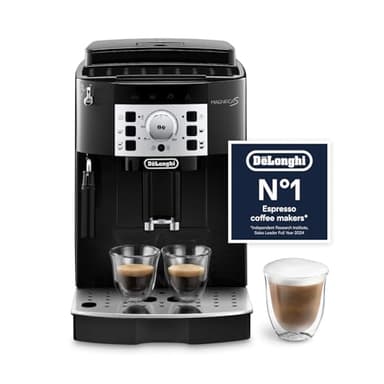
The De'Longhi Magnifica S has been the default recommendation for an affordable bean-to-cup for years, and it endures because it reliably does the core job: fresh-ground espresso and crema at a sensible price, with a simple, robust design that is easy to live with. Rather than an automatic milk carafe it uses a manual steam wand, which some people actively prefer, as you froth the milk yourself for more control and a more hands-on, barista-like feel.
The steam wand is the catch as well as the appeal: it takes a little practice and a little more effort than a one-touch milk system, so it suits people who enjoy that step rather than those who just want a latte poured for them. And as a long-standing model it can sell out. But for proven, well-priced fresh coffee with manual milk control, it remains a benchmark. If you want milk drinks poured automatically and the easiest cleaning, the Philips LatteGo is the smoother choice; if you want value and hands-on frothing, this is it.
What we like
- Proven, well-priced bean-to-cup benchmark
- Fresh-ground espresso with good crema
- Manual steam wand for hands-on milk control
What we'd change
- Steam wand takes practice
- Popular model, can sell out
Buy this if: you want proven value and enjoy frothing your own milk.
AMZCHEF Bean-to-Cup Machine with Grinder
The cheapest route into bean-to-cup, with a built-in grinder, for under £200.
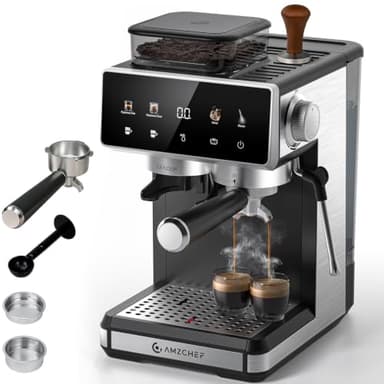
If you want fresh-ground coffee but cannot stretch to the big-brand machines, the AMZCHEF brings bean-to-cup within reach for under £200. It has a built-in grinder so you still get fresh coffee from whole beans rather than pods or pre-ground, plus an espresso system and milk frothing, which is the essential bean-to-cup experience at the lowest price here. For curious coffee drinkers testing whether fresh-grind convenience is worth it, it is an accessible way in.
At this price you should expect a less refined build and less polished controls than Philips or De'Longhi, and the long-term reliability of the big brands is better proven. But the fundamentals, a grinder and a pump espresso system in one machine, are present, and it undercuts the established names significantly. If you want the most dependable long-term machine, the Philips or De'Longhi are worth the extra; as a budget entry into bean-to-cup, this makes the category affordable.
What we like
- Bean-to-cup for under £200
- Built-in grinder for fresh coffee
- Espresso and milk frothing included
What we'd change
- Less refined build and controls
- Long-term reliability less proven
Buy this if: you want fresh-ground coffee for the least money.
Philips 5400 Series Bean-to-Cup (LatteGo, 12 Drinks)
Twelve one-touch drinks, saved profiles and the easy-clean LatteGo system, for coffee-lover households.
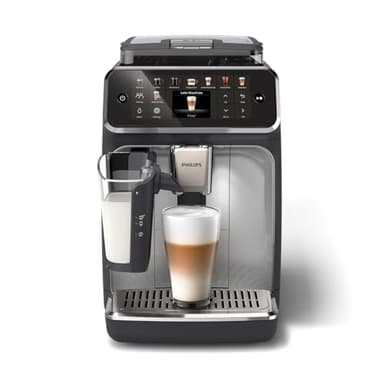
If coffee is a serious part of your day and you want the widest choice at a touch, the Philips 5400 steps up from our main pick with twelve one-touch drinks, finer control over strength and quantity, and user profiles so different people in the house can save their perfect cup. It keeps the excellent LatteGo milk system, so all that extra capability still comes with the easy, tube-free cleaning that makes an automatic machine pleasant to own.
It costs meaningfully more than the 3300, and most of the extra is breadth of drinks and personalisation rather than better coffee in the cup, the core quality is similar. So it is worth it for households that will actually use the range and the profiles, and overkill if you mostly drink one or two types. If you want the best all-round value, the 3300 is our pick; if you want the fuller one-touch menu and saved profiles, the 5400 is the premium choice.
What we like
- Twelve one-touch drinks and saved profiles
- Keeps the easy-clean LatteGo system
- Great for multi-coffee households
What we'd change
- Dearer, mostly for breadth not better coffee
- Overkill if you drink one or two types
Buy this if: you want the widest one-touch menu and per-person profiles.
Russell Hobbs Chester Filter Coffee Machine (with Grinder)
If you mainly drink black coffee by the mug, a grind-and-brew filter machine does it cheaply and simply.
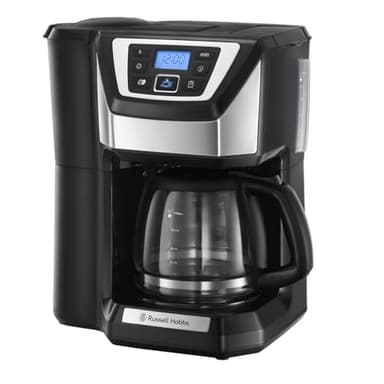
Not everyone wants espresso and milk drinks, and if you mostly drink black filter coffee by the mug or brew for several people at once, a bean-to-cup is the wrong, expensive answer. The Russell Hobbs Chester is the right one: a grind-and-brew filter machine with a built-in grinder, so you still get fresh-ground coffee, that brews a whole jug of straightforward black coffee for a fraction of a bean-to-cup's price. For volume black coffee, it is simpler, cheaper and exactly enough.
It does not make espresso, and it will not froth milk for lattes and cappuccinos, so it is the wrong machine if those drinks are what you are after. But for filter-coffee drinkers and households that get through a pot, paying hundreds for an espresso machine you would use as a drip brewer makes no sense. If you want espresso and milk drinks, choose one of the bean-to-cup machines above; if you want fresh black coffee by the jug, this is the honest, affordable pick.
What we like
- Cheap, simple fresh-ground black coffee
- Built-in grinder, brews a whole jug
- Ideal for volume and filter drinkers
What we'd change
- No espresso
- No milk frothing for lattes or cappuccinos
Buy this if: you mainly drink black filter coffee and want it cheap and simple.
The real cost over time
Look past the sticker price to the cost per cup, because it flips the ranking:
- Pod machines are cheap to buy but each capsule costs a lot per cup, so heavy drinkers pay far more over a year, plus the waste.
- Bean-to-cup costs more upfront but runs on whole beans, which are much cheaper per cup, so for daily drinkers it pays back the difference and then saves money.
- Filter is cheap on both counts if black coffee is what you want.
Factor in the ongoing basics too: beans or pods, descaler, and filters where used. For a household drinking several coffees a day, bean-to-cup is usually the cheapest good option once you count the cups, not just the machine.
Common myths, corrected
- "More bar means better coffee." No. Around 9 bar brews espresso; a "20 bar" pump figure is a maximum, not a quality measure. Grinder, beans, grind and consistency matter, bar number does not.
- "Pod machines are the cheap option." Only to buy. Per cup they are expensive, so for daily drinkers they cost more over a year than a bean-to-cup running on whole beans.
- "Bean-to-cup is high maintenance." It needs regular rinsing and periodic descaling, but an easy-clean milk system like LatteGo makes that quick. Neglecting it is what causes problems, not the machine itself.
- "A dearer machine makes better coffee." Up to a point. Beyond a good grinder and consistent extraction, extra money mostly buys more drink options, automation and build, not a better-tasting cup.
What we’d skip
- Choosing a machine on its "bar" number. Around 9 bar brews espresso; a "15 bar" or "20 bar" figure is the pump maximum and marketing, not better coffee. Judge on grinder quality, fresh beans and consistency instead.
- Buying a pod machine if you drink a lot of coffee. The machine is cheap but the capsules are expensive per cup and wasteful, so over a year a daily drinker pays more than they would with a bean-to-cup running on whole beans.
- Ignoring cleaning and descaling. Every bean-to-cup needs the milk circuit rinsed regularly and the machine descaled, or the coffee suffers and it clogs. Prioritise an easy-clean milk system like LatteGo so maintenance is a quick rinse, not a chore you skip.
- Paying for a twelve-drink premium machine if you drink one or two types. The extra money mostly buys breadth and profiles, not better coffee. A good mid-range bean-to-cup makes a similar cup for less.
- Buying a bean-to-cup when you only drink black filter coffee. It is an expensive way to make drip coffee. A grind-and-brew filter machine does fresh black coffee by the jug far more cheaply and simply.
Frequently asked questions
What is the best type of coffee machine for home?
For most people who drink coffee daily and want café-style drinks with little effort, a bean-to-cup machine is best: it grinds fresh beans and makes espresso and milk drinks at a touch. If you mainly drink black coffee, a filter machine is cheaper and simpler. Pod machines suit light, occasional drinkers, and manual espresso suits hobbyists happy to learn the skill.
Is bean-to-cup better than pods?
For regular drinkers, usually yes. Bean-to-cup grinds fresh beans for better, cheaper coffee per cup and far less waste, though the machine costs more upfront. Pod machines are cheaper to buy and very convenient, but the capsules are expensive per cup over time. If you drink several coffees a day, bean-to-cup typically works out cheaper overall; for the occasional cup, pods are fine.
Does a higher bar pressure make better coffee?
No. Around 9 bar is the ideal pressure for extracting espresso, and the "15 bar" or "20 bar" figure on the box is the pump's maximum, not the brewing pressure. More bar does not mean better coffee. What actually matters is grinder quality, fresh beans, the right grind and dose, water temperature and consistency. Treat a big bar number as marketing, not a reason to buy.
What is the LatteGo milk system?
It is Philips' milk frother made of just two parts that click together with no tubes or nozzles, so it froths milk for lattes and cappuccinos at a touch and then rinses clean in seconds under the tap. Its main advantage is cleaning: most automatic milk systems are fiddly to clean, which is what puts people off using them, and LatteGo largely solves that.
How much cleaning does a bean-to-cup machine need?
Regular but manageable. You should rinse the milk system after use or daily, empty the grounds and drip tray, and descale the machine periodically depending on your water hardness. Neglecting this clogs the machine and spoils the coffee. An easy-clean milk system like LatteGo makes the daily part a quick rinse, so prioritise one if you want maintenance to stay simple.
Are expensive coffee machines worth it?
Up to a point. Spending enough to get a good grinder and consistent extraction makes a real difference to the cup. Beyond that, extra money mostly buys more one-touch drinks, user profiles, automation and build quality rather than better-tasting coffee. A solid mid-range bean-to-cup makes a similar cup to a premium one, so pay more only for the convenience features you will actually use.
Do I need a machine with a grinder?
If you want the best fresh coffee, yes, a built-in grinder means you brew from whole beans ground moments before, which beats pre-ground or pods on flavour. Bean-to-cup machines and grind-and-brew filter machines include one. If you prefer the convenience of pods or already own a separate grinder, you can do without, but for fresh-ground coffee from one machine, a built-in grinder is the point.
Which coffee machine is cheapest to run?
Over time, a bean-to-cup or filter machine running on whole beans or ground coffee is cheapest per cup, which is why they suit daily drinkers despite costing more upfront. Pod machines are the most expensive per cup because of the capsule cost, so they are cheapest only for light, occasional use. Factor in beans or pods, descaler and filters when comparing the true running cost.
Ready to choose?
Our one clear winner is the Philips 3300 Series Bean-to-Cup (LatteGo).