If you want a trusted brand, a Hisense is a sensible step up; for the biggest loads, a 10.5kg wash model suits larger households; and a Candy offers a quick wash-and-dry. But first, the honest truth: a washer-dryer is a compromise. The dry capacity is always smaller than the wash, drying is slower and less efficient than a dedicated dryer, and if it breaks you lose both functions. Buy one only if you genuinely cannot fit separate machines. Below we explain the trade-offs so you buy with eyes open.
Last reviewed 14 October 2026
Prices and stock on this page are pulled live from each listing and refresh several times a day. Be clear what a washer-dryer is: a space-saving two-in-one for homes without room for separate machines, not an upgrade on having both. The catch is that the dry capacity is smaller than the wash, so you often cannot dry a full load in one go. A COMFEE with an unusually generous dry capacity is our pick. How we choose: we compare the live Amazon listings, the makers' published specs and the owner reviews, including the 1 to 3 star ones, and we don't test hands-on, so we never claim to.
The top 4, ranked
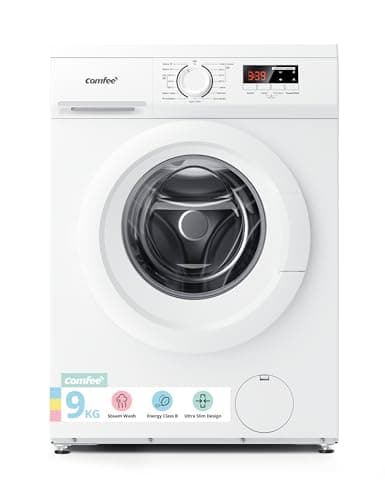
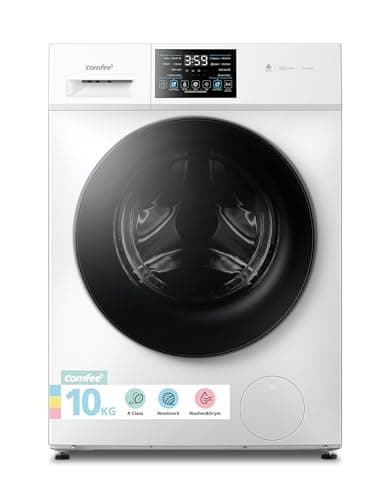 ★ Our pick · Best overallCOMFEE' 10kg/7kg Washer Dryer (A-Rated, BLDC)A 10kg wash and an unusually generous 7kg dry, with an A rating and inverter motor: the best of a compromise.£329.99£389.99Save 15%In stockBuy on Amazon
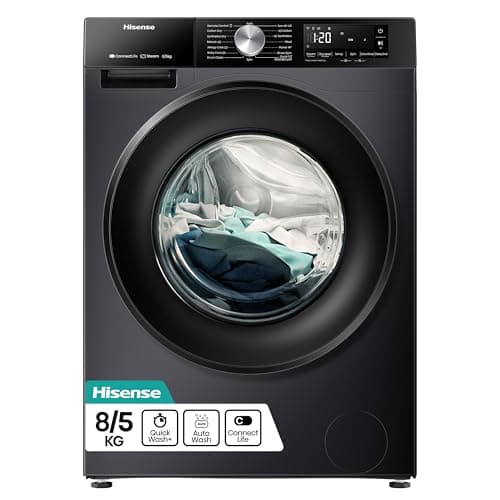 Best brandHisense 3S Series 8kg/5kg Washer Dryer (Wifi)A trusted-brand 8kg wash / 5kg dry washer-dryer with wifi, for reassurance in one slot.£369.00In stockBuy on Amazon
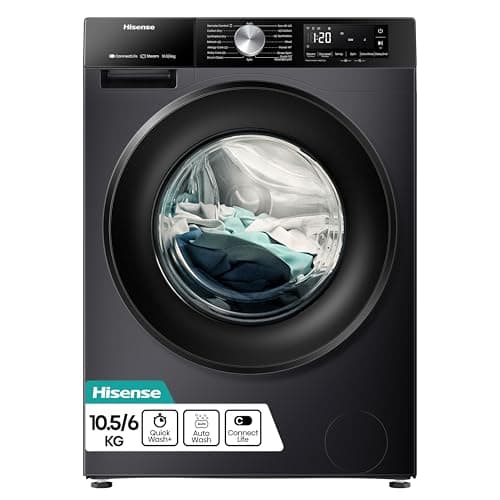 Best large capacityHisense 3S Series 10.5kg/6kg Washer Dryer (Wifi)A big 10.5kg wash and 6kg dry from a trusted brand, for larger households in one slot.£399.00In stockBuy on Amazon
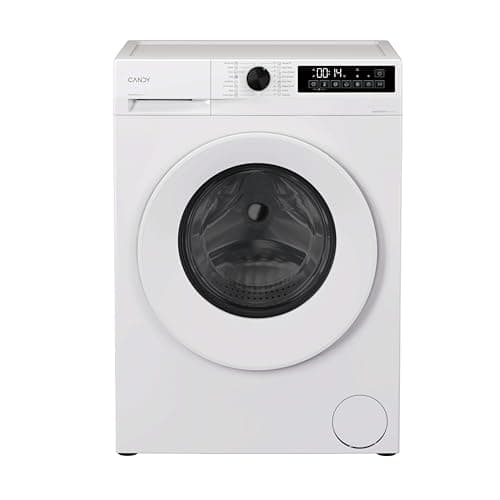 Best for quick wash-dryCandy Quick Pro Washer Dryer (8kg/5kg, 1400rpm)An 8kg/5kg washer-dryer with fast quick-wash programmes, at a keen price.£340.00£399.00Save 15%In stockBuy on Amazon
Compare the specs
| Product | Wash | Dry | Spin | Best for | Price |
|---|---|---|---|---|---|
| COMFEE' 10kg/7kg Washer Dryer (A-Rated, BLDC)★ Best Overall | 10kg | 7kg | 1400rpm | Space-limited homes wanting more dry capacity | £329.99 |
| Hisense 3S Series 8kg/5kg Washer Dryer (Wifi)Best Brand | 8kg | 5kg | 1400rpm | Brand reassurance | £369.00 |
| Hisense 3S Series 10.5kg/6kg Washer Dryer (Wifi)Best Large Capacity | 10.5kg | 6kg | 1400rpm | Larger households, one slot | £399.00 |
| Candy Quick Pro Washer Dryer (8kg/5kg, 1400rpm)Best for Quick Wash-Dry | 8kg | 5kg | 1400rpm | Quick wash-dry, value | £340.00 |
Prices are live from Amazon and refresh through the day; last page update 14 October 2026.
A washer-dryer is a space-saving compromise
Before you buy, understand what a washer-dryer actually is: a two-in-one for homes that do not have room for separate machines. It is a space-saver, not an upgrade on owning both. The honest trade-offs:
- It dries less than it washes. The dry capacity is always smaller than the wash capacity (often 5kg dry to 8kg wash), so you frequently cannot dry a full wash load in one go and have to take half out and dry in two batches.
- Drying is slower and less efficient. Washer-dryers dry using a condenser method that is slower and uses more energy and water than a dedicated dryer, especially a heat pump.
- If it breaks, you lose both. One machine means one point of failure for both washing and drying.
None of this means a washer-dryer is bad, it is the right answer for flats and small kitchens with one appliance slot. Just buy it for the space saving, knowing the compromises, not expecting it to match separate machines.
Washer-dryer or separate machines?
- Buy a washer-dryer if you genuinely lack the space or plumbing for two machines, a flat, a small kitchen, or a single appliance slot. The two-in-one in one footprint is its whole point.
- Buy separate machines if you have room for both. A separate washing machine and a dedicated dryer (ideally a heat pump) wash and dry more, faster and more efficiently, let you wash and dry at the same time, and if one breaks you still have the other.
So the decision is really about space, not performance: separates win on performance, a washer-dryer wins on footprint. If you have the room, separates are better; if you do not, a washer-dryer is the sensible compromise. Do not buy a washer-dryer if you could fit two machines, you would be choosing the compromise for no reason.
What to prioritise in a washer-dryer
- Dry capacity: the most important spec, because it is the format's weak point. A larger dry capacity (7kg rather than 5kg) means you split loads less often. Prioritise it.
- Wash capacity and spin speed: as with any washing machine, match the wash drum to your household and get a good spin so clothes come out drier and need less drying time.
- Energy rating and inverter motor: an efficient machine and a durable, quieter inverter motor matter, especially as drying uses a fair bit of energy.
- Sensor drying: stops when clothes are dry rather than over-drying, saving energy.
Our picks in detail
COMFEE' 10kg/7kg Washer Dryer (A-Rated, BLDC)
A 10kg wash and an unusually generous 7kg dry, with an A rating and inverter motor: the best of a compromise.
A strong-value washer-dryer.
The COMFEE 10kg/7kg is the washer-dryer most people should buy, because it tackles the format's biggest weakness. Washer-dryers usually dry far less than they wash (often 5kg dry to 8kg wash), so you have to split a load before drying; this one dries a more generous 7kg, so you can dry more of a wash in one go, which is the single most useful thing a washer-dryer can do better. Add a 10kg wash drum, the top A energy rating and a durable BLDC inverter motor, and it is a lot of the right specs for a two-in-one.
It is still a washer-dryer, so the honest caveats apply: drying is slower and less efficient than a dedicated dryer, and if it fails you lose both functions. And it is a value brand rather than a premium name. But if you need one machine in one slot, getting the biggest dry capacity and a good energy rating is exactly what to prioritise, and this delivers that. If you want a trusted brand, the Hisense is the step up; for the best-judged washer-dryer for the money, this is the pick.
Hisense 3S Series 8kg/5kg Washer Dryer (Wifi)
A trusted-brand 8kg wash / 5kg dry washer-dryer with wifi, for reassurance in one slot.
If you want a recognised brand in your single appliance slot, the Hisense 3S Series is a dependable 8kg wash / 5kg dry washer-dryer. Hisense is an established appliance name, and this gives you a durable inverter machine, wifi control, and the reassurance of a bigger brand's support, which matters for a two-in-one that is doing double duty. It covers everyday washing and drying for a flat or small household without fuss.
Its 5kg dry capacity is the more typical washer-dryer figure, so you will split larger wash loads before drying, which is the usual compromise. But for buyers who want a known brand and its backing, it is a sensible, reassuring choice. If you want the most dry capacity per load, the COMFEE's 7kg is better; if you want a trusted brand at a fair price, this Hisense is the pick.
Hisense 3S Series 10.5kg/6kg Washer Dryer (Wifi)
A big 10.5kg wash and 6kg dry from a trusted brand, for larger households in one slot.
If you have a larger household but still only one appliance slot, the Hisense 10.5kg/6kg gives you more capacity both ways: a big 10.5kg wash drum for family loads and a 6kg dry, more than the typical 5kg. From a trusted brand with wifi control and an inverter motor, it lets a bigger household wash and dry in one machine without stepping down to a small drum.
As a washer-dryer it still dries less than it washes, so you will split the biggest loads before drying, and drying remains slower than a dedicated dryer. And it costs more than the smaller models. But for a larger family that genuinely lacks space for separate machines, the bigger capacity both ways is worth it. If you are a smaller household or want the most dry capacity for the money, the COMFEE suits better; for the biggest two-in-one from a trusted brand, this is the pick.
Candy Quick Pro Washer Dryer (8kg/5kg, 1400rpm)
An 8kg/5kg washer-dryer with fast quick-wash programmes, at a keen price.
The Candy Quick Pro is the pick if you want speed in a washer-dryer at a sensible price. Its quick-wash programmes get lightly soiled loads washed fast, and the 8kg wash / 5kg dry capacity with a 1400rpm spin covers everyday laundry for a flat or small household, all at a keen price from a recognised brand. For getting a wash done and dried quickly in one machine, it is a practical, affordable choice.
It has the standard washer-dryer compromises, a 5kg dry smaller than the wash so you split larger loads, and drying slower than a dedicated dryer, and it is a value machine rather than premium. But for quick, affordable wash-and-dry in one slot, it does the job. If you want more dry capacity or a trusted brand, the COMFEE or Hisense are worth it; for a cheap, quick two-in-one, this is a sensible pick.
Getting the most from a washer-dryer
- Split loads for drying. Since the dry capacity is smaller, take out roughly half the wash before running the dry cycle, cramming a full wash load into the dryer gives damp, creased results.
- Spin fast before drying. A high spin leaves less water to remove, cutting drying time and cost.
- Use sensor drying and lower heat where you can, and pull clothes out slightly damp to finish on a rack.
- Dry on the airer when you can. The cheapest drying is free. Use the washer-dryer's dry function for speed or bad weather, and an airer the rest of the time.
- Clean the filters and look after the condenser system as the manual advises, to keep drying efficient.
Common myths, corrected
- "A washer-dryer washes and dries a full load." No. It dries less than it washes, so you split larger loads before drying. Check the dry capacity, not just the wash.
- "It is as good as separate machines." No. It is a space-saving compromise: drying is slower and less efficient, and one breakdown loses both functions. Separates are better if you have the room.
- "Drying in a washer-dryer is cheap." It is less efficient than a dedicated dryer, especially a heat pump, so it costs more to dry per load. Spin fast first and use the airer when you can.
- "Buy one to save money." Only buy one to save space. If you have room for separates, they perform better; the washer-dryer is for when space, not budget, is the constraint.
What we’d skip
- Buying a washer-dryer if you have room for separate machinesIt is a space-saving compromise, not an upgrade: separates wash and dry more, faster and more efficiently, let you do both at once, and survive one breaking. Only choose a washer-dryer if you genuinely lack space or plumbing for two machines.
- Judging a washer-dryer on its wash capacity aloneThe dry capacity is always smaller and is the format's weak point, so you often cannot dry a full wash load in one go. Check the dry figure and prioritise a model with a larger one (7kg rather than 5kg) so you split loads less.
- Expecting to dry a full wash load in one goThe dry capacity is smaller than the wash, so take out roughly half the load before drying. Cramming a full wash into the dry cycle gives damp, creased results.
- Assuming drying in a washer-dryer is cheapIt uses a slower, less efficient condenser method than a dedicated dryer, especially a heat pump, so it costs more per load. Spin fast first, use sensor drying, and dry on an airer when you can.
- Overlooking the single-point-of-failure riskOne machine does both jobs, so if it breaks you lose washing and drying at once. It is a reason to choose a reliable brand and, if you have the space, to consider separates instead.
Frequently asked questions
Is a washer-dryer as good as separate machines?
No, it is a space-saving compromise rather than an upgrade. Separate machines wash and dry more, faster and more efficiently, let you wash and dry at the same time, and mean that if one breaks you still have the other. A washer-dryer does both jobs in one footprint, which is its whole point, but it dries less than it washes, dries more slowly and less efficiently, and is a single point of failure. Choose a washer-dryer only if you lack space for two machines.
Can a washer-dryer dry a full load of washing?
Usually not in one go, because the dry capacity is smaller than the wash capacity, often 5kg dry to 8kg wash. So after washing a full load you typically take out roughly half before running the dry cycle, drying in two batches. Cramming a full wash load into the dry cycle gives damp, creased results. Some models have a more generous dry capacity (7kg), which lets you dry more in one go, so prioritise dry capacity if drying full loads matters to you.
Why is the dry capacity smaller than the wash capacity?
Because clothes need room to tumble and for air to circulate to dry properly, which takes more space than washing the same clothes does. So manufacturers rate a washer-dryer for a larger wash load and a smaller dry load, for example 8kg wash and 5kg dry. It is an inherent feature of the two-in-one design, not a fault, which is why you often split a wash load before drying. Look for the largest dry capacity you can to minimise that.
Is it cheaper to run a washer-dryer or separate machines?
For drying, separate machines, especially a heat pump dryer, are cheaper to run per load, because a washer-dryer dries using a slower, less efficient condenser method that uses more energy and water. So if running cost is your priority and you have the space, separates win, particularly with a heat pump dryer. A washer-dryer saves space, not running cost. To reduce a washer-dryer's drying cost, spin fast before drying, use sensor drying, and dry on an airer when you can.
Who should buy a washer-dryer?
Anyone who genuinely lacks the space or plumbing for two separate machines, typically flats, small kitchens or homes with a single appliance slot. For them, getting washing and drying in one footprint is exactly what they need, and the compromises are worth it. If you have room for both a washing machine and a dedicated dryer, you are better off with separates, which perform better and survive one machine breaking. So buy a washer-dryer for space reasons, not budget ones.
What should I prioritise when buying a washer-dryer?
Dry capacity above all, since it is the format's weak point, a larger dry capacity (7kg rather than 5kg) means you split loads less often. Then the wash capacity matched to your household, a good spin speed so clothes come out drier, a strong energy rating and a durable inverter motor, and sensor drying to avoid over-drying. Because a washer-dryer does double duty, reliability and brand support matter too, as one breakdown loses both functions.
Do washer-dryers use a lot of water to dry?
Many use a condenser drying method that uses water to cool and condense the moisture from the clothes, so yes, drying in a washer-dryer can use a noticeable amount of water as well as electricity, which adds to running costs compared with a dedicated dryer. It is one of the efficiency trade-offs of the two-in-one design. If low running cost matters and you have space, separate machines with a heat pump dryer avoid this; otherwise, spinning fast first and drying on an airer when you can helps.
Can you wash and dry at the same time in a washer-dryer?
No, and that is one of its limitations. A washer-dryer does one job at a time in the same drum, so it washes a load, then dries it (or part of it), in sequence, which takes a long time end to end. With separate machines you can be drying one load while washing the next, which is far quicker for getting through a lot of laundry. So a washer-dryer suits lower laundry volumes in a space-limited home; heavy laundry households with room are better served by separates.