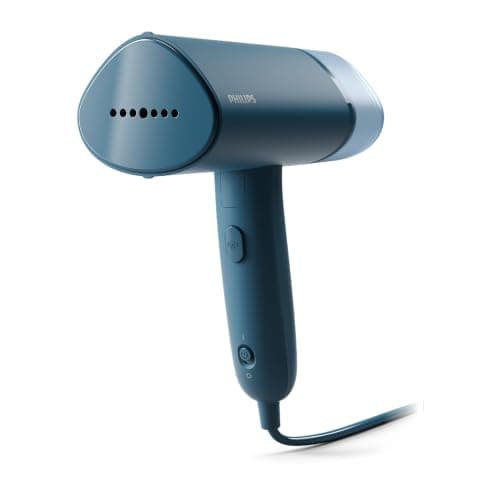
If you want a premium glide, a Morphy Richards with a ceramic soleplate slides beautifully over fabric; on a budget a 2400W Russell Hobbs irons well for under £20; and if you have mountains of ironing, a steam generator iron (a separate pressurised boiler) is the serious step up. What actually matters is steam and the soleplate, not the badge. Below we explain steam output, soleplates, why anti-scale matters in hard-water areas, and when to step up to a steam generator.
Last reviewed 14 October 2026
Prices and stock on this page are pulled live from each listing and refresh several times a day. What makes a steam iron good is steam output and a soleplate that glides, not the price on the box. More steam gets through creases faster, and a smooth soleplate makes ironing less of a chore. A powerful Russell Hobbs is our pick. How we choose: we compare the live Amazon listings, the makers' published specs and the owner reviews, including the 1 to 3 star ones, and we don't test hands-on, so we never claim to.
The top 4, ranked
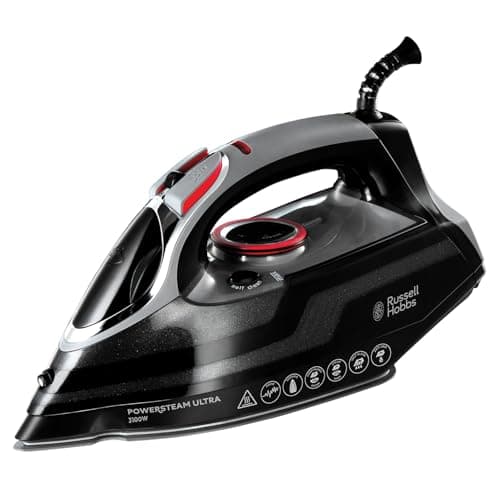 ★ Our pick · Best overallRussell Hobbs Steam Iron (3100W, 210g Boost)High power, strong steam with a 210g boost and a big tank: gets through a pile of ironing quickly.£34.00£71.99Save 53%In stockBuy on Amazon
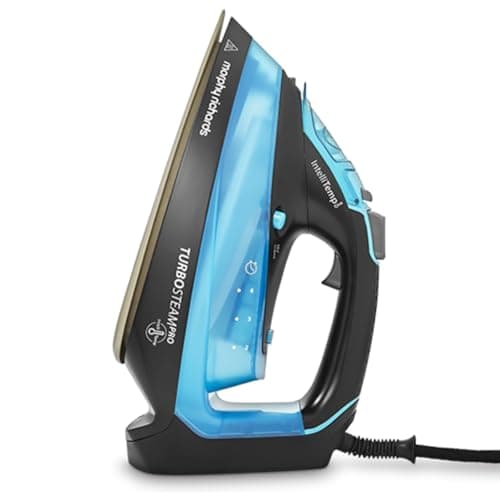 Best premiumMorphy Richards Turbosteam Pro Steam Iron (Ceramic)A ceramic soleplate that glides beautifully, with strong turbo steam, for nicer everyday ironing.£49.00£69.99Save 30%In stockBuy on Amazon
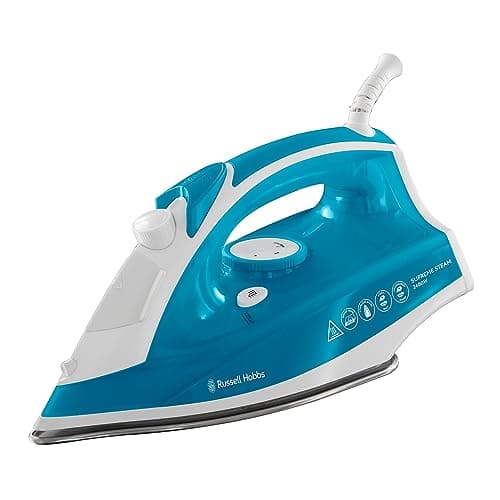 Best budgetRussell Hobbs Supreme Steam Iron (2400W)A capable 2400W iron with a decent tank and steam shot for under £20.£16.98In stockBuy on Amazon
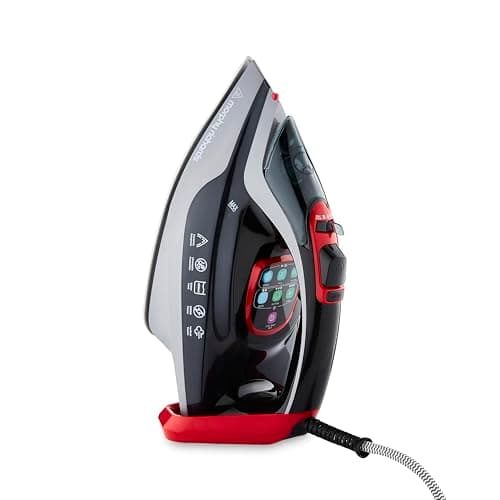 Best mid-rangeMorphy Richards Powersteam Elite LED Steam Iron (Ceramic)A ceramic soleplate and strong steam with an LED display, between budget and premium.£39.00£49.99Save 22%In stockBuy on Amazon
Compare the specs
| Product | Power | Steam | Soleplate | Best for | Price |
|---|---|---|---|---|---|
| Russell Hobbs Steam Iron (3100W, 210g Boost)★ Best Overall | 3100W | Strong + 210g boost | Non-stick | Everyday ironing | £34.00 |
| Morphy Richards Turbosteam Pro Steam Iron (Ceramic)Best Premium | High | Turbo burst | Ceramic non-stick | Smooth glide, regular ironing | £49.00 |
| Russell Hobbs Supreme Steam Iron (2400W)Best Budget | 2400W | 110g shot | Non-stick | Budget, occasional ironing | £16.98 |
| Morphy Richards Powersteam Elite LED Steam Iron (Ceramic)Best Mid-Range | High | Strong | Ceramic non-stick | Mid-range, regular ironing | £39.00 |
Prices are live from Amazon and refresh through the day; last page update 14 October 2026.
Steam output is what gets through creases
The single most important thing a steam iron does is produce steam, and more of it means faster, easier ironing. Two figures matter:
- Continuous steam (grams per minute) is the steady steam while you iron. More continuous steam relaxes and presses fabric faster, so you get through a pile quicker.
- Steam boost / shot (a higher gram figure) is an on-demand blast for stubborn creases, collars, cuffs and heavy fabrics like linen and denim. A strong boost powers through the bits a steady flow struggles with.
A powerful iron (higher wattage) heats fast and keeps the steam coming without cooling between garments, which matters over a big pile. If you iron a lot, prioritise strong steam and power; they make the chore noticeably quicker.
The soleplate: glide and durability
- Ceramic / non-stick soleplates glide smoothly over fabric and resist sticking and scorching, which makes ironing feel easier and is kinder to delicate fabrics. Lovely to use, though the coating can wear over years.
- Stainless steel soleplates are durable and glide well, and stand up to heavy use, a traditional, hard-wearing choice.
- Cheap aluminium plates can drag and stick more. A smooth soleplate is one of those things you appreciate every time you iron, so it is worth a little extra.
Also look for a well-designed tip for getting into collars, pleats and around buttons, which makes detailed ironing far easier.
Anti-scale matters in hard-water areas
Most of the UK has hard water, which leaves limescale inside a steam iron, clogging the steam holes, spitting white flakes onto your clothes, and shortening the iron's life. So:
- Look for anti-scale and self-clean features, which flush out limescale and keep the steam flowing cleanly. Worth having if you live in a hard-water area.
- Use the self-clean function regularly as the maker advises.
- Check the water guidance: some irons prefer distilled or filtered water in very hard-water areas to reduce scale, though many modern irons are designed for tap water, so follow the manual.
Our picks in detail
Russell Hobbs Steam Iron (3100W, 210g Boost)
High power, strong steam with a 210g boost and a big tank: gets through a pile of ironing quickly.
A powerful best-selling iron.
The Russell Hobbs 3100W is the steam iron most people should buy. The high wattage heats it up fast and keeps the steam flowing without the iron cooling between garments, the strong continuous steam plus a 210g boost shot blasts through stubborn creases in collars, cuffs and linen, and the large water tank means you refill less often, so a basket of ironing goes noticeably quicker. For everyday ironing it has the power that makes the chore faster.
It is a conventional iron rather than a ceramic-soleplate premium model or a steam generator, so it does not have the slickest glide or the relentless steam of a separate boiler. But for the core job, plenty of steam and heat to get ironing done, it delivers at a sensible price. If you want the smoothest glide, the ceramic Morphy Richards is the step up; if you iron mountains, a steam generator is worth it. For the best all-round everyday iron, this is the pick.
Morphy Richards Turbosteam Pro Steam Iron (Ceramic)
A ceramic soleplate that glides beautifully, with strong turbo steam, for nicer everyday ironing.
If you want ironing to feel less like a chore, the Morphy Richards Turbosteam Pro's ceramic non-stick soleplate glides over fabric more smoothly than a standard plate, which genuinely makes a difference over a pile, and its turbo steam burst powers through creases. The smoother glide and good steam make it a more pleasant iron to use day to day, from a brand with a strong ironing pedigree, for a modest step up in price.
It costs a little more than the standard irons for broadly the same core job, so you are paying for the nicer soleplate and finish rather than dramatically better results. But a soleplate that slides easily is one of those things you appreciate every time you iron, so if you iron regularly it is worth it. If you want maximum steam and power for less, the Russell Hobbs is excellent value; for the smoothest glide on everyday ironing, this is the pick.
Russell Hobbs Supreme Steam Iron (2400W)
A capable 2400W iron with a decent tank and steam shot for under £20.
If you want a decent steam iron for as little as possible, the Russell Hobbs Supreme does the job for under £20. A 2400W element gives enough heat and steam for everyday ironing, the 300ml tank and 110g steam shot handle creases, and it comes from a trusted household brand, so it is a reliable, no-frills iron for the price. For occasional ironing, a spare or a tight budget, it covers the basics well.
At this price it is less powerful than the 3100W model, so it recovers heat and steam a touch slower through a big pile, and the soleplate is standard rather than ceramic. But a steam iron's core job, heat and steam to press clothes, is delivered cheaply and reliably here. If you iron a lot and want more power or a smoother glide, the picks above are worth the extra; as the cheapest capable iron, this is honest value from a name you know.
Morphy Richards Powersteam Elite LED Steam Iron (Ceramic)
A ceramic soleplate and strong steam with an LED display, between budget and premium.
The Morphy Richards Powersteam Elite sits sensibly between budget and premium: a ceramic non-stick soleplate for a smooth glide, strong steam to tackle creases, and an LED display for clear temperature control, at a mid price. It gives you much of the nicer ironing experience of the premium models, the glide and the steam, without quite the top price, which makes it a well-judged middle option for regular ironers.
It costs more than the budget irons and the LED display is a nice-to-have rather than a game-changer, but the ceramic soleplate and good steam are the real draws. For someone who irons often and wants a smoother, more capable iron without paying the most, it is a sensible pick. If you want maximum power and value, the 3100W Russell Hobbs is the one; for a ceramic-soleplate iron at a middle price, this is a strong choice.
When to step up to a steam generator iron
If you iron large piles regularly, a steam generator iron is the serious upgrade. It has a separate pressurised water tank (a boiler) connected to the iron by a hose, which produces far more steam at higher pressure than a conventional iron, so it:
- Powers through creases much faster, often in a single pass, and can iron through several layers.
- Holds much more water, so you refill far less often over a big pile.
The trade-offs are size (the boiler unit takes up more space and is heavier to store), a longer heat-up, and a higher price. For someone with a family's worth of weekly ironing it is a genuine time-saver and worth it; for a few shirts a week, a good conventional steam iron is plenty and simpler.
Common myths, corrected
- "Expensive irons iron much better." Up to a point. Beyond strong steam and a good soleplate, extra money buys finish and features, not dramatically better ironing. A powerful mid-price iron does most of what matters.
- "Wattage is everything." Power helps heat-up and steam recovery, but steam output and the soleplate matter just as much. Judge an iron on steam and glide, not wattage alone.
- "Anti-scale is a gimmick." Not in hard-water Britain. Limescale clogs steam holes and spits on your clothes, so anti-scale and self-clean genuinely extend an iron's life and keep it working.
- "A garment steamer replaces an iron." Not for crisp results. A steamer is great for quick de-wrinkling hanging clothes, but for sharp creases and collars you still want an iron.
What we’d skip
- Paying a premium expecting dramatically better ironingBeyond strong steam and a soleplate that glides, extra money buys finish and features, not a fundamentally better press. A powerful mid-price iron with good steam does most of what matters.
- Choosing on wattage alonePower helps an iron heat up and keep steaming, but steam output and the soleplate matter just as much. Judge an iron on its continuous steam, boost shot and glide, not only the watts.
- Ignoring anti-scale in a hard-water areaLimescale clogs the steam holes and spits white flakes onto your clothes, and shortens the iron's life. Look for anti-scale and self-clean features and use them, which keeps the steam flowing cleanly.
- Buying a tiny-tank iron if you have lots of ironingA small water tank means constant refills that break your rhythm. A larger tank, or a steam generator for big piles, gets through the basket far more smoothly.
- Expecting a garment steamer to replace your iron for crisp shirtsA steamer is excellent for quickly de-wrinkling hanging clothes and delicates, but for sharp creases, collars and cuffs you still want a proper iron. They complement each other rather than one replacing the other.
Frequently asked questions
What makes a good steam iron?
Strong steam and a soleplate that glides, more than the price. Plenty of continuous steam relaxes and presses fabric faster, a good steam boost blasts through stubborn creases, and a smooth ceramic or stainless soleplate makes ironing less of a chore. A higher wattage helps it heat up and keep steaming over a pile, and a decent tank means fewer refills. In hard-water areas, anti-scale features keep it working. Those fundamentals matter far more than the badge.
How much steam output does a steam iron need?
More is better for faster ironing. The continuous steam (grams per minute) is the steady flow while you iron, and a higher figure gets through creases quicker, while the steam boost or shot is an on-demand blast for stubborn creases, collars and heavy fabrics like linen. If you iron a lot, prioritise strong continuous steam and a powerful boost, which make a real difference over a pile. For a few shirts a week, a moderate steam output is plenty.
Ceramic or stainless steel soleplate, which is better?
Both glide well, with slightly different strengths. Ceramic and non-stick soleplates glide very smoothly, resist sticking and scorching and are kind to delicate fabrics, though the coating can wear over years. Stainless steel soleplates are durable and hard-wearing and glide well, standing up to heavy use. For the smoothest everyday glide, ceramic is lovely; for long-term durability, stainless is excellent. Either is far better than a cheap aluminium plate that drags.
Do I need anti-scale features on a steam iron?
In a hard-water area, which covers much of the UK, yes. Limescale builds up inside a steam iron, clogging the steam holes, spitting white flakes onto your clothes and shortening the iron's life. Anti-scale and self-clean features flush the scale out and keep the steam flowing cleanly, so they genuinely help. Use the self-clean function regularly, and check whether your iron prefers tap, filtered or distilled water in very hard-water areas.
What is a steam generator iron and is it worth it?
A steam generator iron has a separate pressurised water tank connected to the iron by a hose, producing far more steam at higher pressure than a conventional iron, so it powers through creases much faster, often in one pass, and holds much more water for fewer refills. It is worth it if you iron large piles regularly, where it saves real time, but it is bigger, heavier to store, slower to heat up and pricier. For a few shirts a week, a good conventional steam iron is plenty.
Steam iron or garment steamer, which should I get?
They do different jobs. A steam iron presses fabric against a board to give crisp, flat results with sharp creases, collars and cuffs, which a steamer cannot match. A garment steamer relaxes wrinkles out of hanging clothes quickly with no board, which is great for delicates, suits, curtains and quick touch-ups. For crisp shirts and proper ironing, get an iron; for fast de-wrinkling and delicates, a steamer. Many people own both, as they complement each other.
Why does my steam iron spit water or leak?
Usually it is ironing at too low a temperature for steam (steam needs the soleplate hot enough), overfilling the tank, or limescale build-up clogging the holes. Make sure the temperature is set in the steam zone, do not overfill, and in hard-water areas run the anti-scale or self-clean function regularly, as scale is a common cause of spitting and white flakes. If it persists, descaling the iron per the manual usually fixes it.
How much does it cost to run a steam iron?
Not much, as you use it in short bursts. A typical steam iron draws around 2 to 3kW but only for the time you are ironing, so a 30-minute ironing session uses roughly 1 to 1.5 kWh, which at the Ofgem cap of 26.32p per kWh is only around 25 to 40p. Higher-wattage irons heat and steam faster but do not necessarily cost more overall, as they get the job done quicker. Running cost is not really a reason to choose one iron over another.