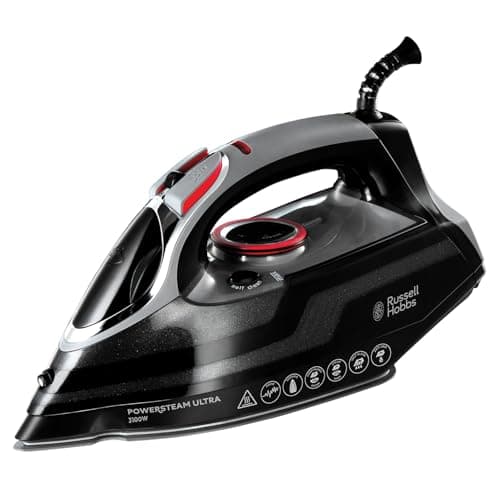
If you travel, a slim Tefal folds down small for a suitcase; on a budget a BEAUTURAL handheld steams for around £20; and a 2-in-1 Russell Hobbs adds a small press plate for a bit of crispness. First, be clear what a steamer is for: fast de-wrinkling of hanging clothes and delicates, not the sharp creases of an iron. Below we explain steamer versus iron, handheld versus upright, and what actually matters.
Last reviewed 14 October 2026
Prices and stock on this page are pulled live from each listing and refresh several times a day. A garment steamer relaxes wrinkles out of hanging clothes in seconds with no ironing board, which is brilliant for delicates, suits, knitwear, curtains and quick touch-ups. Just know it complements an iron rather than fully replacing it, as it will not give you crisp creases. A Philips handheld is our pick. How we choose: we compare the live Amazon listings, the makers' published specs and the owner reviews, including the 1 to 3 star ones, and we don't test hands-on, so we never claim to.
The top 4, ranked
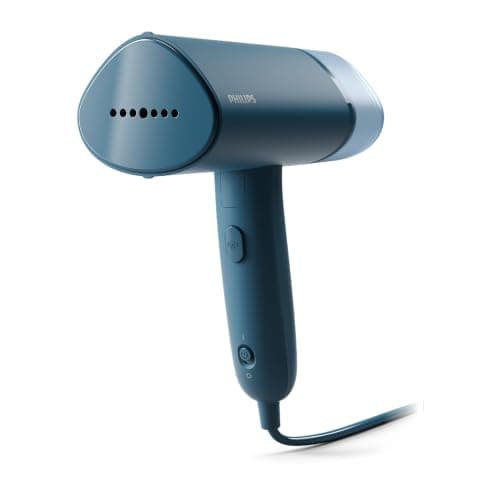 ★ Our pick · Best overallPhilips Handheld Garment Steamer 3000 Series (20g/min)Fast heat-up, a steady 20g/min of steam and a no-burns design: the handheld steamer most people should buy.£37.99£39.99Save 5%In stockBuy on Amazon
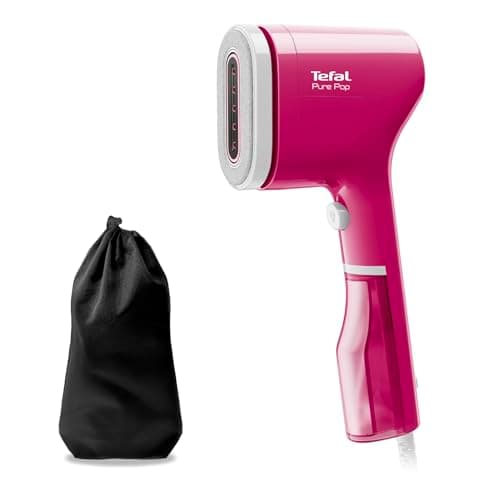 Best for travelTefal Pure Pop Slim Handheld Clothes SteamerA slim, compact steamer that folds down for a suitcase, for wrinkle-free clothes away from home.£26.99£49.99Save 46%In stockBuy on Amazon
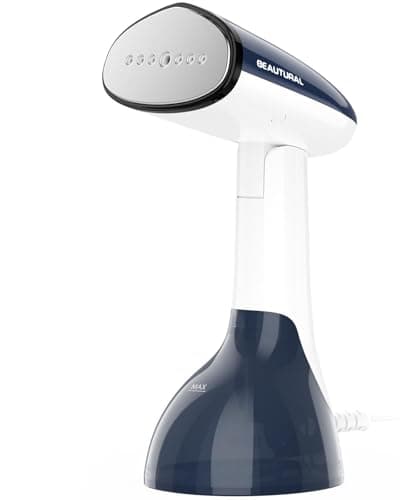 Best budgetBEAUTURAL Portable Handheld Clothes Steamer (Foldable)A foldable 1500W handheld steamer for around £20: the cheapest sensible choice.£23.99In stockBuy on Amazon
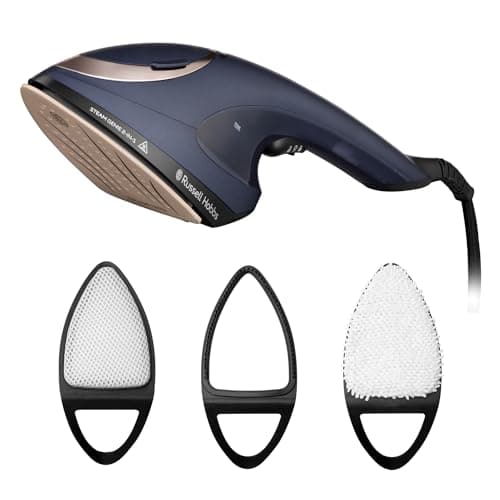 Best 2-in-1Russell Hobbs Steam Genie 2-in-1 Handheld Steamer (with Press Plate)A steamer with a press plate attachment, so you get a bit of crispness as well as de-wrinkling.£39.99£62.99Save 37%In stockBuy on Amazon
Compare the specs
| Product | Type | Steam | Heat-up | Best for | Price |
|---|---|---|---|---|---|
| Philips Handheld Garment Steamer 3000 Series (20g/min)★ Best Overall | Handheld | 20g/min | Fast | Everyday freshening, delicates | £37.99 |
| Tefal Pure Pop Slim Handheld Clothes SteamerBest for Travel | Handheld, slim | Moderate | Fast | Travel, touch-ups | £26.99 |
| BEAUTURAL Portable Handheld Clothes Steamer (Foldable)Best Budget | Handheld | 1500W | Fast | Budget, light use | £23.99 |
| Russell Hobbs Steam Genie 2-in-1 Handheld Steamer (with Press Plate)Best 2-in-1 | Handheld 2-in-1 | Good | Fast | Steaming plus light pressing | £39.99 |
Prices are live from Amazon and refresh through the day; last page update 14 October 2026.
What a garment steamer is brilliant at
A garment steamer blasts hot steam at hanging clothes to relax the fibres and drop the wrinkles out, with no ironing board. It is brilliant for:
- Quick freshening of shirts, dresses and trousers in seconds before you head out.
- Delicate fabrics like silk, chiffon and embellished items you would be nervous pressing with a hot iron.
- Knitwear and suits that you should not flatten with an iron.
- Curtains, upholstery and soft furnishings while they hang, which you cannot easily iron.
- Travel, keeping clothes presentable in a hotel room with no board.
It is fast, gentle and needs no board, which is why a lot of people reach for a steamer far more often than an iron for everyday tidying-up.
A steamer complements an iron, it does not replace it
Be honest about the limit before you buy: a steamer relaxes wrinkles, it does not press sharp creases.
- For crisp shirts, sharp collars and cuffs, and trouser creases, you still want a proper iron pressing fabric flat against a board. A steamer cannot match that.
- For quick de-wrinkling, delicates and freshening, a steamer is faster and gentler than an iron.
So the two are complementary, not interchangeable. Many people keep both: a steamer for everyday freshening and delicates, an iron for when they want a sharp, pressed finish. If you only ever want crisp shirts, buy an iron; if you want fast, gentle de-wrinkling, a steamer. A 2-in-1 with a press plate splits the difference but does not fully replace a real iron.
Handheld or upright?
- Handheld steamers are compact, quick to heat, easy to store and great for travel and quick jobs. Their smaller tank means more refills on big jobs. The right choice for most people and the most popular type.
- Upright (standing) steamers have a large water tank and a pole with a hanger, designed for continuous use and bigger jobs, a whole wardrobe, long curtains, or if you steam a lot. They take up more space and are less portable.
For everyday freshening, delicates and travel, a handheld is ideal. Choose an upright only if you regularly do large steaming sessions and want the big tank and continuous steam, and have the space to store it.
Our picks in detail
Philips Handheld Garment Steamer 3000 Series (20g/min)
Fast heat-up, a steady 20g/min of steam and a no-burns design: the handheld steamer most people should buy.
A best-selling handheld steamer.
The Philips 3000 Series is the garment steamer most people should buy. It heats up in well under a minute, delivers a steady 20g a minute of steam that relaxes wrinkles out of hanging clothes in seconds, and its no-burns design means you can run it safely over delicate fabrics, right up to the fabric, without the scorching risk of an iron. It is compact enough to keep handy and travel with, from a brand with a strong steaming pedigree, so it covers everyday freshening and delicates brilliantly.
As a handheld it has a smaller water tank than an upright standing steamer, so for very large jobs like a wardrobe of clothes or long curtains you refill more often, and like any steamer it de-wrinkles rather than giving crisp creases. But for the common jobs, freshening shirts, suits, dresses and knitwear quickly with no board, it is exactly right. If you do big steaming jobs, an upright suits better; for the best everyday handheld, this is the pick.
Tefal Pure Pop Slim Handheld Clothes Steamer
A slim, compact steamer that folds down for a suitcase, for wrinkle-free clothes away from home.
If you travel, the Tefal Pure Pop Slim is designed for exactly that: a slim, lightweight steamer that packs down small into a suitcase, so you can de-wrinkle shirts and dresses in a hotel room with no ironing board in sight. It heats quickly and steams hanging clothes effectively, and its compact shape makes it easy to store at home too. For keeping clothes presentable on trips, it is a neat, practical choice from a trusted brand.
Being slim and travel-focused, it has a smaller tank and a bit less steam power than a full-size handheld or an upright, so it is best for a few garments at a time rather than big jobs. But for the specific job of travel and quick touch-ups, its portability is the whole point, and it does that job well. If you mainly steam at home in volume, the Philips or an upright suits better; for travel and compact storage, this is the pick.
BEAUTURAL Portable Handheld Clothes Steamer (Foldable)
A foldable 1500W handheld steamer for around £20: the cheapest sensible choice.
If you want to try steaming without spending much, the BEAUTURAL does the job for around £20. A 1500W element produces plenty of steam for de-wrinkling hanging clothes, it folds for easy storage and travel, and it covers the core steaming jobs, freshening shirts, dresses and the odd crease, cheaply. For a first steamer, a spare or a tight budget, it is honest, inexpensive value.
At this price the tank is small and the build and finish are more basic than the branded steamers, so it suits lighter use and smaller jobs, and like any steamer it de-wrinkles rather than presses. But the fundamentals, hot steam to relax wrinkles out of hanging clothes, are delivered for very little money. If you steam a lot or want the safest, slickest tool, the Philips is worth more; as the cheapest capable handheld steamer, this covers the basics.
Russell Hobbs Steam Genie 2-in-1 Handheld Steamer (with Press Plate)
A steamer with a press plate attachment, so you get a bit of crispness as well as de-wrinkling.
The Russell Hobbs Steam Genie bridges the gap between a steamer and an iron: it is a handheld steamer for de-wrinkling hanging clothes, but it adds a press (ironing) plate attachment, so you can press lightly against the fabric for a crisper finish on collars and fronts than a plain steamer gives. For people who want the convenience of steaming plus a little of an iron's crispness in one tool, it is a clever, versatile option.
The press plate does not fully replace a proper iron and board for sharp creases, and the two-in-one design is a bit more to handle than a simple steamer. But if you want mostly steaming with the option of a firmer press for shirts, without owning a separate iron, it is a genuinely useful hybrid. If you only ever de-wrinkle, the Philips is simpler; if you want steaming plus some pressing in one tool, this is the pick.
What actually matters when buying
- Fast heat-up: a good steamer is ready in under a minute, so you are not waiting around for a quick job.
- Steady steam output: enough continuous steam (around 20g/min on handhelds) to drop wrinkles quickly.
- Tank size: bigger means fewer refills; small travel steamers trade tank size for portability.
- Safe on delicates: no-burns designs let you steam delicate fabrics and even hold the plate against clothes without scorching.
- Anti-drip / works at an angle: useful so it does not spit water onto clothes, and some only steam held upright.
- Attachments: fabric brushes and press plates help with different fabrics and a bit of crispness.
Common myths, corrected
- "A steamer replaces your iron." No. It de-wrinkles beautifully but does not press sharp creases. For crisp shirts and collars you still want an iron.
- "Steamers are only for delicates." They excel at delicates, but they are also great for everyday shirts, dresses, knitwear, curtains and travel, basically anything hanging you want freshened fast.
- "Bigger is better." Only if you do big jobs. For most people a handheld is more convenient; an upright is for large, regular steaming sessions.
- "Any water is fine." In hard-water areas, check the guidance, some steamers prefer filtered water to reduce limescale, which otherwise clogs them and spits.
What we’d skip
- Buying a steamer expecting it to replace your iron for crisp shirtsA steamer relaxes wrinkles out of hanging clothes but does not press sharp creases, collars or cuffs. For a crisp, pressed finish you still want an iron and board; a steamer is for fast de-wrinkling and delicates.
- Choosing a tiny travel steamer if you mostly steam at home in volumeA small tank means constant refills on big jobs. For home use, a full-size handheld or an upright with a bigger tank gets through more clothes before refilling.
- Buying an upright standing steamer if you only do quick touch-upsIt is bigger, pricier and takes up space you do not need to use for freshening the odd shirt. A compact handheld is more convenient for everyday and travel.
- Ignoring the water guidance in a hard-water areaLimescale clogs a steamer and makes it spit onto your clothes. Check whether yours prefers filtered or distilled water, and descale it as the maker advises to keep the steam clean.
- Expecting a 2-in-1 press plate to equal a proper ironThe press attachment adds some crispness, but it does not match a full iron and board for sharp creases. Treat it as a steamer with a bonus, not an iron replacement.
Frequently asked questions
What is a garment steamer good for?
Quickly de-wrinkling hanging clothes with no ironing board, which makes it brilliant for freshening shirts, dresses and trousers before you head out, for delicate fabrics like silk and embellished items you would be nervous ironing, for knitwear and suits you should not flatten, for curtains and upholstery while they hang, and for travel. It relaxes wrinkles out in seconds and is gentler and faster than an iron for everyday tidying-up, which is why many people reach for one often.
Can a garment steamer replace an iron?
Not fully. A steamer relaxes wrinkles out of hanging clothes beautifully and is gentler and quicker for everyday freshening and delicates, but it does not press sharp creases, collars, cuffs or trouser lines the way an iron pressing fabric against a board does. So the two are complementary rather than interchangeable: many people keep a steamer for everyday de-wrinkling and delicates and an iron for when they want a crisp, pressed finish. If you only want crisp shirts, buy an iron.
Handheld or upright garment steamer?
A handheld steamer is compact, quick to heat, easy to store and great for travel and quick jobs, though its smaller tank means more refills on big jobs, and it suits most people. An upright standing steamer has a large tank and a hanger pole for continuous use and bigger jobs, like a whole wardrobe or long curtains, but takes up more space and is less portable. Choose handheld for everyday freshening and travel, upright for large, regular steaming sessions.
Are garment steamers safe for delicate fabrics?
Yes, that is one of their main strengths. Steam relaxes wrinkles without the direct heat and pressure of an iron, so it is gentler on delicate fabrics like silk, chiffon and embellished or beaded items that a hot iron could scorch or crush. Many steamers have a no-burns design that lets you hold the steam head right against the fabric safely. Always check the garment's care label and test an inconspicuous area first, but steaming is generally kinder to delicates than ironing.
How long does a garment steamer take to heat up?
Good handheld steamers heat up fast, often in well under a minute, which is a big part of their convenience for quick jobs, you can freshen a shirt in the time it takes to find it. Upright steamers with larger tanks can take a little longer. If quick, grab-and-go use matters to you, check the heat-up time, as a fast one means you are not waiting around, which is much of the appeal over getting out an iron and board.
Why does my garment steamer spit water?
Usually it is being used at the wrong angle, overfilled, not fully heated, or clogged with limescale. Most steamers are designed to be used held fairly upright, and tilting them too far can make them spit, so follow the angle guidance, let it heat fully before use, and do not overfill. In hard-water areas, limescale build-up causes spitting, so use filtered water if the maker recommends it and descale the steamer periodically to keep the steam clean.
Do garment steamers work on curtains and upholstery?
Yes, and it is one of their handiest uses. Because a steamer works on fabric while it hangs, you can freshen and de-wrinkle curtains in place and relax creases from sofas and soft furnishings without taking anything down or using a board, which you cannot easily do with an iron. Steam can also help freshen fabrics between washes. Check the fabric is suitable and test an area first, but for hanging curtains and upholstery a steamer is far more practical than an iron.
What should I look for when buying a garment steamer?
Fast heat-up (ideally under a minute), a steady steam output of around 20g a minute on a handheld, a tank size that matches your jobs (bigger for home use, compact for travel), a no-burns design so it is safe on delicates, and anti-drip so it does not spit onto clothes. Useful extras include fabric brushes and, on some models, a press plate for a bit of crispness. Match the type, handheld or upright, to whether you do quick touch-ups or large steaming sessions.