If you cook for a crowd, a 5L fryer handles big batches; on a budget a compact 1.5L fryer does chips for one or two; and a mid-size Quest adds a removable oil container for easy storage. But first, the honest question: do you actually need deep frying, or would an air fryer serve you better for everyday cooking? Most people are better off air frying. Below we explain when a deep fat fryer makes sense, what to look for, and the safety that genuinely matters with hot oil.
Last reviewed 14 October 2026
Prices and stock on this page are pulled live from each listing and refresh several times a day. Be honest with yourself first: for everyday cooking, an air fryer is healthier, cheaper to run and far less hassle. A deep fat fryer is for people who genuinely want proper deep-fried results, crispy chips, battered fish, doughnuts, that an air fryer cannot fully replicate. If that is you, a Russell Hobbs is our pick. How we choose: we compare the live Amazon listings, the makers' published specs and the owner reviews, including the 1 to 3 star ones, and we don't test hands-on, so we never claim to.
The top 4, ranked
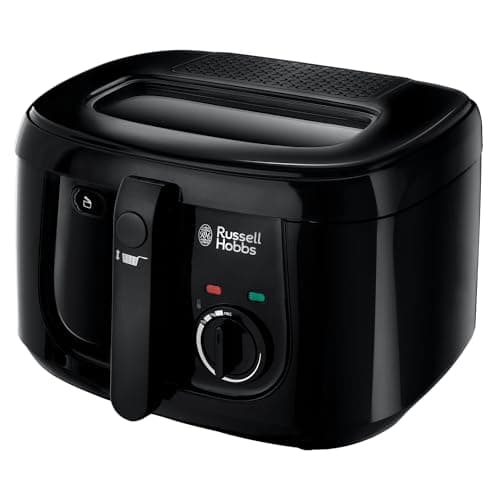 ★ Our pick · Best overallRussell Hobbs Deep Fat Fryer (2.5L / 1kg Food)Accurate temperature control, a 1kg food capacity and easy-clean removable parts from a trusted brand.£41.74£54.99Save 24%In stockBuy on Amazon
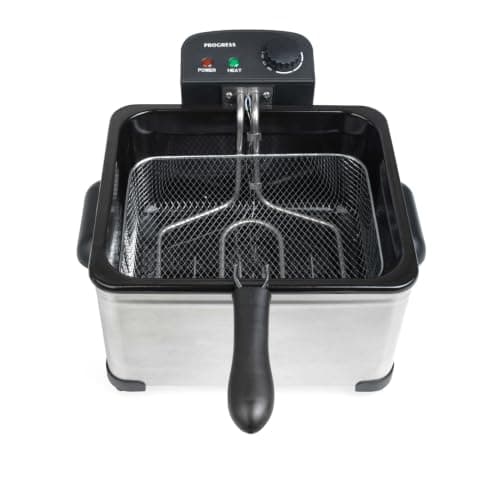 Best large capacityProgress Deep Fat Fryer (5L, 2000W, Stainless Steel)A big 5L fryer with a 2000W element for cooking larger batches for a crowd.£37.99£39.99Save 5%In stockBuy on Amazon
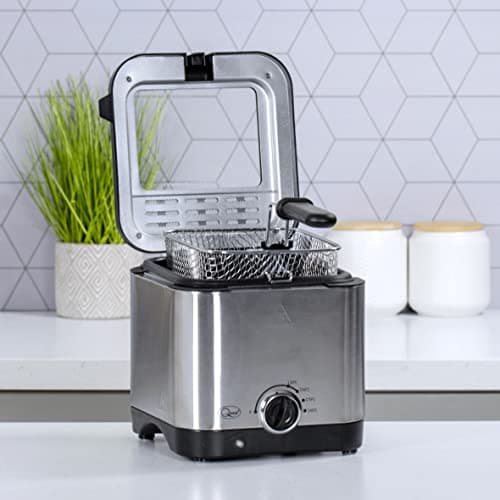 Best budget / compactQuest 1.5L Compact Deep Fat FryerA compact 1.5L fryer for around £27: cheap, small and uses less oil for one or two.£26.99£32.99Save 18%In stockBuy on Amazon
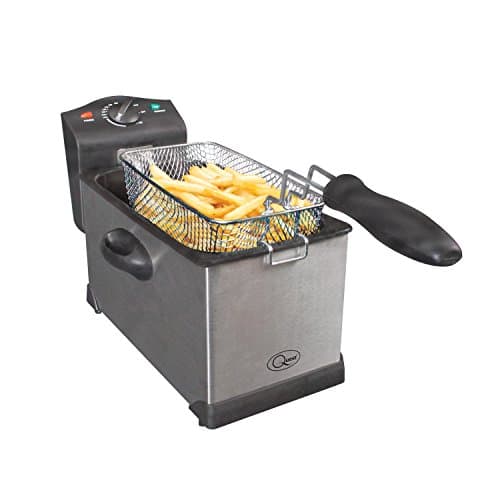 Best for easy storageQuest 3L Deep Fat Fryer (2000W, Removable Basket & Oil Container)A 3L fryer with a removable basket and oil container, making the oil easier to store and reuse.£34.99In stockBuy on Amazon
Compare the specs
| Product | Capacity | Temperature | Removable bowl | Best for | Price |
|---|---|---|---|---|---|
| Russell Hobbs Deep Fat Fryer (2.5L / 1kg Food)★ Best Overall | 2.5L / 1kg | Adjustable | Yes | Most deep-frying households | £41.74 |
| Progress Deep Fat Fryer (5L, 2000W, Stainless Steel)Best Large Capacity | 5L | Adjustable | Check listing | Big batches, crowds | £37.99 |
| Quest 1.5L Compact Deep Fat FryerBest Budget / Compact | 1.5L | Adjustable | Check listing | One or two, occasional | £26.99 |
| Quest 3L Deep Fat Fryer (2000W, Removable Basket & Oil Container)Best for Easy Storage | 3L | Adjustable | Basket + oil container | Easy oil storage and reuse | £34.99 |
Prices are live from Amazon and refresh through the day; last page update 14 October 2026.
First: do you actually need a deep fat fryer?
Before buying, ask yourself honestly whether you need deep frying or would be better off with an air fryer, because for most people, an air fryer is the better everyday choice:
- An air fryer cooks with little or no oil, so it is far healthier, has no oil to buy, store, smell or dispose of, is cheaper to run, and is much less hassle. For chips, chicken, roast veg and everyday cooking, it does a great job. (See our air fryer guide.)
- A deep fat fryer is for when you specifically want proper deep-fried results, truly crispy chip-shop chips, battered fish, doughnuts, tempura, that an air fryer cannot fully replicate, because actual deep frying in hot oil produces a texture and crispness air frying only approximates.
So buy a deep fat fryer only if you genuinely want authentic deep-fried food and are happy with the oil, the smell and the health trade-off. If you mainly want healthier everyday cooking, buy an air fryer instead. Many people are better served by an air fryer; a deep fat fryer is a deliberate choice for deep-frying enthusiasts.
What to look for in a deep fat fryer
- Accurate adjustable temperature: the most important feature. Frying at the right temperature is what gives crisp, non-greasy results, too cool and food soaks up oil and goes soggy. A good thermostat matters.
- Capacity: match the oil and food capacity to your household. Smaller fryers use less oil (cheaper to fill); bigger ones handle batches but cost more to fill and store.
- Removable bowl and basket: cleaning a deep fat fryer is the grim part, so removable, dishwasher-safe parts make a real difference. A removable oil container makes storing and reusing oil far easier.
- A lid with odour/filter control helps contain spitting and smell, and a viewing window lets you check without lifting the lid.
- Power: a higher-wattage element heats the oil faster and recovers temperature quickly when you add food, which keeps results crisp.
Safety: hot oil is genuinely dangerous
A deep fat fryer holds a large volume of very hot oil, so a few safety rules genuinely matter:
- Never leave it unattended while on. Hot oil is a serious fire risk, and most kitchen fires involving frying start when it is left.
- Never overfill with oil. Fill only to the marked level, as overfilled oil can bubble over when you add food, which is dangerous.
- Never put wet food into hot oil. Water hitting hot oil causes violent spitting and splashing. Pat food dry first.
- Keep a fire blanket or lid to hand, and never throw water on an oil fire. Smother it or use the lid.
- Let the oil cool fully before moving or emptying the fryer.
Used sensibly a deep fat fryer is safe, but it demands respect in a way an air fryer, with little or no oil, does not.
Our picks in detail
Russell Hobbs Deep Fat Fryer (2.5L / 1kg Food)
Accurate temperature control, a 1kg food capacity and easy-clean removable parts from a trusted brand.
A popular mid-size fryer.
The Russell Hobbs 2.5L is the deep fat fryer most people who want one should buy. It has accurate adjustable temperature control, which is the key to crisp, non-greasy results, as frying at the right temperature is what stops food soaking up oil, and it cooks up to 1kg of food, enough for a family's chips. Crucially it has removable parts for cleaning, which takes some of the grimness out of dealing with used oil and a greasy bowl, and it comes from a trusted brand at a fair price.
It is a mid-size fryer, so very large batches need the 5L option, and like all deep fat fryers it comes with the inherent downsides of oil, cost, storage, disposal and smell. But for the core job, proper deep frying with good temperature control and manageable cleaning, it is the balanced pick. If you want to feed a crowd, the Progress 5L is bigger; on a budget, the Quest 1.5L is cheaper. For the best all-round deep fat fryer, this is the one.
Progress Deep Fat Fryer (5L, 2000W, Stainless Steel)
A big 5L fryer with a 2000W element for cooking larger batches for a crowd.
If you deep-fry for a family or a crowd, the Progress 5L gives you the capacity to do it in fewer batches. The large 5-litre oil capacity and a powerful 2000W element heat the oil quickly and recover temperature well when you add food, which matters for crisp results when cooking a lot, and the stainless steel body is sturdy. For big chip nights, parties or a hungry household, it is the capacious choice.
A bigger fryer holds more oil, so it costs more to fill and is heavier to move and empty, and it takes up more cupboard space. But for genuine batch frying, the capacity and power are exactly what you want, and recovering temperature quickly after adding food is what keeps the results crisp rather than greasy. If you only fry for one or two, a smaller fryer uses less oil and space; for feeding a crowd, this is the pick.
Quest 1.5L Compact Deep Fat Fryer
A compact 1.5L fryer for around £27: cheap, small and uses less oil for one or two.
If you only occasionally fry for one or two people, the Quest 1.5L is a compact, cheap way to do it for around £27. Its smaller capacity uses less oil, so it is cheaper to fill and store, it takes up little cupboard space, and it still gives you proper deep frying for chips, a few battered pieces or doughnuts. For small households, occasional frying or a tight budget, it covers the basics affordably.
The small capacity obviously limits how much you can fry at once, so it is not for families or batches, and at this price the temperature control and build are more basic. But for small-scale occasional deep frying, it does the job while using the least oil, which is a genuine plus given oil cost. If you fry a lot or for a family, a bigger fryer suits better; as the cheapest, most compact deep fat fryer, this is sensible for one or two.
Quest 3L Deep Fat Fryer (2000W, Removable Basket & Oil Container)
A 3L fryer with a removable basket and oil container, making the oil easier to store and reuse.
The Quest 3L stands out for a genuinely useful feature: a removable oil container as well as a removable basket, which makes storing and reusing the oil far easier and tidier. Instead of wrestling with a fixed, oil-filled bowl, you can lift out and cover the oil container between uses, which is one of the more annoying parts of owning a deep fat fryer solved neatly. With a 2000W element and a 3-litre capacity, it handles everyday family frying well.
It is a value machine rather than a premium one, and it still has all the inherent deep-frying downsides of oil and smell. But the removable oil container is a real practical advantage for anyone who reuses their oil (which saves money) and wants to store it cleanly, and the 3L capacity suits most households. If you want the biggest capacity or the cheapest, the other picks suit; for the easiest oil storage and reuse, this Quest is the pick.
Managing the oil
- Use the right oil: one with a high smoke point, such as vegetable, sunflower or groundnut oil, suits deep frying. Do not use olive oil or butter.
- Reuse oil a few times if it is strained and stored properly (a fryer with a removable oil container makes this easy), which saves money, but replace it once it darkens, smells off or foams.
- Dispose of used oil responsibly: never pour it down the sink, where it blocks drains. Let it cool, pour it into a sealable container and put it in the bin, or take larger amounts to a recycling centre.
- Factor in the ongoing cost: oil is a real recurring expense of deep frying, unlike an air fryer, so a smaller fryer that uses less oil can be cheaper over time.
Common myths, corrected
- "An air fryer is just a deep fat fryer." No. An air fryer circulates hot air with little or no oil; a deep fat fryer submerges food in hot oil. They give different results: air frying is healthier and easier, deep frying gives authentic crispy deep-fried texture.
- "Deep frying always makes food greasy." Not at the right temperature. Frying hot enough (with a good thermostat) seals the food so it absorbs less oil, giving crisp rather than greasy results. Frying too cool is what makes food soggy and oily.
- "You can throw away used oil down the sink." Never. It solidifies and blocks drains. Cool it, seal it in a container and bin it, or recycle larger amounts.
- "It is fine to leave a fryer on while you pop out." No. Never leave hot oil unattended, it is a serious fire risk. This is the single most important safety rule.
What we’d skip
- Buying a deep fat fryer if you mainly want healthier everyday cookingAn air fryer cooks with little or no oil, is healthier, cheaper to run and far less hassle, with no oil to buy, store or dispose of. Only buy a deep fat fryer if you specifically want authentic deep-fried results an air fryer cannot match.
- Ignoring temperature controlAccurate adjustable temperature is the most important feature, as frying at the right heat gives crisp, non-greasy results while frying too cool makes food soggy and oily. A fryer with a poor or no thermostat is a false economy.
- Overlooking how you will clean and store itCleaning a deep fat fryer is the grim part, so removable, ideally dishwasher-safe parts make a real difference, and a removable oil container makes storing and reusing oil far easier. A fixed oily bowl is a chore you will come to hate.
- Leaving hot oil unattended, overfilling it, or adding wet foodHot oil is a serious fire and burn risk: never leave it on unattended, never fill above the marked level, and always pat food dry, as water in hot oil causes violent spitting. Keep a lid or fire blanket to hand and never use water on an oil fire.
- Pouring used oil down the sinkIt solidifies and blocks drains. Cool the oil, pour it into a sealable container and put it in the bin, or take larger amounts to a recycling centre. And factor the recurring cost of oil into the decision, as it is a real expense of deep frying.
Frequently asked questions
Should I buy a deep fat fryer or an air fryer?
For most people, an air fryer, because it cooks with little or no oil, so it is healthier, cheaper to run and far less hassle, with no oil to buy, store, smell or dispose of, and it does a great job of chips, chicken and everyday cooking. Buy a deep fat fryer only if you specifically want proper deep-fried results, truly crispy chip-shop chips, battered fish, doughnuts, that an air fryer cannot fully replicate. So it comes down to whether you want authentic deep frying or healthier everyday cooking; most people are better off with an air fryer.
What should I look for in a deep fat fryer?
Accurate adjustable temperature control above all, since frying at the right heat is what gives crisp, non-greasy results. Then a capacity matched to your household (smaller uses less oil, bigger handles batches), removable and ideally dishwasher-safe parts since cleaning is the grim bit, and a removable oil container for easy storage and reuse. A lid with odour control, a viewing window and a powerful element that recovers temperature quickly when you add food all help too. Temperature control and easy cleaning matter most.
Is deep frying at home safe?
It is safe if you respect the hot oil, but it demands care in a way an air fryer does not. The key rules: never leave the fryer unattended while on, as hot oil is a serious fire risk; never overfill it above the marked level, as oil can bubble over when you add food; never put wet food into hot oil, as water causes violent spitting; and keep a lid or fire blanket to hand, never water, for an oil fire. Let the oil cool fully before moving the fryer. Used sensibly, it is safe.
Does a deep fat fryer make food greasy?
Not if you fry at the right temperature. Frying hot enough, which a good adjustable thermostat ensures, quickly seals the surface of the food so it absorbs less oil, giving crisp rather than greasy results. Frying too cool is what makes food soak up oil and turn soggy and greasy. So accurate temperature control is the key to non-greasy deep frying, along with not overcrowding the basket (which drops the oil temperature) and patting food dry before frying.
What oil should I use in a deep fat fryer, and can I reuse it?
Use an oil with a high smoke point, such as vegetable, sunflower or groundnut oil, not olive oil or butter. You can reuse frying oil a few times if you strain it and store it properly (a fryer with a removable oil container makes this easy and tidy), which saves money, but replace it once it darkens, smells off or foams. Reusing oil sensibly cuts the running cost of deep frying, which is a real recurring expense compared with an air fryer.
How do I dispose of used cooking oil?
Never pour it down the sink or drain, where it solidifies and causes blockages. Instead, let the oil cool fully, then pour it into a sealable container (an old bottle or jar) and put it in your general waste bin. For larger quantities, many household recycling centres accept used cooking oil. Some areas have cooking-oil recycling schemes too. Proper disposal protects your drains and the sewer system, so it is worth doing correctly rather than tipping it away.
What size deep fat fryer do I need?
Match it to how much and how often you fry. A compact 1.5-litre fryer suits one or two people and occasional frying, using less oil so it is cheaper to fill and store. A 2.5 to 3-litre fryer suits most families for everyday frying, and a 5-litre fryer handles big batches for a crowd. Remember a bigger fryer holds more oil, so it costs more to fill and dispose of, which is why a smaller fryer can be more economical if you only fry occasionally.
Why does my fryer not make crispy food?
Usually the oil is not hot enough, or you are overcrowding the basket. Frying at too low a temperature lets food absorb oil and go soggy, so make sure the fryer is at the right temperature before adding food, which a good thermostat helps with. Adding too much food at once drops the oil temperature sharply, so fry in smaller batches. Also pat food dry first and do not add it straight from frozen in huge amounts. Right temperature plus small batches gives crisp results.