If budget is tight, a basic chimney hood does the job for under £50; for a discreet under-cabinet fit, a visor hood tucks away; and a glass hood looks smarter. But first, the decision that matters most: duct the air outside if you can, because recirculating through a charcoal filter is far less effective and does not remove moisture. Below we explain ducted versus recirculating, how to size the extraction rate to your kitchen, the hood types, and what to skip.
Last reviewed 14 October 2026
Prices and stock on this page are pulled live from each listing and refresh several times a day. The biggest decision with a cooker hood is whether it ducts the air outside or recirculates it through a filter. Ducted is far better, it removes steam, grease, smells and moisture properly, so duct outside if you possibly can. After that, size the extraction rate to your kitchen. A well-rated CIARRA is our pick. How we choose: we compare the live Amazon listings, the makers' published specs and the owner reviews, including the 1 to 3 star ones, and we don't test hands-on, so we never claim to.
The top 4, ranked
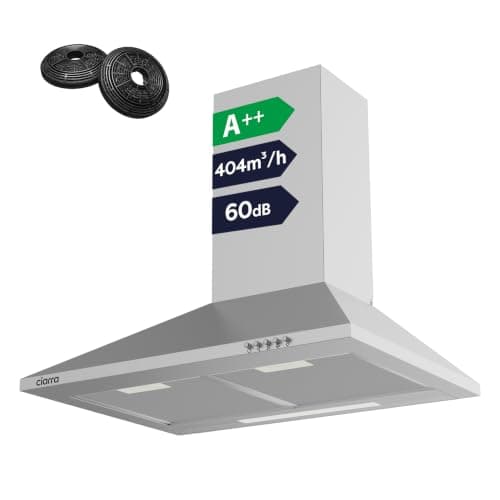 ★ Our pick · Best overallCIARRA CBCS6201 60cm Chimney Cooker Hood (404m³/h, A++)A 404m³/h chimney hood with an A++ rating: shifts plenty of air for a standard kitchen and looks the part.£66.49£79.99Save 17%In stockBuy on Amazon
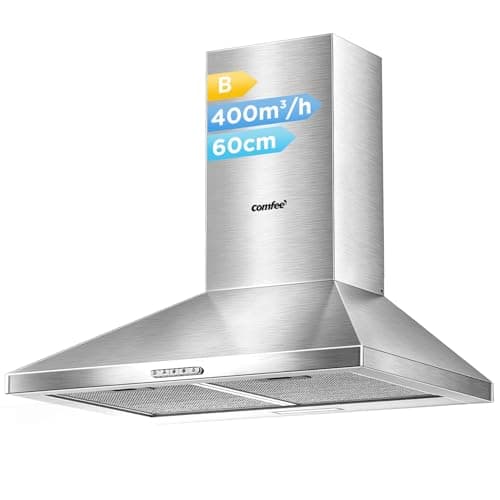 Best budget chimneyCOMFEE' 60cm Chimney Cooker Hood (Stainless Steel)A stainless steel chimney hood for around £50: the cheapest sensible wall-mounted option.£49.99In stockBuy on Amazon
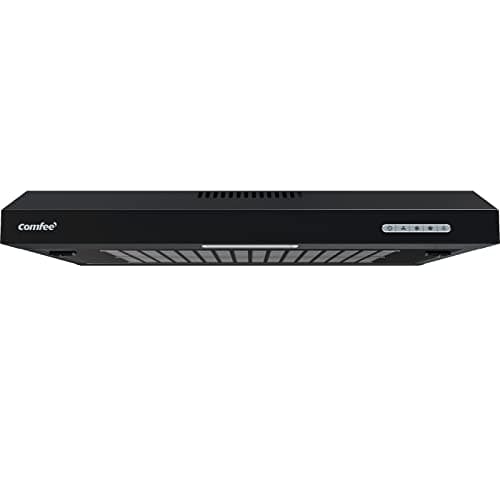 Best under-cabinetCOMFEE' Visor Cooker Hood (Under-Cabinet, 60cm)A discreet under-cabinet visor hood for around £36, where a chimney hood would not fit or suit.£35.99£45.99Save 22%In stockBuy on Amazon
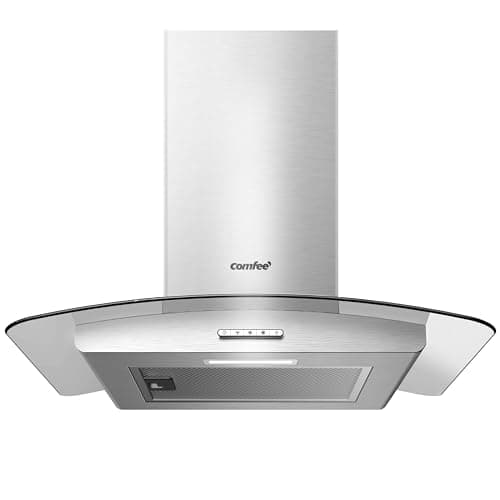 Best lookingCOMFEE' 60cm Glass Cooker Hood (Stainless Steel)A glass-and-steel hood for a smarter, more modern look over the hob.£63.99£86.99Save 26%In stockBuy on Amazon
Compare the specs
| Product | Type | Extraction | Width | Best for | Price |
|---|---|---|---|---|---|
| CIARRA CBCS6201 60cm Chimney Cooker Hood (404m³/h, A++)★ Best Overall | Chimney | 404m³/h | 60cm | Most standard kitchens | £66.49 |
| COMFEE' 60cm Chimney Cooker Hood (Stainless Steel)Best Budget Chimney | Chimney | Standard | 60cm | Budget, standard kitchens | £49.99 |
| COMFEE' Visor Cooker Hood (Under-Cabinet, 60cm)Best Under-Cabinet | Visor (under-cabinet) | Modest | 60cm | Cupboard above hob, discreet | £35.99 |
| COMFEE' 60cm Glass Cooker Hood (Stainless Steel)Best Looking | Glass canopy | Standard | 60cm | Modern-look kitchens | £63.99 |
Prices are live from Amazon and refresh through the day; last page update 14 October 2026.
Ducted or recirculating? Duct outside if you can
This is the decision that matters most, and the answer is clear: duct the air outside if you possibly can.
- Ducted (extraction): blows the steam, grease, smells and moisture straight outside through a duct to an outside wall. This is far more effective, it actually removes the air (and crucially the moisture, which helps prevent condensation and damp) rather than just cleaning it.
- Recirculating: draws the air through a charcoal filter to remove some grease and smell, then blows it back into the kitchen. It is for homes that genuinely cannot duct outside (for example an internal kitchen with no outside wall nearby). It is less effective, does not remove moisture (so does nothing for steam and condensation), and the charcoal filters need replacing periodically.
So if you have an outside wall within reach of the hob, duct outside, it is worth the extra installation effort. Only recirculate if ducting is genuinely not possible. Most hoods can do either; the difference is in how you install it, not which hood you buy.
Size the extraction rate to your kitchen
Extraction rate, measured in cubic metres per hour (m³/h), is how much air the hood shifts, and it should match your kitchen size. A common rule of thumb:
- Work out your kitchen volume (length x width x height in metres), then aim for a hood that can change the air around 10 times an hour. So a 30m³ kitchen wants roughly a 300m³/h hood.
- Bigger kitchens, open-plan spaces and keen cooks (lots of frying) want a higher extraction rate.
- Do not undersize it. A hood that is too weak for the kitchen will not clear steam and grease effectively, which is the whole point.
Also check the noise (higher extraction can mean more noise, measured in decibels), as you run it while cooking. A good hood balances strong extraction with acceptable noise.
Hood types: which suits your kitchen?
- Chimney hood: wall-mounted and visible, a deliberate feature over the hob. Strong extraction and a smart look. Our main picks. Needs wall space above the hob.
- Visor / under-cabinet hood: fits underneath a wall cabinet, discreet and space-saving, usually with a pull-out visor. More modest extraction. For kitchens with a cupboard above the hob.
- Integrated / canopy hood: built into or hidden behind a cabinet for an invisible look.
- Island hood: hangs from the ceiling over an island hob. A feature piece for island kitchens, and pricier.
- Width: 60cm suits standard hobs; 90cm for wider hobs and range cookers. Match the hood width to (or slightly wider than) your hob.
Our picks in detail
CIARRA CBCS6201 60cm Chimney Cooker Hood (404m³/h, A++)
A 404m³/h chimney hood with an A++ rating: shifts plenty of air for a standard kitchen and looks the part.
A well-rated chimney hood.
The CIARRA CBCS6201 is the cooker hood most kitchens should have. Its 404 cubic metres an hour extraction shifts plenty of air to clear steam, grease and smells from a standard kitchen, the A++ energy rating keeps running costs down, and as a 60cm wall-mounted chimney hood it fits the common layout and looks like a deliberate feature rather than an afterthought. Ducted outside, it does the real job of a cooker hood properly, and it can recirculate with a charcoal filter if you genuinely cannot duct.
It needs mounting and, for best results, ducting to an outside wall, which is more involved than a plug-in appliance, and at 60cm it suits standard hobs rather than wide range cookers. But for the core job, effective extraction in a normal kitchen with a smart look and low running costs, it is the balanced pick. If you want the cheapest option, the value COMFEE chimney is below; for a discreet fit, a visor hood. For the best all-round cooker hood, this is the one, ducted outside if you can.
COMFEE' 60cm Chimney Cooker Hood (Stainless Steel)
A stainless steel chimney hood for around £50: the cheapest sensible wall-mounted option.
If you want a proper chimney cooker hood without spending much, the COMFEE 60cm does the job for around £50. It is a stainless steel wall-mounted chimney hood that extracts steam, grease and smells from a standard kitchen, with the usual speed settings and lighting, and it can be ducted outside or run as a recirculating hood with a charcoal filter. For a budget kitchen upgrade or a rental, it covers the fundamentals cheaply from a recognised brand.
At this price the extraction and build are more basic than the dearer hoods, so it is best for lighter cooking in a standard kitchen rather than heavy frying in a big one. But the core job, clearing the air over the hob, is delivered for little money, and ducting it outside makes even a budget hood far more effective. If you cook a lot or want the strongest extraction and best efficiency, the CIARRA is worth the extra; as the cheapest sensible chimney hood, this is honest value.
COMFEE' Visor Cooker Hood (Under-Cabinet, 60cm)
A discreet under-cabinet visor hood for around £36, where a chimney hood would not fit or suit.
If you have a cupboard above your hob or want the hood to disappear, the COMFEE visor hood is the discreet pick. It fits underneath a wall cabinet rather than standing proud like a chimney hood, so it tucks away neatly and keeps the extraction without dominating the kitchen, and its pull-out visor increases the capture area over the hob when cooking. At around £36 it is a cheap, space-saving way to add extraction where a chimney hood would not fit or suit the look.
Under-cabinet visor hoods generally have more modest extraction than big chimney hoods and are a more basic design, so they suit lighter cooking in a standard kitchen. But for the specific situation of a cupboard above the hob and a want for discreet extraction, they are exactly right, and ducting it outside still makes it far more effective. If you want strong extraction or a feature hood, the chimney models suit better; for a discreet under-cabinet fit, this is the pick.
COMFEE' 60cm Glass Cooker Hood (Stainless Steel)
A glass-and-steel hood for a smarter, more modern look over the hob.
If the hood is on show and you want it to look modern, the COMFEE glass cooker hood pairs a glass canopy with stainless steel for a sleeker, more contemporary look than a plain box hood. It extracts steam, grease and smells over the hob with the usual speeds and lighting, can be ducted outside or recirculated, and makes more of a design statement in a modern kitchen while doing the practical job of a cooker hood.
You pay a little towards the glass styling, and like the other value hoods its extraction and build are practical rather than premium. But if your kitchen is on display and you want the hood to look the part without a big spend, the glass design delivers that. If you only care about the strongest extraction and efficiency, the CIARRA is the pick; if looks matter and you want a modern glass hood at a fair price, this is a good choice. Duct it outside for best results.
Why a good cooker hood matters
A cooker hood is not just about smells. A good one, ducted outside, genuinely helps your kitchen:
- Removes grease from the air, so less of it settles on your cupboards, walls and ceiling as a sticky film.
- Removes moisture and steam, which reduces condensation and the damp and mould it can cause, a real benefit in UK kitchens.
- Clears cooking smells so they do not linger through the house.
- Lights the hob for better visibility while cooking.
A recirculating hood helps with grease and smell but not moisture, which is the main reason ducting outside is worth the effort where possible.
Filters and cleaning
- Grease filters (metal mesh) trap grease and need regular cleaning, most are dishwasher-safe. A clogged grease filter cuts extraction and is a fire risk, so clean them every few weeks with regular use.
- Charcoal filters (recirculating hoods only) remove smells and need replacing periodically (typically every few months), as they cannot be cleaned. Factor in this ongoing cost if you recirculate.
- Run the hood before and after cooking. Start it as you begin and leave it running a few minutes after to clear the last of the steam and smells.
- Wipe the hood surfaces to stop grease building up on the outside.
Common myths, corrected
- "Recirculating is just as good as ducted." No. Recirculating cleans some grease and smell but does not remove moisture, so it does nothing for steam and condensation, and filters need replacing. Duct outside if you can.
- "Any hood will clear the air." Only if it is powerful enough for the kitchen. Size the extraction rate to your kitchen volume, as an undersized hood will not keep up.
- "A cooker hood is only about smells." No. A good ducted hood removes grease (less sticky film on cupboards) and moisture (less condensation and damp) too, which matters as much as smell.
- "You never need to clean it." You do. Grease filters clog and become a fire risk, so clean the metal filters regularly and replace charcoal filters on recirculating hoods.
What we’d skip
- Recirculating when you could duct outsideRecirculating through a charcoal filter is far less effective and does not remove moisture, so it does nothing for steam and condensation. If you have an outside wall within reach of the hob, duct outside, it is worth the extra installation effort.
- Buying a hood that is underpowered for your kitchenA hood too weak for the room will not clear steam and grease, which defeats the point. Work out your kitchen volume and aim for roughly ten air changes an hour, sizing up for big, open-plan or heavy-frying kitchens.
- Choosing the hood width without matching your hobA 60cm hood suits standard hobs, but a wide hob or range cooker needs a 90cm hood to capture the steam and grease across the whole cooking area. Match the hood width to, or slightly wider than, your hob.
- Ignoring noiseYou run the hood while cooking, so a very loud one is unpleasant to live with. Check the decibel rating alongside the extraction rate, and look for a hood that balances strong extraction with acceptable noise.
- Neglecting the grease filtersMetal grease filters clog with use, which cuts extraction and becomes a fire risk, and charcoal filters on recirculating hoods stop working and need replacing. Clean the metal filters regularly (most are dishwasher-safe) and replace charcoal filters on schedule.
Frequently asked questions
Is a ducted or recirculating cooker hood better?
Ducted is far better, so duct the air outside if you possibly can. A ducted hood blows steam, grease, smells and moisture straight outside, actually removing them, including the moisture that causes condensation and damp. A recirculating hood draws air through a charcoal filter and blows it back into the kitchen, which removes some grease and smell but not moisture, and the filters need replacing. Recirculating is only for homes that genuinely cannot duct outside, such as an internal kitchen with no outside wall.
What extraction rate (m³/h) do I need?
Size it to your kitchen. Work out the kitchen volume (length times width times height in metres), then aim for a hood that can change the air around ten times an hour, so a 30 cubic metre kitchen wants roughly a 300 cubic metres per hour hood. Bigger kitchens, open-plan spaces and keen cooks who fry a lot want more. Do not undersize it, as a hood too weak for the kitchen will not clear steam and grease effectively, which is the whole point of having one.
What width cooker hood should I buy?
Match the hood width to your hob, or slightly wider. A 60cm hood suits a standard hob, while a wide hob or a range cooker needs a 90cm hood to capture the steam and grease across the full cooking area, as a hood narrower than the hob misses the edges. So measure your hob and choose a hood at least as wide. The common domestic sizes are 60cm and 90cm, with 60cm being the standard for most kitchens.
What is the difference between a chimney and a visor cooker hood?
A chimney hood is wall-mounted and visible, standing proud above the hob as a feature, usually with stronger extraction and a smart look, and needing wall space above the hob. A visor or under-cabinet hood fits underneath a wall cabinet, so it is discreet and space-saving, often with a pull-out visor to increase capture, but with more modest extraction. Choose a chimney hood for strong extraction and a feature look, or a visor hood if you have a cupboard above the hob and want discretion.
Do cooker hoods remove moisture and help with condensation?
A ducted hood does, which is a key benefit, by blowing the steam and moisture outside it reduces condensation and the damp and mould it can cause, a real plus in UK kitchens. A recirculating hood does not remove moisture, since it only filters and returns the air, so it does nothing for steam and condensation. This is one of the main reasons to duct outside where possible. Running the hood while cooking and for a few minutes after clears the steam most effectively.
How often should I clean a cooker hood filter?
Clean the metal grease filters every few weeks with regular cooking, more often if you fry a lot, as they clog with grease, which cuts extraction and becomes a fire risk. Most metal grease filters are dishwasher-safe or can be soaked in hot soapy water. Charcoal filters on recirculating hoods cannot be cleaned and need replacing periodically, typically every few months, to keep removing smells. Keeping the filters clean is essential for both performance and safety.
Does a cooker hood need to vent outside?
It works best vented outside (ducted), but it does not have to be if that is impossible. Ducting outside removes steam, grease, smells and moisture properly and is the better option by far. If you cannot reach an outside wall, the hood can run in recirculating mode with a charcoal filter, cleaning and returning the air, which is less effective and does not remove moisture. So vent outside if you can; recirculate only if ducting is genuinely not possible in your kitchen.
Are expensive cooker hoods worth it?
Up to a point. Spending enough to get strong-enough extraction for your kitchen, a decent energy rating and acceptable noise matters, and a good grease filter and lighting help day to day. Beyond that, extra money buys design, quieter running, brand and features rather than fundamentally better air clearing. A well-sized value hood, ducted outside, clears the air well for most kitchens, so prioritise the right extraction rate and ducting over the badge or a high price.