If you need more room, a 196L Hoover takes a big batch-cooking or bulk haul; for a small utility or flat, a compact 99L model fits tighter spaces; and there are value mid-size options too. The big practical check before you buy: if the freezer is going in a cold garage or outbuilding, make sure it is rated for low temperatures, or it may stop working when the garage gets cold. Below we explain chest versus upright, the garage-safe issue, and what else matters.
Last reviewed 14 October 2026
Prices and stock on this page are pulled live from each listing and refresh several times a day. A chest freezer gives you more usable space per litre than an upright, is cheaper to run, and holds its cold longer in a power cut, which makes it the batch cooker and bulk buyer's friend. The one thing to check before buying: if it is going in a cold garage, make sure it is rated for it. A convertible COMFEE is our pick. How we choose: we compare the live Amazon listings, the makers' published specs and the owner reviews, including the 1 to 3 star ones, and we don't test hands-on, so we never claim to.
The top 4, ranked
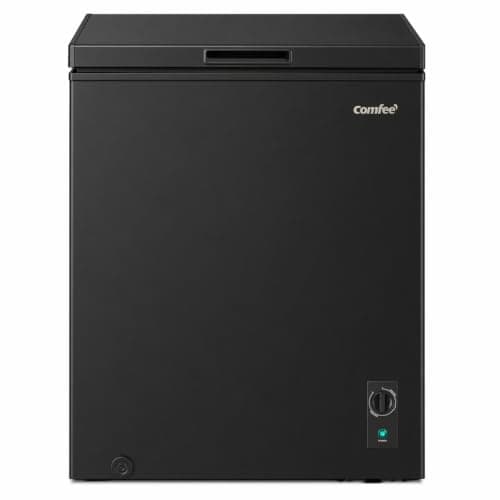 ★ Our pick · Best overallCOMFEE' 143L Chest Freezer (Convertible Fridge/Freezer)A 143-litre chest freezer that can switch to fridge mode, giving flexible cold storage for sensible money.£169.99In stockBuy on Amazon
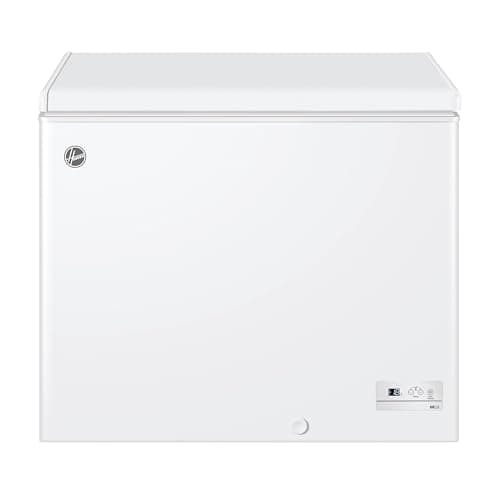 Best large capacityHoover 196L Chest FreezerA big 196-litre chest freezer from a recognised brand, for serious batch cooking and bulk buying.£249.00£279.00Save 11%In stockBuy on Amazon
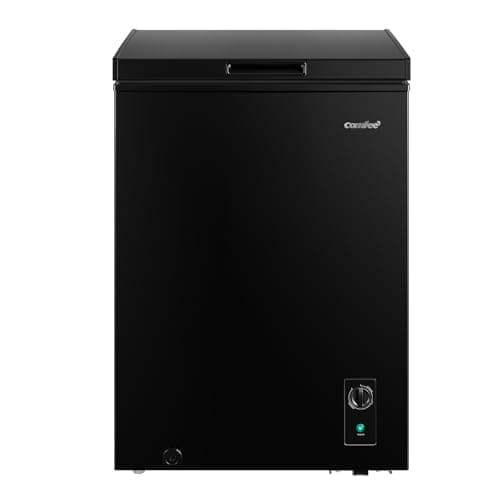 Best compactCOMFEE' 99L Chest Freezer (Convertible)A compact 99-litre convertible chest freezer for small utilities and flats, at around £110.£149.99In stockBuy on Amazon
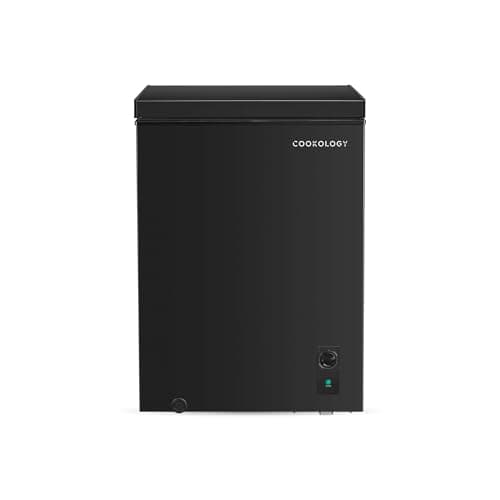 Best mid-range valueCookology 142L Freestanding Chest FreezerA 142-litre chest freezer with adjustable feet at a keen price: a straightforward value buy.£149.99In stockBuy on Amazon
Compare the specs
| Product | Capacity | Convertible | Type | Best for | Price |
|---|---|---|---|---|---|
| COMFEE' 143L Chest Freezer (Convertible Fridge/Freezer)★ Best Overall | 143L | Yes | Value | Most people, flexibility | £169.99 |
| Hoover 196L Chest FreezerBest Large Capacity | 196L | No | Brand | Bulk batch cooking and buying | £249.00 |
| COMFEE' 99L Chest Freezer (Convertible)Best Compact | 99L | Yes | Value | Small spaces, top-up storage | £149.99 |
| Cookology 142L Freestanding Chest FreezerBest Mid-Range Value | 142L | No | Value | Simple value storage | £149.99 |
Prices are live from Amazon and refresh through the day; last page update 14 October 2026.
Chest or upright freezer?
- Chest freezer (top-opening): more usable space per litre (no drawers or shelves eating into it), cheaper to run, and holds its cold longer in a power cut because cold air sinks and stays put when you lift the lid. Best for bulk storage and batch cooking. The downsides: it takes up floor space, you dig down to reach things at the bottom, and most are manual defrost.
- Upright freezer: drawers and shelves make it far easier to organise and reach food, and it has a smaller floor footprint. The trade-offs: slightly dearer to run, less usable space per litre, and it loses cold faster when opened (cold air falls out).
Choose a chest freezer for maximum cheap storage, bulk buying and batch cooking, especially for a garage or utility. Choose an upright if easy access and organisation matter more and floor space is tight. For a top-up freezer in a kitchen, an upright is often handier; for bulk storage elsewhere, a chest wins.
Going in the garage? Check it is rated for the cold
This is the single most important check if your freezer is going in a garage, shed or outbuilding, and it catches a lot of people out. A freezer's thermostat works by sensing the air temperature around it. In a cold garage in winter, the surrounding air can be colder than the thermostat's trigger point, so the freezer thinks it is cold enough and stops running its compressor, and the food inside can partially thaw.
- Check the climate class / ambient temperature rating. Look for a freezer rated to work at low ambient temperatures (sometimes sold as "garage-safe" or "garage-ready"), which is designed to keep running in a cold garage.
- A standard-rated freezer in an unheated garage can fail to keep food frozen in winter. This is a genuine, common problem, not a technicality.
- If in doubt, keep the freezer somewhere heated, or buy one explicitly rated for garage use.
Size and running cost
- Capacity: match it to how much you freeze. Around 100L suits a top-up or small household, 140 to 200L for serious batch cooking and bulk buying. Do not buy far bigger than you will fill, as an empty freezer is less efficient and wastes space.
- Cheap to run: chest freezers are among the most efficient cold appliances per litre, but they still run 24/7, so check the energy rating. It runs for years, so efficiency adds up.
- Keep it reasonably full for best efficiency, frozen items help hold the cold, so fill gaps with bottles of water if it is sparse.
- Convertible models that switch between fridge and freezer add flexibility if your needs might change.
Our picks in detail
COMFEE' 143L Chest Freezer (Convertible Fridge/Freezer)
A 143-litre chest freezer that can switch to fridge mode, giving flexible cold storage for sensible money.
A popular convertible chest freezer.
The COMFEE 143L is the chest freezer most people should buy. It gives you a useful 143 litres of chest-freezer space, with the usual chest advantages, more usable room per litre than an upright, low running cost, and good cold retention in a power cut, and it adds genuine flexibility: a convertible mode lets you run it as a fridge instead of a freezer if your needs change. For batch cookers, bulk buyers and anyone wanting extra cold storage, it is a well-judged, flexible buy at around £135.
As a chest freezer, it is top-opening, so you dig down for things and it takes up floor space, and like most chest freezers it is manual defrost. And it is a value brand. But those are the normal chest-freezer trade-offs rather than faults, and the convertible mode and sensible size make it stand out for the money. If you need more capacity, the Hoover is bigger; for a compact space, the 99L model fits. For the best all-round chest freezer, this is the pick. Check it is rated for your location if it is going in a cold garage.
Hoover 196L Chest Freezer
A big 196-litre chest freezer from a recognised brand, for serious batch cooking and bulk buying.
If you batch-cook in bulk, buy in quantity or want a proper second freezer, the Hoover 196L gives you the space to do it. The larger capacity swallows big-batch meals, a bulk meat or frozen-food haul, and a garden's worth of produce, with all the chest-freezer benefits of usable space, low running cost and good cold retention, from a recognised brand. For a garage, utility or outbuilding where you store a lot frozen, it is the capacious choice.
A bigger freezer takes more floor space and costs a little more to buy and run than a compact one, and you will not want it half-empty (a freezer runs most efficiently reasonably full). But for genuine bulk storage it is exactly the right size, and a chest freezer this size is still cheap to run for its capacity. If you only want a modest top-up freezer, the 143L or 99L suit better; for serious bulk cold storage, this is the pick. Check the climate rating if it is going in a cold garage.
COMFEE' 99L Chest Freezer (Convertible)
A compact 99-litre convertible chest freezer for small utilities and flats, at around £110.
If you want extra freezer space but do not have much room, the COMFEE 99L is a compact, convertible chest freezer that fits smaller utilities, kitchens and flats. It gives you a useful 99 litres of top-up freezer space without dominating the room, costs little to buy and run, and like its bigger sibling can switch to fridge mode for flexibility. For a modest second freezer or a small household wanting more frozen storage, it is a tidy, affordable fit.
The smaller capacity obviously holds less, so it is a top-up or small-household freezer rather than a bulk-storage one, and it is top-opening and manual defrost like most chest freezers. But for the specific need of extra cold storage in a tight space, it is the right size, and buying compact when compact suits you saves money and room. If you want to store in bulk, the 143L or 196L are better; for a small space, this is the pick.
Cookology 142L Freestanding Chest Freezer
A 142-litre chest freezer with adjustable feet at a keen price: a straightforward value buy.
The Cookology 142L is a straightforward, good-value chest freezer: a useful 142 litres of storage, adjustable feet to sit level on an uneven garage or utility floor, and a simple, reliable design from a recognised UK appliance brand, at a keen price. For batch cookers and bulk buyers who just want solid, no-frills chest-freezer space, it covers the essentials well without paying for extras.
It is a simpler machine than the convertible COMFEE models, so there is no fridge mode, and as a chest freezer it is top-opening and manual defrost. But it does the core job, plenty of cheap-to-run frozen storage, dependably and for sensible money, and the adjustable feet are a genuinely useful touch for garage floors. If you want the flexibility of a convertible model, the COMFEE is worth it; for a simple, well-priced mid-size chest freezer, this is a strong value pick. Check it is rated for a cold garage if that is where it is going.
Living with a chest freezer
- Manual defrost: most chest freezers are manual defrost, so ice builds up over time and you defrost it occasionally (empty it, switch off, let the ice melt, drain and dry). Doing it when stocks are low makes it easier.
- Organise with baskets. Because you dig down into a chest freezer, hanging baskets and labelled bags for different food types save you rummaging in the cold.
- Keep a rough inventory so food does not get lost and freezer-burned at the bottom.
- Let hot food cool before freezing, and do not overload fresh items at once, which raises the internal temperature.
- In a power cut, keep the lid shut, a full chest freezer can hold food frozen for many hours.
Common myths, corrected
- "Any freezer is fine in the garage." No. In a cold garage, a standard freezer's thermostat can stop it running in winter, thawing the food. Check it is rated for low ambient temperatures (garage-safe).
- "Upright and chest freezers are the same." No. A chest has more usable space per litre, is cheaper to run and holds cold longer, but you dig for things; an upright is easier to organise but dearer to run. Pick by access versus efficiency.
- "A bigger freezer is better value." Only if you fill it. An empty freezer is less efficient and wastes space and money. Match the size to what you actually freeze.
- "Chest freezers need no maintenance." Most are manual defrost, so you defrost them occasionally when ice builds up. It is a simple job but not zero.
What we’d skip
- Putting a standard freezer in a cold garageA freezer not rated for low ambient temperatures can stop running when the garage gets cold in winter, because its thermostat thinks it is cold enough, and the food thaws. For a garage or outbuilding, buy one explicitly rated for low temperatures (garage-safe), or keep it somewhere heated.
- Buying far more capacity than you will fillAn empty or half-empty freezer is less efficient and wastes space and money. Match the litres to how much you actually freeze: around 100L for a top-up, 140 to 200L for serious bulk storage and batch cooking.
- Choosing a chest freezer if easy access matters mostYou dig down into a chest freezer, so things at the bottom get lost. If organisation and reaching food easily matter more than maximum cheap storage, an upright freezer with drawers suits better despite the slightly higher running cost.
- Ignoring the energy rating because chest freezers are efficientThey are efficient per litre, but they still run 24/7 for years, so a poor rating costs you every year. Check the energy label, and keep the freezer reasonably full, which helps it run efficiently.
- Forgetting it needs occasional defrostingMost chest freezers are manual defrost, so ice builds up and you have to defrost it now and then. Plan for it (do it when stocks are low), and do not treat a chest freezer as entirely maintenance-free.
Frequently asked questions
Chest freezer or upright freezer, which is better?
A chest freezer gives more usable space per litre, is cheaper to run, and holds its cold longer in a power cut, making it best for bulk storage and batch cooking, but it takes floor space, you dig down for things, and most are manual defrost. An upright freezer has drawers that make it far easier to organise and reach food and has a smaller footprint, but costs a little more to run and loses cold faster when opened. Choose a chest for cheap bulk storage, an upright for easy access.
Can I put a chest freezer in the garage?
Only if it is rated for low ambient temperatures, often sold as garage-safe or garage-ready. A freezer's thermostat senses the surrounding air, so in a cold garage in winter a standard freezer can think it is already cold enough and stop running its compressor, letting the food partially thaw. This is a common, genuine problem. For a garage, shed or outbuilding, buy a freezer explicitly rated to keep running at low temperatures, or keep it somewhere heated instead.
Are chest freezers cheap to run?
Yes, they are among the most efficient cold appliances per litre, because they have no drawers eating into the space and they hold cold well, cold air sinks and stays put when you lift the lid. That said, they still run 24 hours a day for years, so the energy rating matters and a poor one adds up over time. Keeping the freezer reasonably full helps it run efficiently, as the frozen contents help hold the cold. Check the energy label when buying.
What size chest freezer do I need?
Match it to how much you freeze. Around 100 litres suits a top-up freezer or small household, while 140 to 200 litres handles serious batch cooking and bulk buying. Do not buy far bigger than you will fill, as an empty freezer is less efficient and wastes space and money. Also consider the floor space it needs, since chest freezers have a larger footprint than uprights. If you mainly want a modest second freezer, a compact model is the sensible, cheaper choice.
Do chest freezers need defrosting?
Most do, as they are usually manual defrost, so ice gradually builds up on the walls and you defrost the freezer occasionally. To do it, run down the stocks, switch it off, let the ice melt (a bowl of hot water speeds it up), drain the water, dry it and switch it back on. Doing it when the freezer is nearly empty makes it much easier. It is a simple occasional job rather than a frequent chore, but it is not entirely maintenance-free.
How long will a chest freezer keep food frozen in a power cut?
Longer than an upright, often many hours and sometimes over a day if it is full and you keep the lid shut. Chest freezers hold their cold well because cold air sinks and stays in the cabinet when closed, and a full freezer holds temperature longer than an empty one as the frozen contents act as cold stores. The key is to keep the lid closed during the outage, since opening it lets the cold escape. A full chest freezer is quite resilient to short power cuts.
What is a convertible chest freezer?
A convertible chest freezer can switch between running as a freezer and running as a fridge (cooler), giving you flexibility if your needs change, for example using it as extra fridge space for a party or over Christmas, then back to a freezer. It is a useful feature if you are not sure whether you need more fridge or freezer capacity long term, or want the option to change. If you only ever need freezer space, a non-convertible model is fine and often cheaper.
How do I organise a chest freezer so I can find things?
Because you dig down into a chest freezer, organisation matters. Use the hanging baskets it comes with, or add more, and group food into labelled bags or containers by type, like meat, vegetables and ready meals, so you can lift a basket out rather than rummaging in the cold. Keeping a rough inventory list, and a first-in-first-out approach, stops food getting lost and freezer-burned at the bottom. A little organisation turns a chest freezer from a cold pit into usable storage.