If you bake a lot and want the best results, a Panasonic is the benchmark, with superb loaves, a gluten-free program and an automatic nut dispenser; a Morphy Richards has a fast-bake program for bread in a hurry; and a Tefal offers the most programs for variety. But be honest: most people only ever use the basic and wholemeal settings, so a long program list is rarely worth paying for. Below we explain programs, loaf size, the features that matter and when the premium Panasonic earns its price.
Last reviewed 14 October 2026
Prices and stock on this page are pulled live from each listing and refresh several times a day. A bread maker makes genuinely good fresh bread for a fraction of shop prices, with no additives and the smell filling the house, and it is hands-off: add the ingredients, press go, walk away. Most people only ever use the basic and wholemeal programs, so do not overpay for a long program list. A value Tower is our pick, with Panasonic as the premium step up. How we choose: we compare the live Amazon listings, the makers' published specs and the owner reviews, including the 1 to 3 star ones, and we don't test hands-on, so we never claim to.
The top 4, ranked
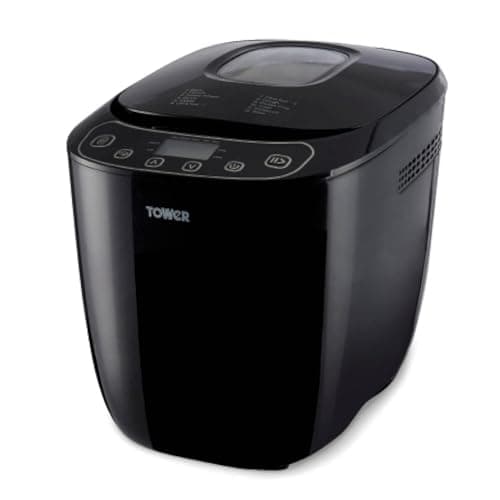 ★ Our pick · Best overallTower 2lb Digital Bread Maker (12 Programs, Delay)A big 2lb loaf, the programs most people use and a 13-hour delay timer, for under £70.£67.99£89.99Save 24%In stockBuy on Amazon
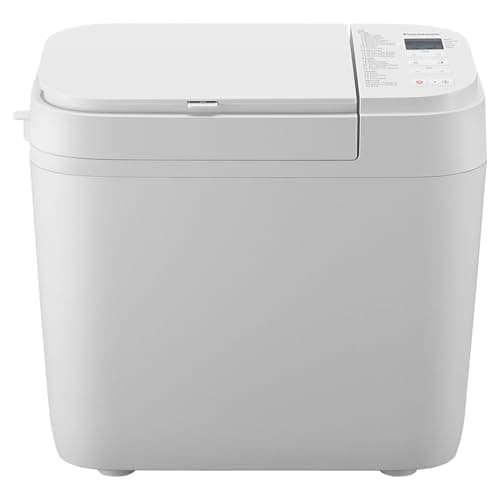 Best premiumPanasonic SD-R2530 Automatic Bread Maker (Gluten-Free, Nut Dispenser)The benchmark bread maker: the best loaves, a gluten-free program and an automatic nut dispenser.£159.00£179.00Save 11%In stockBuy on Amazon
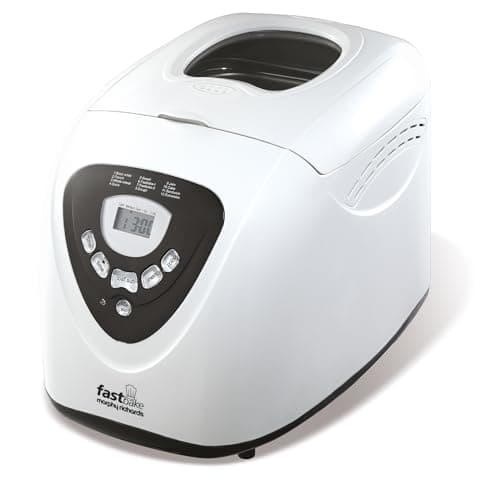 Best for speedMorphy Richards Fastbake Breadmaker (12 Programs)A fast-bake program turns out a loaf in under an hour, for bread in a hurry.£69.00£79.00Save 13%In stockBuy on Amazon
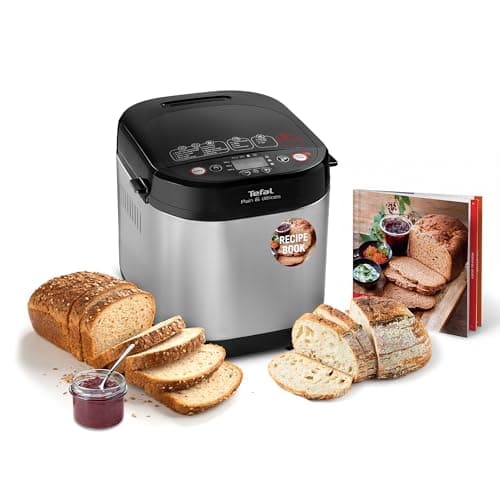 Best for varietyTefal Bread Maker (20 Programs, Compact)Twenty programs and a 15-hour delay in a compact body, for bakers who want more than bread.£89.98£129.99Save 31%In stockBuy on Amazon
Compare the specs
| Product | Loaf size | Programs | Delay timer | Best for | Price |
|---|---|---|---|---|---|
| Tower 2lb Digital Bread Maker (12 Programs, Delay)★ Best Overall | 2lb | 12 | 13 hours | Most households | £67.99 |
| Panasonic SD-R2530 Automatic Bread Maker (Gluten-Free, Nut Dispenser)Best Premium | Up to large | Many + gluten-free | Yes | Keen bakers, gluten-free | £159.00 |
| Morphy Richards Fastbake Breadmaker (12 Programs)Best for Speed | Standard | 12 + fastbake | Yes | Bread in a hurry | £69.00 |
| Tefal Bread Maker (20 Programs, Compact)Best for Variety | Standard | 20 | 15 hours | Variety, experimenting | £89.98 |
Prices are live from Amazon and refresh through the day; last page update 14 October 2026.
Why a bread maker is worth it
A bread maker is one of the more satisfying kitchen buys if you eat bread regularly:
- Cheap fresh bread. A homemade loaf costs a fraction of a decent bakery loaf in ingredients, so a bread maker pays for itself over time if you bake often.
- No additives. You control exactly what goes in, flour, water, yeast, salt, with none of the preservatives and emulsifiers in many shop loaves.
- Completely hands-off. You add the ingredients, select a program and press go; the machine mixes, kneads, proves and bakes. No skill, no mess, no watching.
- The smell. Waking to fresh bread via the delay timer is a genuine pleasure, and it fills the house.
You can make better artisan bread by hand with practice, but a bread maker is foolproof, convenient and consistent, which is exactly what most people want for everyday loaves.
Programs: you will use fewer than you think
Bread makers advertise long lists of programs, but here is the honest truth: most people only ever use the basic (white) and wholemeal settings, plus occasionally the dough program to make dough they bake in the oven.
- The essentials: basic/white, wholemeal, and a dough-only program. Almost every machine has these.
- Genuinely useful extras: a gluten-free program (important for coeliacs, and not on every machine), and a fast-bake program if you often want bread quickly.
- Nice but rarely used: jam, cakes, yogurt, specialty breads. Fun if you will use them, but do not pay a premium for a long list you will ignore.
So match the programs to what you will actually make. For everyday bread, a basic machine is plenty; only pay more for gluten-free, fast-bake or variety if you specifically want them.
Loaf size, delay timer and dispensers
- Loaf size: most machines make 1lb, 1.5lb and 2lb loaves. A 2lb option suits families; smaller households may prefer smaller loaves so bread does not go stale.
- Delay timer: genuinely worth having, load the machine at night and wake to fresh warm bread. Longer delays (up to 13 to 15 hours) give more flexibility.
- Crust control: light, medium or dark crust settings let you get the finish you like.
- Automatic fruit-and-nut dispenser: adds nuts, seeds and dried fruit at the right moment for even distribution. A premium feature (Panasonic), otherwise you add them manually at the beep.
- A viewing window to check progress without opening the lid.
Our picks in detail
Tower 2lb Digital Bread Maker (12 Programs, Delay)
A big 2lb loaf, the programs most people use and a 13-hour delay timer, for under £70.
A popular value bread maker.
The Tower Digital is the bread maker most people should buy. It bakes a generous 2lb loaf, big enough for a family, has the twelve programs that actually get used, white, wholemeal, dough, and so on, plus crust control, and a 13-hour delay timer so you can load it at night and wake to fresh bread and that fresh-baked smell. For cheap, additive-free bread with no effort, from a recognised brand at under £70, it covers everything most households need.
It is a value machine rather than a premium Panasonic, so the loaves are very good rather than the absolute best, and it does not have an automatic fruit-and-nut dispenser (you add them at the beep). But for the core job, consistent, hands-off fresh bread at a fair price, it is excellent value. If you bake a lot and want the best loaves and a gluten-free program, the Panasonic is the step up; for the best everyday bread maker for the money, this is the pick.
Panasonic SD-R2530 Automatic Bread Maker (Gluten-Free, Nut Dispenser)
The benchmark bread maker: the best loaves, a gluten-free program and an automatic nut dispenser.
If bread matters to you and you bake often, the Panasonic SD-R2530 is the benchmark. Panasonic bread makers are renowned for producing consistently excellent loaves with a better rise and texture than most, and this adds the features keen bakers want: a dedicated gluten-free program (genuinely useful for coeliacs, as a proper gluten-free setting is hard to find), and an automatic dispenser that adds nuts, seeds and dried fruit at exactly the right moment so they are evenly distributed rather than sinking or clumping. It is a serious machine for serious bread.
It costs well over double the value machines, and for occasional white loaves that premium is hard to justify. But for regular bakers, anyone needing reliable gluten-free bread, or those who want the best possible results, the superior loaves and the automatic dispenser earn their price over years of use. If you bake rarely or just want cheap everyday bread, the Tower is excellent value; if you want the best bread maker, this is it.
Morphy Richards Fastbake Breadmaker (12 Programs)
A fast-bake program turns out a loaf in under an hour, for bread in a hurry.
The Morphy Richards Fastbake is the pick if you often want bread quickly. Its fast-bake program produces a loaf in under an hour, far quicker than the three-plus hours a standard cycle takes, which is genuinely handy when you have run out and need bread for dinner. Alongside the fast-bake it has the usual twelve programs, crust control and a delay timer, from a trusted brand at a sensible price, so it is a capable everyday machine with a useful speed trick.
A fast-baked loaf has a slightly denser texture than a slow-proved one, that is the trade-off for the speed, and it is a value machine rather than a premium one. But the ability to make bread in under an hour is a real convenience the slower machines cannot match. If you are not in a hurry, the Tower or Panasonic make a better slow-proved loaf; if you value speed, this fast-bake machine is the pick.
Tefal Bread Maker (20 Programs, Compact)
Twenty programs and a 15-hour delay in a compact body, for bakers who want more than bread.
If you want to make more than plain loaves, the Tefal offers twenty automatic programs, covering not just white and wholemeal bread and dough but things like jams, cakes and specialty loaves, in a compact body that suits smaller kitchens. With a 15-hour delay timer and a good range of settings, it is the pick for bakers who like to experiment beyond everyday bread and want the flexibility of lots of programs.
The honest caveat is the one that applies to all feature-packed bread makers: most people only ever use two or three programs, so twenty is more than many will touch, and you are partly paying for variety you may not use. But if you genuinely want to make jam, cakes and different breads, the range is there and the compact size is a bonus. If you only ever make a white loaf, a simpler machine is enough; for variety in a compact machine, this is a good pick.
Getting good loaves
- Measure accurately. Bread making is a ratio, so use scales and the right flour (strong bread flour, not plain) and the correct yeast, getting the balance right is most of success.
- Add ingredients in the order the manual says, usually liquids first, then flour, with yeast kept away from the salt and water until mixing starts.
- Use fresh, in-date yeast. Old yeast is the most common cause of a loaf that will not rise.
- Expect a small hole in the base. The kneading paddle leaves a hole where it sits, that is normal; remove the paddle before slicing.
- Let it cool before slicing for a better texture, as fresh-from-the-machine bread is hard to slice neatly.
Common myths, corrected
- "You need lots of programs." No. Most people use basic and wholemeal, occasionally dough. Do not pay a premium for a long program list you will not use; buy gluten-free or fast-bake only if you specifically want them.
- "Expensive bread makers are a waste." Not for keen bakers. A Panasonic makes noticeably better loaves and adds genuinely useful features (gluten-free, auto dispenser). It is worth it if you bake often, overkill if you do not.
- "Bread-maker bread is as good as artisan." It is excellent and foolproof, but hand-made artisan bread can be better with skill. A bread maker wins on convenience and consistency, which is what most people want.
- "The hole in the loaf is a fault." No. The kneading paddle always leaves a small hole in the base. Remove the paddle before slicing; it is normal.
What we’d skip
- Paying a premium for a long list of programsMost people only ever use the basic and wholemeal settings, plus occasionally dough. Buy extra programs like gluten-free or fast-bake only if you specifically want them, not because the box lists twenty.
- Buying a premium Panasonic if you only make the occasional white loafIts superior loaves, gluten-free program and auto dispenser are worth it for keen or regular bakers, but overkill for occasional use, where a value machine makes very good bread for far less.
- Buying too big a loaf size for your householdA 2lb loaf suits families, but a smaller household may find bread goes stale before it is eaten. Match the loaf size to how much bread you get through, and you can always make a smaller loaf.
- Using plain flour or old yeastBread needs strong bread flour and fresh, in-date yeast to rise properly, old yeast is the most common cause of a flat loaf. Measure accurately with scales, as bread making is about getting the ratios right.
- Expecting no small hole in the loafThe kneading paddle leaves a small hole in the base of every bread-maker loaf, which is normal, not a fault. Just remove the paddle before slicing. Do not judge a machine on this.
Frequently asked questions
Is a bread maker worth buying?
If you eat bread regularly, yes. A homemade loaf costs a fraction of a bakery loaf in ingredients, so a bread maker pays for itself over time, you control exactly what goes in with no additives, and it is completely hands-off: add ingredients, press go, and it mixes, proves and bakes. Add the pleasure of waking to fresh bread via the delay timer, and it earns its place for regular bread eaters. For occasional bread, it is less essential, but for daily loaves it is a satisfying, money-saving buy.
How many programs does a bread maker need?
Fewer than the boxes suggest. Most people only ever use the basic (white) and wholemeal programs, plus occasionally a dough-only program to bake in the oven. Genuinely useful extras are a gluten-free program for coeliacs (not on every machine) and a fast-bake program if you often want bread quickly. Programs like jam, cakes and yogurt are fun but rarely used. So do not pay a premium for a long program list, match it to what you will actually make.
Are expensive bread makers like Panasonic worth it?
For keen or regular bakers, yes. Panasonic bread makers are the benchmark for loaf quality, producing a consistently better rise and texture, and they add genuinely useful features like a dedicated gluten-free program and an automatic dispenser that adds nuts and fruit at the right moment. That is worth the higher price if you bake often, need reliable gluten-free bread, or want the best results. If you only make the occasional white loaf, a value machine makes very good bread for far less.
What size loaf should a bread maker make?
Most machines make 1lb, 1.5lb and 2lb loaves, and the right size depends on your household. A 2lb loaf suits families who get through bread quickly, while a smaller household may prefer 1lb or 1.5lb so the bread is eaten before it goes stale, since homemade bread without preservatives does not keep as long as shop bread. A machine offering a range of loaf sizes gives you flexibility, so you can make a bigger or smaller loaf as needed.
Why is there a hole in the bottom of my bread?
That is completely normal, not a fault. The bread maker uses a kneading paddle in the base of the tin to mix and knead the dough, and the paddle stays in place while the loaf bakes around it, leaving a small hole where it sits once you remove the baked loaf. Simply take the paddle out of the base of the loaf before slicing. Every bread-maker loaf has this, so it is nothing to worry about and does not affect the bread.
Can a bread maker make gluten-free bread?
Only if it has a dedicated gluten-free program, which not all machines do. Gluten-free dough behaves very differently from normal dough, so a proper gluten-free setting adjusts the mixing and baking to suit it, giving far better results than using a standard program. If you need gluten-free bread, for coeliac disease or intolerance, look specifically for a machine with a gluten-free program, such as the Panasonic, rather than assuming any bread maker will handle it well.
Why did my bread not rise in the bread maker?
The most common cause is old or incorrectly measured yeast, dead or out-of-date yeast will not raise the dough. Other causes are using plain flour instead of strong bread flour, letting the yeast touch the salt or liquid before mixing, inaccurate measuring, or very cold ingredients. Measure with scales, use fresh in-date yeast and strong bread flour, add ingredients in the order the manual specifies keeping yeast and salt apart, and your loaves should rise properly.
Is a delay timer on a bread maker useful?
Yes, it is one of the nicest features. A delay timer lets you load the machine with ingredients the night before and set it to finish baking for the morning, so you wake to fresh, warm bread and the smell filling the house. Longer delays, up to 13 to 15 hours, give more flexibility over timing. One tip: for delayed bakes, keep the yeast away from the liquid and salt until mixing starts, so it does not activate early, which most machines' ingredient order handles.