If quiet running for the bedroom matters most, a DC-motor DREO is especially hushed and energy-saving; on a budget an Igenix oscillating tower cools for around £40; and the cheapest towers do the basic job for less. But set expectations first: a fan makes you feel cooler by moving air over your skin, it does not lower the room's temperature like air conditioning. Below we explain that difference, DC versus AC motors, why noise matters for bedrooms, and the genuinely low running cost.
Last reviewed 14 October 2026
Prices and stock on this page are pulled live from each listing and refresh several times a day. First, the honest bit: a fan cools you, not the room. It moves air so your sweat evaporates and you feel cooler, but it does not lower the room temperature like an air conditioner. A tower fan is the slim, tidy way to do that, and a quiet DREO is our pick. How we choose: we compare the live Amazon listings, the makers' published specs and the owner reviews, including the 1 to 3 star ones, and we don't test hands-on, so we never claim to.
The top 4, ranked
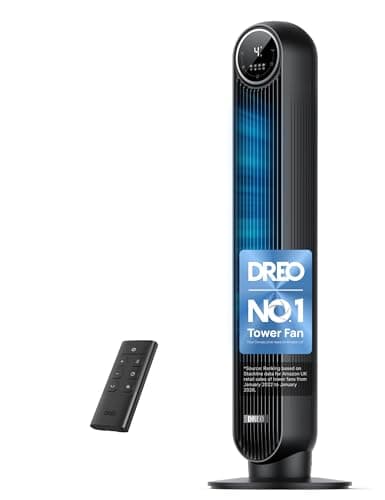 ★ Our pick · Best overallDREO Silent Tower Fan (20dB, Oscillating)Strong airflow with quiet 20dB running, oscillation and a slim footprint: the tower fan most people should buy.£79.99In stockBuy on Amazon
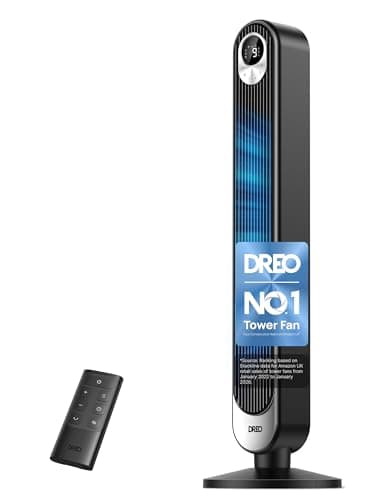 Best for bedroomsDREO 42-Inch Tower Fan (DC Motor, Energy Saving)A DC-motor tower fan: the quietest, most energy-efficient choice, with fine speed control for sleeping.£89.99In stockBuy on Amazon
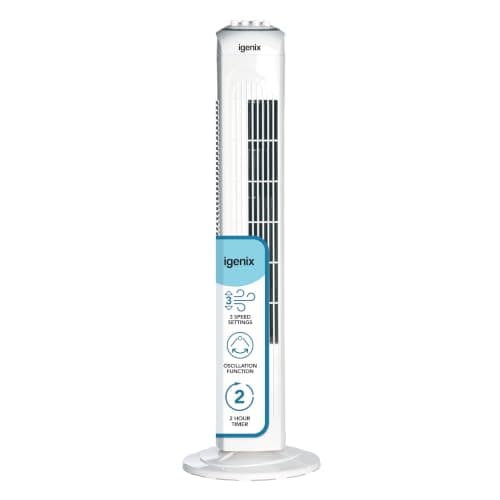 Best budgetIgenix DF0030 Oscillating Tower Fan (30 Inch)A simple oscillating 30-inch tower fan for around £40: the cheapest sensible choice.£39.99In stockBuy on Amazon
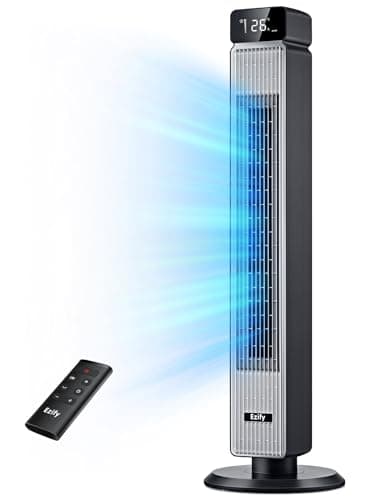 Best cheapestEzify Tower Fan with Remote (Quiet)A remote-controlled tower fan for around £27: the lowest price for a tidy cooling fan.See alternativesOut of stockBuy on Amazon
Compare the specs
| Product | Motor | Noise | Controls | Best for | Price |
|---|---|---|---|---|---|
| DREO Silent Tower Fan (20dB, Oscillating)★ Best Overall | Standard | ~20dB low | Remote + timer | Living rooms and bedrooms | £79.99 |
| DREO 42-Inch Tower Fan (DC Motor, Energy Saving)Best for Bedrooms | DC | Very quiet | Fine speeds, remote | Bedrooms, all-night use | £89.99 |
| Igenix DF0030 Oscillating Tower Fan (30 Inch)Best Budget | AC | Moderate | Speeds, oscillation | Budget, daytime cooling | £39.99 |
| Ezify Tower Fan with Remote (Quiet)Best Cheapest | AC | Moderate | Remote | Cheapest, occasional use | See alternatives |
Prices are live from Amazon and refresh through the day; last page update 14 October 2026.
A fan cools you, not the room
The most important thing to understand before buying any fan: a fan does not lower the temperature of the room. It moves air, and that moving air helps sweat evaporate off your skin, which makes you feel cooler. The air itself is not chilled.
- Point it at people, not the room. A fan only cools you when the moving air reaches your skin, so aim it where people sit or sleep.
- It will not drop the thermometer. If anything, the motor adds a tiny amount of heat. So in a genuinely hot, stuffy room a fan makes you feel cooler but does not cool the space.
- For actually lowering room temperature, you need an air conditioner, which is far pricier to buy and run (see our portable air conditioner guide). For most people, a fan is the cheap, sensible way to stay comfortable.
Set expectations this way and a fan is brilliant value. Expect it to "cool the room" like AC and you will be disappointed.
DC or AC motor?
- DC motors: quieter, more energy-efficient, and offer many more fine speed steps, so you can set a barely-there airflow for sleeping. The better choice for bedrooms and anyone who runs a fan a lot. Costs more.
- AC motors: the traditional, cheaper type. Perfectly good for daytime cooling, but louder and with fewer, coarser speeds, which makes them less ideal for all-night use.
If you mainly want a fan for the day or occasional use, a standard AC-motor tower is fine and cheaper. If you want to run it overnight in a bedroom, or all day through a heatwave, a DC motor is quieter and cheaper to run, and the fine speed control genuinely helps you sleep. Match the motor to how much you will use it.
Noise matters, especially for the bedroom
You run a fan for hours, often while you sleep, so how loud it is matters a lot. Noise is measured in decibels (dB):
- Around 20 to 30dB is very quiet, a gentle whisper you can sleep through. Ideal for bedrooms.
- Around 40 to 50dB is noticeable, fine for a living room in the day but potentially distracting at night.
- Higher is intrusive for anything but a quick blast of cooling.
A fan is only useful if you will actually leave it on, and a noisy one gets switched off. For the bedroom especially, prioritise a quiet model (a DC motor and a low-noise rating), and check it has a sleep or low setting you can live with through the night.
Our picks in detail
DREO Silent Tower Fan (20dB, Oscillating)
Strong airflow with quiet 20dB running, oscillation and a slim footprint: the tower fan most people should buy.
A quiet best-selling tower fan.
The DREO Silent is the tower fan most people should buy. It pushes a genuinely strong airflow to keep you cool, yet runs quietly, down to around 20dB on its lowest setting, so you can leave it on in a living room or bedroom without it intruding, which is exactly what you want from a fan you run for hours. The slim tower shape takes up little floor space, it oscillates to spread the air across the room, and it comes with the speeds, timer and remote you actually use.
It is dearer than a basic budget tower, and like every fan it cools you rather than the room. But for the combination of strong airflow, genuinely quiet running and a tidy design that you will happily leave on all evening and night, it is the sweet spot, and quiet running is the thing people most appreciate day to day. If you want the absolute quietest and most efficient for a bedroom, the DC-motor model is the step up; for the best all-round tower fan, this is the pick.
DREO 42-Inch Tower Fan (DC Motor, Energy Saving)
A DC-motor tower fan: the quietest, most energy-efficient choice, with fine speed control for sleeping.
If you want a fan to run all night, the DREO 42-inch with a DC motor is the pick. DC-motor fans are quieter and more energy-efficient than standard AC-motor ones, and they offer many more fine speed steps, so you can dial in a barely-there whisper of airflow for sleeping rather than being stuck with a few coarse speeds. Taller at 42 inches, it also pushes air higher and further, and the energy-saving motor costs even less to run over a long night.
It costs more than standard tower fans, and the DC-motor benefits, quietness, fine control and efficiency, matter most if you run it a lot, especially overnight. For occasional daytime use, a standard fan is fine and cheaper. But for light sleepers and anyone who wants a fan on low all night without a hum, the DC motor is a genuine upgrade. If you mainly use a fan in the day, the Silent or a budget tower suits; for the quietest, most efficient bedroom fan, this is the one.
Igenix DF0030 Oscillating Tower Fan (30 Inch)
A simple oscillating 30-inch tower fan for around £40: the cheapest sensible choice.
If you want a tower fan for as little as possible, the Igenix DF0030 does the job for around £40. It is a straightforward 30-inch oscillating tower with a few speeds that moves plenty of air to keep you cool, from a recognised UK brand, in a slim shape that tucks into a corner. For a spare room, occasional use or a tight budget, it covers the core job of cooling you down cheaply.
At this price it is a standard AC-motor fan, so it is louder than the DC-motor models and has fewer, coarser speeds, which makes it less ideal for all-night bedroom use. But for daytime cooling and general use, it does exactly what a fan should for little money. If you want quiet running for sleeping or the finest control, the DREO models are worth the extra; as the cheapest capable tower fan here, this is honest value.
Ezify Tower Fan with Remote (Quiet)
A remote-controlled tower fan for around £27: the lowest price for a tidy cooling fan.
If you just want a tidy fan that cools you for the lowest price, the Ezify tower fan does that for around £27, with a remote so you can adjust it from the sofa or bed. It moves a decent airflow, oscillates to spread it around, and its slim shape takes up little room, which is a lot of fan for very little money for occasional warm-weather use.
At this price the build and motor are basic, so it is louder and less refined than the dearer fans and best suited to lighter, occasional use rather than running flat out all summer. But for a cheap, tidy way to keep cool on hot days with the convenience of a remote, it does the job. If you want quiet all-night running or a durable fan for heavy use, the DREO models are worth more; as the cheapest tower fan here, this covers the basics. (Stock can be limited.)
Running cost: fans are cheap
Good news: fans use very little electricity. A tower fan typically draws only around 30 to 60 watts, far less than a heater or air conditioner. At the Ofgem cap of 26.32p per kWh, running a 50W fan for a full 12-hour night costs only around 16p, and a DC-motor fan on a low setting costs even less.
So you can run a fan freely without worrying about the bill, which is a big part of why it is the sensible way to stay comfortable compared with air conditioning (which can cost many times more to run). A DC motor shaves a bit more off, which is a nice bonus if you run it a lot, but even a standard fan is cheap to run.
Features worth having
- Oscillation: swings side to side to spread the airflow across a room or several people, rather than blasting one spot. Worth having.
- A timer and sleep mode: let it run for a set time or gradually reduce speed overnight, handy so it is not blowing on you till morning.
- A remote: genuinely useful for adjusting it from the sofa or bed without getting up.
- Multiple speeds: more steps (especially on DC fans) let you fine-tune between a gentle breeze and a strong blast.
- A slim, stable base: tower fans take up little floor space; check the base is stable so it does not topple.
Common myths, corrected
- "A fan cools the room." No. It moves air so you feel cooler; it does not lower the room temperature. For that you need an air conditioner.
- "Leaving a fan on in an empty room cools it for later." No. Since a fan only cools people, not the air, running it in an empty room just wastes electricity. Turn it off when you leave.
- "Fans are expensive to run." No, they are very cheap, only around 30 to 60 watts, so pennies a night. It is air conditioners that cost a lot to run.
- "All tower fans are much the same." No. Noise and motor type vary a lot. A quiet DC-motor fan and a loud basic one are very different to live with, especially at night.
What we’d skip
- Expecting a fan to cool the room like air conditioningA fan moves air so you feel cooler, but it does not lower the room temperature. If you genuinely need to cool a hot room, you need an air conditioner, which costs far more to buy and run. For feeling comfortable cheaply, a fan is the sensible choice.
- Running a fan in an empty roomSince a fan only cools people, not the air, leaving it on when no one is there just wastes electricity and cools nothing. Turn it off when you leave the room, and point it at people when you are there.
- Buying a loud, basic AC-motor fan for the bedroomYou run it while you sleep, so noise matters, and a cheap loud fan gets switched off. For bedroom and all-night use, prioritise a quiet model, ideally a DC motor with a low sleep setting.
- Overlooking oscillation and a timerOscillation spreads the airflow around the room or across several people rather than blasting one spot, and a timer or sleep mode stops it blowing on you all night. These make a fan far nicer to live with.
- Worrying about the running cost of a fanFans use very little power, only around 30 to 60 watts, so they cost pennies a night to run. Do not avoid using a fan to save money; it is air conditioners, not fans, that are expensive to run.
Frequently asked questions
Does a tower fan actually cool a room?
No. A fan, tower or otherwise, does not lower the temperature of the room. It moves air, and that moving air helps sweat evaporate off your skin, which makes you feel cooler, but the air itself is not chilled. If anything, the motor adds a tiny amount of heat. So a fan cools people, not rooms. For actually reducing a room's temperature you need an air conditioner, which costs far more to buy and run. For feeling comfortable cheaply, a fan is ideal, just point it at people.
DC or AC motor tower fan, which is better?
A DC-motor fan is quieter, more energy-efficient and offers many more fine speed steps, so you can set a barely-there airflow for sleeping, which makes it the better choice for bedrooms and heavy use, though it costs more. An AC-motor fan is the cheaper traditional type, perfectly good for daytime and occasional cooling, but louder with fewer, coarser speeds. Choose DC if you run a fan a lot or overnight; AC is fine and cheaper for lighter daytime use.
How much does it cost to run a tower fan?
Very little. A tower fan typically draws only around 30 to 60 watts, far less than a heater or air conditioner, so at the Ofgem cap of 26.32p per kWh, running a 50W fan for a 12-hour night costs only around 16p. A DC-motor fan on a low setting costs even less. So you can run a fan freely without worrying about the bill, which is a big reason a fan is the sensible, cheap way to stay comfortable compared with air conditioning.
Are tower fans good for bedrooms?
Yes, if you choose a quiet one, since you run it while you sleep. Look for a low noise rating (around 20 to 30dB is very quiet), ideally a DC motor for quiet running and fine speed control, and a sleep or timer mode. Tower fans also suit bedrooms because their slim shape takes up little floor space and they oscillate to spread the air. A loud, basic fan tends to get switched off at night, so prioritise quietness for bedroom use.
Tower fan or pedestal fan, which should I get?
A tower fan is slim and tidy, takes up little floor space, and suits living rooms and bedrooms where you want an unobtrusive shape, moving air through a tall vertical column. A pedestal fan sits on a stand and can push more air over a wider area and be raised higher, which some find more powerful, but it is bulkier. For a neat, space-saving fan in a living space or bedroom, a tower is ideal; for maximum airflow in a larger or warmer room, a pedestal fan can move more air.
Why does the room still feel hot with a fan on?
Because a fan does not cool the air, it only makes you feel cooler by moving air over your skin, so the room stays at the same temperature. In a genuinely hot, stuffy room the fan helps you feel more comfortable but cannot bring the temperature down. To actually cool the air you need an air conditioner. You can help a fan by opening windows when it is cooler outside to let hot air out, and pointing the fan at yourself rather than the room.
What features should a tower fan have?
Oscillation to spread the airflow across the room, multiple speeds (more steps on DC fans let you fine-tune the breeze), a timer and sleep mode so it does not run all night, and a remote to adjust it without getting up. For bedrooms, a low noise rating and ideally a DC motor matter most. A slim, stable base is a given for tower fans. Prioritise quiet running and oscillation over gimmicks, as those are what make a fan pleasant to live with.
Can a tower fan replace air conditioning?
Not really, because they do different things. A fan moves air to make you feel cooler but does not lower the room temperature, while an air conditioner actually cools the air. A fan is far cheaper to buy and run and is enough to keep most people comfortable on warm days and nights in the UK. An air conditioner is only worth its much higher cost if you genuinely need to reduce the temperature of a hot room. For most UK homes, a good fan is the sensible choice.