The Best Golf Rangefinder(UK, 2026)
By Niko Moustoukas, Founder & Editor
Published 14 October 2026
If you want one golf rangefinder, buy an accurate laser model with pin-lock and switchable slope, and the MiLESEEY is our pick. It reads the exact distance to the flag to within about half a yard, locks onto the pin (not the trees behind it) with a vibration to confirm, and its slope feature, which adjusts the yardage for uphill and downhill shots, can be switched off so the device stays legal for competitions. For most club golfers it does everything a £300 rangefinder does for a fraction of the price.
If you want a proven golf brand with better optics and a faster lock, a GolfBuddy steps up; on a budget, a sub-£30 model still gives you slope and flag-lock; and a higher-magnification option helps if you struggle to hold steady. The honest headline is that cheap rangefinders have caught up, so you are mostly paying for optics and reliability, not accuracy. Below we explain slope and competition legality, pin-lock, and why the huge range numbers are marketing.
Our pick · Best Overall

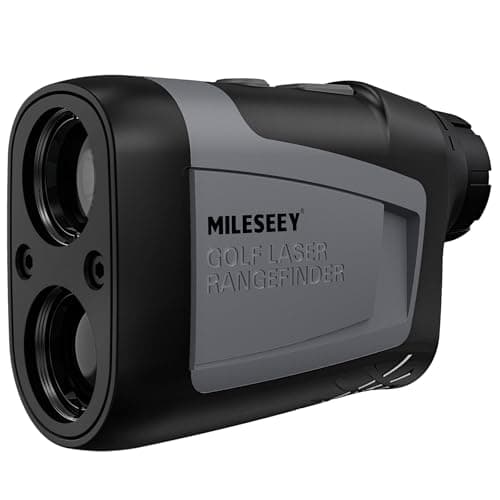
MiLESEEY Golf Rangefinder (Slope, 1100 Yards)
Accurate to about half a yard, with pin-lock and switchable slope, for well under £60.
Price checked live · updated 14 October 2026 · we may earn a commission
In this guide +
The top 4, ranked
 Our pick · Best OverallMiLESEEY Golf Rangefinder (Slope, 1100 Yards)Accurate to about half a yard, with pin-lock and switchable slope, for well under £60.Why we picked it ↓£59.48Buy on Amazon● In stock
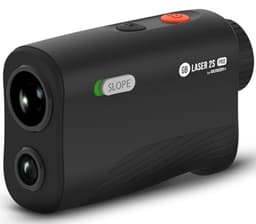 Best PremiumGolfBuddy GB LASER 2S Pro Rangefinder (Slope)A proper golf brand with better optics and a faster, more reliable lock, with switchable slope.Why we picked it ↓£126.99Buy on Amazon● In stock
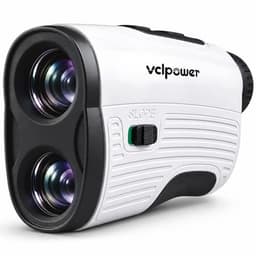 Best BudgetVCLPOWER Golf Rangefinder (0.3s Flag Lock, Slope)Fast flag lock, slope and 7x magnification for under £25: the cheapest sensible choice.Why we picked it ↓£24.70Buy on Amazon● In stock
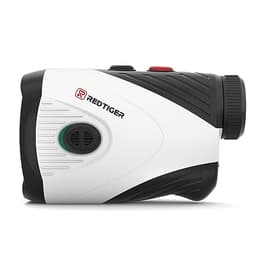 Best for OpticsREDTIGER Golf Rangefinder (7X, Slope On/Off, 1200 Yards)7x magnification and clear glass make the flag easier to find and lock, with slope on/off.Why we picked it ↓£88.80Buy on Amazon● In stock
Compare the specs
| # | Product | Best for | Slope (switchable) | Pin-lock | Magnification | Best for | Price |
|---|---|---|---|---|---|---|---|
| 1 | MiLESEEY Golf Rangefinder (Slope, 1100 Yards) | Best Overall | Yes, switchable | Yes, vibration | 6x | Most golfers | £59.48 |
| 2 | GolfBuddy GB LASER 2S Pro Rangefinder (Slope) | Best Premium | Yes, switchable | Yes, fast | 6x | Frequent use, reliability | £126.99 |
| 3 | VCLPOWER Golf Rangefinder (0.3s Flag Lock, Slope) | Best Budget | Yes | Yes, fast | 7x | Budget, occasional use | £24.70 |
| 4 | REDTIGER Golf Rangefinder (7X, Slope On/Off, 1200 Yards) | Best for Optics | Yes, switchable | Yes | 7x | Easier aiming, clearer view | £88.80 |
Swipe the table to see more →
Prices are live from Amazon and refresh through the day; last page update 14 October 2026.
Budget rangefinders have caught up
The big, honest headline: you no longer need to spend £300 on a Bushnell to get an accurate rangefinder. Budget laser rangefinders (roughly £30 to £90) are now genuinely accurate, usually to within a yard, and come with the features that matter, slope and pin-lock.
- Accuracy is largely a solved problem across price points. A £50 device gives you essentially the same yardage as a £300 one.
- What premium brands buy you is better optics (clearer, brighter glass), a faster and more reliable flag lock, and longer-term durability, not dramatically better numbers.
- So decide what you value: if you use one every round and want the slickest, most reliable experience, pay up; if you just want accurate yardages, a budget model delivers.
Slope: useful, but it must switch off for competitions
Slope measures the uphill or downhill angle to the target and adjusts the yardage accordingly, so an uphill shot that is 150 yards flat might play 158 yards, which genuinely helps you club up or down correctly. It is a brilliant feature for practice and casual rounds.
But there is a rule that matters: slope-adjusted distances are not allowed in competition. Using slope in a handicap or competition round makes the device non-conforming. That is why you must buy a rangefinder whose slope can be switched off (most show an external toggle or switch), so you can turn it off for comps and stay legal. A slope-only device you cannot disable is a problem if you play any competitive golf, so always choose a switchable one.
Pin-lock is the feature you actually use
The single most useful everyday feature is pin-lock (also called flag-lock or pin-seeking). Without it, pointing a rangefinder at a flag with trees behind it can read the trees instead, giving you a distance that is too long. Pin-lock locks specifically onto the flag and usually confirms with a vibration, so you know you have the pin and not the background.
- Always get pin-lock with vibration. It is the difference between a reliable yardage and an occasional embarrassing one.
- Magnification (6x to 7x) helps you find and hold the flag, especially at distance or in flat light.
- A steady hand helps, so rest against something if you can, no device fully fixes a wobble.
Our picks in detail
Accurate to about half a yard, with pin-lock and switchable slope, for well under £60.
A strong-value accurate rangefinder.
The MiLESEEY is the rangefinder most golfers should buy. It reads distances accurately to within about half a yard, locks onto the flag with a vibration so you know you have the pin and not the tree line behind it, and crucially its slope feature, which adjusts the yardage for uphill and downhill, switches off so the device stays legal when you play competitions. It does all of this for well under £60, which a few years ago would have bought you far less.
It is a budget-brand device, so the optics and the speed of the lock are not quite premium level, and the build is functional rather than plush. But for the core job, giving you a fast, accurate yardage to the flag with slope when you want it and off when you need it, it is excellent value and does everything most club golfers need. If you want better glass and a quicker, more reliable lock, the GolfBuddy is the step up; for the best value done right, this is the pick.
What we like
- Accurate to about half a yard
- Pin-lock with vibration confirmation
- Switchable slope (legal for comps)
- Excellent value under £60
What we'd change
- Budget-brand optics and lock speed
- Functional rather than premium build
Buy this if: you want an accurate rangefinder with pin-lock and legal slope for sensible money.
A proper golf brand with better optics and a faster, more reliable lock, with switchable slope.
If you want a rangefinder from an established golf brand, the GolfBuddy GB LASER 2S Pro is the pick. GolfBuddy is a known name in golf distance tech, and it shows in the clearer optics, the faster and more reliable flag lock, and the overall confidence the device gives you over a round. It has switchable slope so it is competition-legal with slope off, and it feels like a more polished, trustworthy tool than the budget devices.
It costs around twice the value models for broadly the same core accuracy, so you are paying for better glass, a quicker lock and brand reliability rather than dramatically different yardages. But if you use a rangefinder every round and value a fast, sure lock and clear optics, especially in flat light or at distance, those improvements are worth it. If value is your priority, the MiLESEEY does the job for much less; if you want the proven golf-brand experience, this is it.
What we like
- Established golf brand
- Clearer optics, faster reliable lock
- Switchable slope, competition-legal
What we'd change
- Around twice the price of value models
- Core accuracy similar to cheaper devices
Buy this if: you want a proven golf brand with the best optics and lock.
Fast flag lock, slope and 7x magnification for under £25: the cheapest sensible choice.
If you want a rangefinder for as little as possible, the VCLPOWER delivers a surprising amount for under £25: a quick flag lock with vibration, slope adjustment, 7x magnification and a long quoted range. For an occasional golfer or anyone testing whether a rangefinder suits them, it gives you accurate yardages to the pin without any real outlay, which would have been unthinkable not long ago.
At this price the optics and build are basic, the slope may not be as refined, and long-term durability is less assured, so it is best for lighter or occasional use. But the fundamentals, an accurate distance to the flag with a confirming lock, are there, which is genuinely most of what a rangefinder needs to do. If you play often and want better glass and reliability, step up to the MiLESEEY or GolfBuddy; as the cheapest capable rangefinder here, this is remarkable value.
What we like
- Very cheap, under £25
- Fast flag lock, slope, 7x magnification
- Accurate yardages for the money
What we'd change
- Basic optics and build
- Durability less assured
Buy this if: you want the cheapest capable rangefinder with slope and flag lock.
7x magnification and clear glass make the flag easier to find and lock, with slope on/off.
If you find it fiddly to locate and lock onto a distant flag, the REDTIGER's 7x magnification and clearer optics make that easier. The higher magnification brings the pin closer and steadier in the viewfinder, which helps you line up and lock on faster, especially at distance or in flatter light, and it has slope that switches on and off so it stays competition-legal. For golfers who want a clearer, easier-to-aim device without going premium, it is a sensible middle option.
It sits above the cheapest models on price and the optics are its main advantage rather than different accuracy, and like all these devices a steady hand still helps. But clearer, higher-magnification glass genuinely makes a rangefinder nicer to use round after round, particularly if your eyes or hands are less steady. If you want the outright cheapest, the VCLPOWER undercuts it; if clearer optics and easier aiming matter to you, this is the pick.
What we like
- 7x magnification, clearer optics
- Easier to find and lock the flag
- Slope on/off, competition-legal
What we'd change
- Dearer than the cheapest models
- Optics the main gain, not accuracy
Buy this if: you want clearer, higher-magnification optics to find and lock the flag easily.
Ignore the huge range numbers
Rangefinders advertise ranges like "1200 yards", and it is marketing. You will never hit a golf shot anywhere near 1000 yards, and the effective range that matters, locking reliably onto a flag, is far shorter, typically a few hundred yards, which every one of these devices comfortably covers.
So do not choose a rangefinder on its headline maximum range. What matters is reliable pin-lock at normal golf distances (say up to 300 to 400 yards), accuracy, clear optics and switchable slope. A bigger range number against a reflective target does not make it a better golf rangefinder.
Laser rangefinder or GPS?
- Laser rangefinder (this guide): you aim it at the flag and get the exact distance to that target, which is precise and great for approach shots. It needs line of sight and a reasonably steady hand, and only measures what you point it at.
- GPS (watch or handheld/app): shows preset distances to the front, middle and back of the green and to hazards without aiming, which is quick and hands-free, but less precise than a laser to the actual pin, and often needs an app or course downloads.
For precise yardage to the flag, a laser wins, which is why it is the most popular choice. A GPS suits players who want quick, no-aim green distances or hazard layouts. Some keen golfers use both; most are well served by a good laser rangefinder.
Common myths, corrected
- "You need a £300 brand for accuracy." No. Budget rangefinders are accurate now. Premium brands buy optics, lock speed and reliability, not meaningfully better numbers.
- "Slope is always fine to use." No. Slope-adjusted distances are illegal in competition. Buy a model whose slope switches off so you can play comps legally.
- "Bigger range is better." No. You will never need 1000 yards. Reliable pin-lock at normal golf distances matters far more than the headline range.
- "A rangefinder will lower my scores on its own." It gives you accurate numbers, but you still have to hit the shot and club correctly. It removes guesswork; it does not swing for you.
What we’d skip
- Spending £300 on a premium brand expecting dramatically better accuracy. Budget rangefinders are accurate to within a yard now. The premium money buys clearer optics, a faster lock and reliability, worth it if you use one every round, but not better yardages.
- Buying a slope rangefinder that cannot switch slope off, if you play any competitive golf. Slope-adjusted distances are illegal in competition, so the device must let you turn slope off to stay legal. Always choose a switchable one.
- Choosing on the headline maximum range. You will never hit a 1000-yard shot, and every one of these locks onto flags at normal golf distances. Reliable pin-lock and clear optics matter far more than a big range number.
- Skipping pin-lock with vibration. Without it, a rangefinder can read the trees behind the flag and give you a distance that is too long. Pin-lock with a vibration confirmation is the everyday feature that makes the yardage trustworthy.
- Expecting a rangefinder to lower your scores by itself. It removes yardage guesswork, which helps, but you still have to club correctly and hit the shot. Pair it with honest club distances, and do not blame the device when the swing is the problem.
Frequently asked questions
Do you need an expensive golf rangefinder?
No. Budget laser rangefinders (around £30 to £90) are genuinely accurate now, usually to within a yard, and come with slope and pin-lock, so you do not need to spend £300 to get the exact yardage to the flag. What premium brands buy you is clearer optics, a faster and more reliable flag lock, and durability, which are worth it if you play every round and value the slick experience, but not meaningfully better accuracy.
What is slope on a golf rangefinder, and is it legal?
Slope measures the uphill or downhill angle to the target and adjusts the yardage, so an uphill 150-yard shot might play 158 yards, which helps you club correctly. It is brilliant for practice and casual rounds. However, slope-adjusted distances are not allowed in competition, so using slope in a handicap or comp round is non-conforming. That is why you should buy a rangefinder whose slope switches off, so you can turn it off and stay legal when it counts.
What is pin-lock on a rangefinder?
Pin-lock, also called flag-lock or pin-seeking, locks the rangefinder specifically onto the flag rather than the trees or background behind it, and usually confirms with a vibration so you know you have the pin. Without it, aiming at a flag with trees behind can read the trees and give a distance that is too long. It is the most useful everyday feature, so always choose a rangefinder with pin-lock and vibration confirmation.
Laser rangefinder or GPS, which is better for golf?
A laser rangefinder gives the exact distance to whatever you aim at, usually the flag, which is precise and ideal for approach shots, though it needs line of sight and a steady hand. A GPS device or watch shows preset distances to the front, middle and back of the green and to hazards without aiming, which is quick and hands-free but less precise to the actual pin. For precise flag yardage a laser wins; a GPS suits players wanting fast, no-aim green distances.
How accurate are budget golf rangefinders?
Surprisingly accurate, typically to within about a yard, which is essentially the same as premium devices for practical purposes. Accuracy is largely a solved problem across price points now, which is why budget rangefinders have become genuinely usable. Where cheaper models differ is in optics, the speed and reliability of the flag lock, and durability, not in the yardages they give. So a £50 rangefinder gives you numbers you can trust just as much as a £300 one.
Does the range number (like 1200 yards) matter?
No, it is largely marketing. You will never hit a golf shot anywhere near 1000 yards, and those big figures are measured against large reflective targets, not flags. What matters is reliable pin-lock at normal golf distances, up to a few hundred yards, which every decent rangefinder handles comfortably. Choose on accuracy, a reliable flag lock, clear optics and switchable slope, not on the headline maximum range.
What magnification should a golf rangefinder have?
Around 6x to 7x is standard and plenty for golf. Higher magnification brings the flag closer and steadier in the viewfinder, which makes it easier to find and lock onto, especially at distance or in flat light, so a 7x model can be a little easier to aim. Beyond that, magnification matters less than a reliable pin-lock and clear glass. If you find aiming fiddly or your hands are less steady, lean towards 7x and clearer optics.
Will a rangefinder improve my golf?
It helps by removing yardage guesswork, so you can club more confidently and commit to the shot, which genuinely aids course management and pace of play. But it does not swing the club for you: you still have to know your real club distances and hit the shot. Used alongside honest club yardages it is a useful tool; treated as a magic fix it will disappoint. It gives you better information, not a better swing.
Ready to choose?
Our one clear winner is the MiLESEEY Golf Rangefinder (Slope, 1100 Yards).