The Best Golf Balls(UK, 2026)
By Niko Moustoukas, Founder & Editor
Published 14 October 2026
If you want one golf ball for most club golfers, buy a soft, straight, well-priced ball, and the Srixon AD333 is our pick. It's the UK's default sensible ball for a reason: a soft feel, a straight, forgiving flight and real durability, at a price that doesn't hurt when you lose one. For the average golfer with a mid swing speed who isn't a single-figure handicapper, it does more for your scores than a pricier tour ball you can't compress.
The right ball really depends on you. Slower swings want a low-compression (very soft) ball; high-handicappers losing balls want cheap distance balls by the bulk box; and only genuinely fast, skilled swings get value from a firm urethane tour ball's greenside spin. Below we explain compression, soft versus tour balls, ionomer versus urethane covers, and why the famous premium balls are the wrong buy for most amateurs.
Our pick · Best Overall

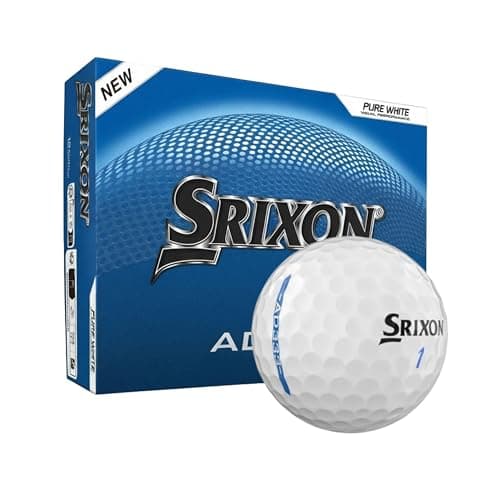
Srixon AD333 Golf Balls
Soft, straight and durable at a sensible price: the ball that suits the most club golfers.
Price checked live · updated 14 October 2026 · we may earn a commission
The top 5, ranked
 Our pick · Best OverallSrixon AD333 Golf BallsSoft, straight and durable at a sensible price: the ball that suits the most club golfers.Why we picked it ↓£19.49Buy on Amazon● In stock
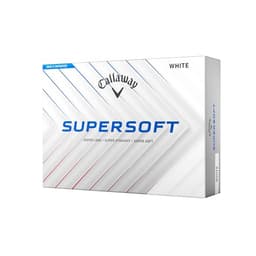 Best for Slow SwingsCallaway Supersoft Golf BallsOne of the softest, lowest-compression balls there is, built for genuinely slow swing speeds.Why we picked it ↓£24.95Buy on Amazon● In stock
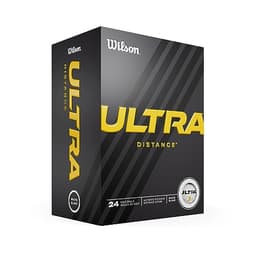 Best Budget / BeginnersWilson Ultra Distance Golf Balls (24 Ball)Two dozen per box and the lowest cost per ball here: the right buy while you're still losing a few a round.Why we picked it ↓£28.95Buy on Amazon● In stock
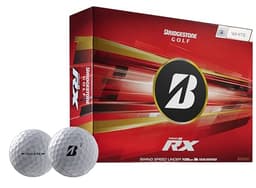 Best Value Tour BallBridgestone Tour B RX Golf BallsUrethane tour-ball control for less than the big premium names, fitted to moderate swing speeds.Why we picked it ↓£38.99Buy on Amazon● In stock
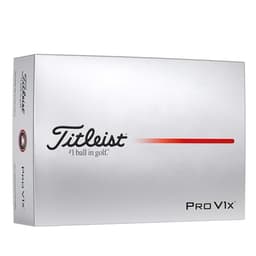 Best PremiumTitleist Pro V1x Golf BallsThe tour-ball consistency benchmark, for fast, skilled swings that can use the spin and flight.Why we picked it ↓£52.00Buy on Amazon● In stock
Compare the specs
| # | Product | Best for | Compression | Feel | Cover | Best for | Price |
|---|---|---|---|---|---|---|---|
| 1 | Srixon AD333 Golf Balls | Best Overall | Mid | Soft | Ionomer | Most club golfers | £19.49 |
| 2 | Callaway Supersoft Golf Balls | Best for Slow Swings | Low | Very soft | Ionomer | Slow swing speeds | £24.95 |
| 3 | Wilson Ultra Distance Golf Balls (24 Ball) | Best Budget / Beginners | Mid | Firm | Ionomer | Beginners, losing balls | £28.95 |
| 4 | Bridgestone Tour B RX Golf Balls | Best Value Tour Ball | Mid | Soft | Urethane | Improving mid-handicappers | £38.99 |
| 5 | Titleist Pro V1x Golf Balls | Best Premium | ~100 (firm) | Firm | Urethane | Fast, low-handicap swings | £52.00 |
Swipe the table to see more →
Prices are live from Amazon and refresh through the day; last page update 14 October 2026.
Most golfers play the wrong ball
The single biggest golf-ball mistake amateurs make is playing too firm and too expensive a ball for their swing, usually a premium tour ball they saw a pro use. Here's the honest truth:
- A premium tour ball only helps if you can compress it and use its spin. That needs a fast, skilled swing. For most club golfers, a tour ball gives up distance and costs four times more, for greenside spin they can't yet use.
- A soft, sensible ball flatters the average golfer. It launches easily, flies straighter and feels better at normal swing speeds.
- If you're losing balls, buy cheap ones by the box. There's no sense drowning £3 balls in the lake while you're learning.
Match the ball to your swing speed and skill, not to the pro on TV. It's one of the cheapest ways to play better golf, or at least to stop wasting money.
Compression: match the ball to your swing speed
Compression is how much the ball squashes at impact, and it's the one ball spec that genuinely matters for most golfers. The rule is simple: slower swings want lower compression; faster swings can use higher compression.
- Slow swing (roughly under 85mph driver): a low-compression, very soft ball (like the Supersoft) that you can actually compress for distance and launch.
- Moderate swing (around 85 to 95mph): a soft, mid-compression ball (like the AD333) that balances feel and distance.
- Fast swing (95mph and up): you can compress a firm, high-compression tour ball (like the Pro V1x) and get the spin and control from it.
Playing a firm ball with a slow swing loses you distance and feel; playing a soft ball with a very fast swing can feel mushy and spin too much. Get the compression roughly right for your swing and you've made the main decision.
Ionomer or urethane cover?
- Ionomer (Surlyn) covers are harder and more durable, give more distance off the driver and, crucially, less greenside spin. They're on value and distance balls. Ideal for beginners and higher-handicappers who want durability and distance and can't use spin anyway.
- Urethane covers are softer and give much more greenside spin and control, letting skilled players stop the ball on greens and spin wedges. They're on tour balls, and cost more and wear faster.
The honest question is whether you can use greenside spin. If you're not yet consistently striking wedges and controlling your short game, a urethane ball's spin is wasted on you, and an ionomer ball is more durable and often longer. Earn the tour ball, don't just buy it.
Our picks in detail
Soft, straight and durable at a sensible price: the ball that suits the most club golfers.
The UK club golfer's default ball.
The Srixon AD333 is the golf ball most club golfers should play. It pairs a soft feel with a straight, forgiving flight and genuine durability, so it flatters a mid swing speed without punishing a slightly off-centre strike, and it does all that at a price that doesn't sting when one finds the trees. It's the UK's default sensible ball because, for the average golfer, it quietly does everything you need without you paying for spin and firmness you can't use.
It's a mid-compression ionomer ball, not a firm urethane tour ball, so a low-handicapper with fast hands who wants maximum greenside bite will prefer a premium ball. But most golfers aren't that player, and for them the AD333's blend of feel, forgiveness, straightness and value beats a dearer ball that their swing can't get the most from. If you swing slowly, go softer; if you're losing a lot of balls, go cheaper and bulk. For most people, this is the one.
What we like
- Soft feel with a straight, forgiving flight
- Durable, holds up round after round
- Sensible price for a quality ball
- Suits most club golfers' swing speeds
What we'd change
- Not a urethane tour ball for maximum greenside spin
- Fast, skilled swings may want more control
Buy this if: you're an average club golfer who wants a soft, straight, well-priced ball.
One of the softest, lowest-compression balls there is, built for genuinely slow swing speeds.
If you have a slower swing, the Callaway Supersoft is built for you. At a maker-listed compression around 38, it's one of the softest balls on the market, which means a slower swing can actually compress it and get the distance and launch out of it that a firm ball would deny them. It has a very soft feel and a high, easy flight, and it's a value-priced ball, so it suits slower-swinging and senior golfers perfectly without costing tour-ball money.
Being very low compression and ionomer-covered, it isn't the ball for a fast, powerful swing chasing greenside spin, those players will find it too soft and will prefer a firmer tour ball. But matching ball compression to swing speed is one of the few ball decisions that genuinely affects your golf, and for slow swings a soft ball like this is the right call. If your swing is average or quick, the AD333 or a tour ball suits better; if it's slow, this is the pick.
What we like
- Very low compression, suits slow swings
- Soft feel, high easy flight
- Value priced
What we'd change
- Too soft for fast, powerful swings
- Ionomer cover, limited greenside spin
Buy this if: you have a slower swing and want a soft ball you can actually compress.
Two dozen per box and the lowest cost per ball here: the right buy while you're still losing a few a round.
If you're a beginner or higher-handicapper losing several balls a round, the sensible thing isn't an expensive ball, it's a cheap one by the bulk box, and the Wilson Ultra Distance gives you two dozen for the lowest cost per ball here. It's a firm, distance-focused two-piece ball that flies a long way and shrugs off cart paths and the odd tree, which is exactly what you want while you're still finding the course. There's no sense feeding £3 balls into the lake.
It's a value distance ball, so it's firm and low on greenside spin, you won't be spinning wedges back with it. But a high-handicapper can't use that spin anyway, and distance and durability matter far more to them, so this is honestly the better ball for that player than a premium one. Once you stop losing balls and want more feel and control, step up to the AD333 or a tour ball; while you're learning, buy these by the box.
What we like
- Two dozen per box, lowest cost per ball
- Long, durable distance ball
- Ideal while you're losing balls
What we'd change
- Firm feel, minimal greenside spin
- Not for players wanting control
Buy this if: you're a beginner or high-handicapper losing balls and want cheap distance by the box.
Urethane tour-ball control for less than the big premium names, fitted to moderate swing speeds.
The Bridgestone Tour B RX is the bridge between value and premium: a proper urethane-covered tour ball, with the soft feel and greenside spin that brings, for noticeably less than the flagship tour balls. Crucially, the RX is Bridgestone's version fitted to moderate swing speeds (there's a firmer RXS/X for faster swings), so it gives improving golfers the control of a tour ball without demanding a 100mph-plus swing to perform. It's the step up to take when you want more than a value ball.
It's still a premium-ish purchase, so a beginner losing balls shouldn't be playing it, and a very fast swing may want the firmer tour options. But for a mid-handicapper with a moderate swing who wants real greenside control and feel without paying Pro V1 money, it's the sweet spot. If you're not ready for a tour ball, the AD333 is plenty; if you want tour-ball control at a fairer price, this is the pick.
What we like
- Urethane cover, real greenside spin and feel
- Fitted to moderate swing speeds
- Cheaper than flagship tour balls
What we'd change
- Premium-ish price, not for ball-losers
- Very fast swings may want the firmer version
Buy this if: you want tour-ball control and feel for a moderate swing, without flagship prices.
The tour-ball consistency benchmark, for fast, skilled swings that can use the spin and flight.
The Titleist Pro V1x is the premium tour ball by which others are judged: the consistency benchmark, with the high greenside spin (over 8,000 rpm of wedge spin in Today's Golfer robot testing) and the controlled, higher flight that skilled players use to attack pins and stop the ball on firm greens. If you have a fast, repeatable swing and the short game to exploit spin, this is the ball that gives you the control and consistency to score with it.
But be honest about whether you're that player. It's a firm, high-compression ball at a premium price, and a slower or higher-handicap golfer won't compress it, won't use the spin, and will simply pay four times more to play worse golf than they would with a soft value ball. It's a brilliant ball for the right golfer and a waste of money for the wrong one. If you're a low-handicapper with fast hands, buy it; if you're not, play the AD333 and spend the difference on lessons.
What we like
- Tour-level consistency and greenside spin
- Controlled, higher flight for attacking pins
- The benchmark premium ball
What we'd change
- Firm and high-compression: needs a fast swing
- Premium price, wasted on most amateurs
Buy this if: you have a fast, skilled swing and the short game to use tour-level spin.
A simple way to choose
Work down this list and you'll land on the right ball:
- Are you losing several balls a round? Buy cheap distance balls by the bulk box (Ultra Distance). Don't overthink it until you stop losing them.
- Is your swing slow? Play a low-compression soft ball (Supersoft) you can actually compress.
- Average club golfer, keeping most balls? A soft, sensible mid ball (AD333) is all you need, and better than a tour ball for you.
- Improving, moderate swing, want more control? Step up to a value urethane tour ball (Tour B RX).
- Fast, skilled swing with a real short game? Now a premium tour ball (Pro V1x) earns its price.
Most golfers are at step 1, 2 or 3, which is exactly why the expensive balls are the wrong buy for most people.
Common myths, corrected
- "The pros play it, so it's the best ball." It's the best ball for a pro's swing. With your swing, a tour ball often costs distance and feel and wastes money on spin you can't use.
- "A dearer ball will lower my scores." Rarely, for most amateurs. Matching compression to your swing and not losing balls helps far more than price. Lessons help most of all.
- "Soft balls are just for old people." No. Soft, low-compression balls suit any slower swing and many players prefer the feel. Compression should match your swing, not your age.
- "Every ball is basically the same." Not quite. Compression and cover genuinely change distance, feel and spin. But the differences only help if the ball suits your swing, which is the whole point.
What we’d skip
- Playing a premium tour ball (like a Pro V1) if you're a beginner or higher-handicapper. You can't compress it or use its greenside spin, so it often costs you distance and always costs you money. A soft value ball performs better for your swing at a quarter of the price.
- Chasing greenside spin you can't yet use. Urethane tour balls spin more around the greens, but only if your short game is consistent enough to exploit it. If it isn't, a durable ionomer ball is longer, tougher and cheaper.
- Buying expensive balls while you're still losing several a round. Feeding £3 balls into lakes and trees is a waste. Buy cheap distance balls by the bulk box until you stop losing them, then upgrade.
- Playing a firm, high-compression ball with a slow swing. You won't compress it, so you lose distance and feel. Match compression to your swing speed: slow swings want soft, low-compression balls.
- Agonising over the ball before your swing. The ball matters far less than your technique, fit and not losing them. Get the compression roughly right for your swing, then spend your energy (and money) on lessons.
Frequently asked questions
What golf ball should a beginner use?
A cheap, durable distance ball bought by the bulk box, not a premium tour ball. Beginners lose several balls a round, so cost per ball matters most, and they can't yet use the greenside spin a tour ball offers, so they gain nothing from it. A firm, two-piece ionomer distance ball flies far, survives cart paths and trees, and costs little. Upgrade to a softer feel ball once you stop losing them.
Do expensive golf balls actually make a difference?
For skilled, fast-swinging players, yes, premium tour balls offer greenside spin and consistency they can use to score. For most amateurs, no: you can't compress a firm tour ball or exploit its spin, so it often costs distance and always costs more money for no gain. What helps most golfers far more is matching ball compression to their swing speed, not losing balls, and lessons. Price is not the point; fit is.
What is golf ball compression and what do I need?
Compression is how much the ball squashes at impact, and it should match your swing speed. Slower swings (under about 85mph driver) want low-compression, very soft balls they can actually compress for distance. Moderate swings (85 to 95mph) suit soft mid-compression balls. Fast swings (95mph and up) can use firm, high-compression tour balls. Playing the wrong compression for your swing costs distance and feel, so this is the key decision.
Soft or firm golf ball, which is better?
Neither universally, it depends on your swing. Soft, low-compression balls suit slower swings, launch easily and feel softer, which is why they suit most club golfers and seniors. Firm, high-compression balls suit fast swings that can compress them and want controlled spin. Match the ball's compression to your swing speed rather than picking by feel preference alone, and most amateurs will find a soft ball suits them better.
What is the difference between ionomer and urethane golf balls?
The cover. Ionomer (Surlyn) covers are harder and more durable, give more distance and less greenside spin, and feature on value and distance balls, which suits beginners and higher-handicappers. Urethane covers are softer, give much more greenside spin and control for stopping the ball on greens, and feature on premium tour balls. The question is whether your short game is good enough to use urethane spin; if not, a durable ionomer ball is the better buy.
Is the Titleist Pro V1 worth it for an average golfer?
Usually not. The Pro V1 and Pro V1x are brilliant balls for fast, skilled swings that can compress them and use their greenside spin, but an average or higher-handicap golfer can't do either, so they pay roughly four times the price of a good value ball to play the same or worse golf. Unless you have a fast, repeatable swing and a consistent short game, a soft value ball like the Srixon AD333 is the smarter buy.
How many golf balls should I buy at once?
It depends how many you lose. If you're a beginner or higher-handicapper losing several a round, buy cheap distance balls by the bulk box (two dozen or more) so cost per ball stays low, you'll get through them. As you improve and keep more balls, you can buy smaller quantities of a better ball without it being wasteful. Match the quantity and the price of the ball to how many you realistically lose.
Does the golf ball matter more than my clubs or swing?
No. Your swing and technique matter most by a wide margin, followed by clubs that fit you, and the ball a distant third for most amateurs. That said, matching the ball's compression to your swing and not losing expensive balls are cheap, easy wins. So get the ball roughly right, a soft ball for a slow or average swing, cheap balls while you're losing them, but put your real effort and money into lessons.
Ready to choose?
Our one clear winner is the Srixon AD333 Golf Balls.