The Best Electric Golf Trolley(UK, 2026)
By Niko Moustoukas, Founder & Editor
Published 14 October 2026
If you want one electric golf trolley, buy a lithium model with enough battery for your round, and the M.Y Pro Series 36-Hole Lithium is our pick. It carries your clubs around the course under its own power, the lithium battery is light and long-lived where a lead-acid one is heavy and short-lived, and the 36-hole capacity gives you plenty of headroom so you're never nursing a flat battery up the 18th. For most golfers who want the effort of carrying gone without spending a fortune, it hits the sweet spot.
If you want a premium, proven brand, a PowaKaddy is the benchmark; an established-name Ben Sayers sits in between with an accessories bundle; and the cheapest way in is a lead-acid model, though we'd steer you to lithium every time. First, two decisions: whether you actually want electric over a much cheaper push trolley, and, if you do, why lithium beats lead-acid every time. Below we cover both, plus battery capacity, fold size and what to skip.
Our pick · Best Overall

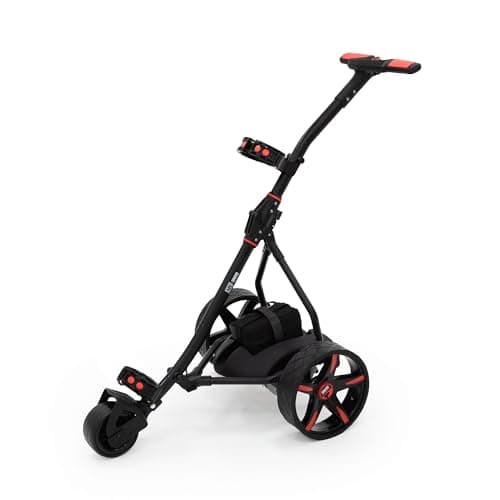
M.Y Pro Series Electric Golf Trolley (36-Hole Lithium)
A light, long-lived lithium battery with 36-hole headroom at a sensible price: the electric trolley most golfers should buy.
Price checked live · updated 14 October 2026 · we may earn a commission
In this guide +
The top 4, ranked
 Our pick · Best OverallM.Y Pro Series Electric Golf Trolley (36-Hole Lithium)A light, long-lived lithium battery with 36-hole headroom at a sensible price: the electric trolley most golfers should buy.Why we picked it ↓£259.99Buy on Amazon● In stock
 Best PremiumPowaKaddy FX1 Electric Golf Trolley (Lightweight)The benchmark premium brand: lightweight, reliable and well-supported, if you want a trolley to keep for years.Why we picked it ↓£495.00Buy on Amazon● In stock
 Best Mid-RangeBen Sayers Electric Golf Trolley (Lithium + Accessories)An established golf brand with a lithium battery and a bundle of accessories, between value and premium.Why we picked it ↓£349.00Buy on Amazon● In stock
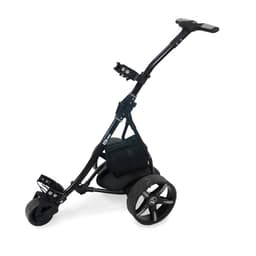 Best Budget (Lead-Acid)M.Y Pro Series Electric Golf Trolley (18-Hole Lead-Acid)The cheapest way into an electric trolley, but on a heavy lead-acid battery: buy with eyes open.Why we picked it ↓£199.99Buy on Amazon● In stock
Compare the specs
| # | Product | Best for | Battery | Capacity | Type | Best for | Price |
|---|---|---|---|---|---|---|---|
| 1 | M.Y Pro Series Electric Golf Trolley (36-Hole Lithium) | Best Overall | Lithium | 36 hole | Value | Most golfers | £259.99 |
| 2 | PowaKaddy FX1 Electric Golf Trolley (Lightweight) | Best Premium | Lithium | Round+ | Premium | Regular golfers, longevity | £495.00 |
| 3 | Ben Sayers Electric Golf Trolley (Lithium + Accessories) | Best Mid-Range | Lithium | 18 hole+ | Mid brand | A trusted name with extras | £349.00 |
| 4 | M.Y Pro Series Electric Golf Trolley (18-Hole Lead-Acid) | Best Budget (Lead-Acid) | Lead-acid | 18 hole | Value | Lowest upfront price | £199.99 |
Swipe the table to see more →
Prices are live from Amazon and refresh through the day; last page update 14 October 2026.
Electric or push trolley?
Before you spend on electric, make sure you actually want it over a much cheaper push trolley:
- Electric trolley: drives itself and carries the clubs for you, so you walk the course with no effort beyond steering. Worth it for hilly courses, tiring rounds, a bad back or knees, or simply wanting to arrive at your ball fresh. Costs far more, and it's a motor and battery to charge and maintain.
- Push trolley: you push it, but it still takes the bag off your shoulder and the weight off your back. Far cheaper (often a fifth of the price), lighter, nothing to charge, and you keep more of the walking workout.
If you want the physical effort of the round reduced, especially on hills or with joint issues, electric is worth it. If you just want the bag off your shoulder and like the exercise, a push trolley does that for a lot less. Be honest about which you want before paying electric money.
Lithium, not lead-acid (the battery decision)
If you do go electric, this is the decision that matters most. Choose a lithium battery over lead-acid.
- Weight: lithium batteries are a fraction of the weight of lead-acid, which makes lifting the trolley in and out of the car boot far easier, often the heaviest, most awkward part of owning one.
- Lifespan: lithium lasts many more charge cycles and years; lead-acid degrades faster and needs replacing sooner, so the cheaper upfront price is often a false economy.
- Charging: lithium charges faster and handles partial charges well; lead-acid is slower and prefers full cycles.
Lead-acid trolleys are cheaper to buy, which is their only real advantage. For almost everyone, the lighter weight and longer life of lithium are worth the extra, and it's the better long-term value. Only choose lead-acid if the lowest upfront price genuinely trumps everything.
Battery capacity: 18-hole or 36-hole?
- 18-hole battery: enough for a single round on a flat-to-moderate course. Fine if you play 18 and charge after, but it leaves little headroom for hilly courses or a slow, long round.
- 36-hole battery: plenty of headroom. A single round barely touches it, so you never worry about running flat up the closing holes, and because you're not deeply discharging it every round, the battery tends to last longer overall.
A 36-hole battery is the safer, longer-lasting choice for most people, even if you only ever play 18, the headroom removes range anxiety and is kinder to the battery. Pay the small extra for more capacity if you can, especially on a hilly course.
Our picks in detail
A light, long-lived lithium battery with 36-hole headroom at a sensible price: the electric trolley most golfers should buy.
A strong-value lithium trolley.
The M.Y Pro Series 36-Hole Lithium is the electric trolley most golfers should buy, because it gets the big decision right for sensible money. The lithium battery is light to lift in and out of the boot and will last far more rounds over the years than a lead-acid one, and the 36-hole capacity means a single round barely dents it, which both removes any range anxiety and, by avoiding deep discharges, helps the battery last even longer. It carries your clubs around comfortably for a price well below the premium brands.
It isn't a premium-badge trolley, so the finish and the dealer network aren't PowaKaddy level, and it doesn't have fancy extras like a remote or downhill braking. But for the core job, a reliable lithium trolley that takes the weight off your round without costing the earth, it's excellent value, and lithium plus generous capacity is exactly where your money should go. If you want a premium proven brand, the PowaKaddy is worth the step up; for the best value done right, this is the pick.
What we like
- Light, long-lived lithium battery
- 36-hole capacity, plenty of headroom
- Carries clubs comfortably
- Well priced for lithium
What we'd change
- Not a premium badge or dealer network
- No remote or downhill braking
Buy this if: you want a reliable lithium trolley with plenty of battery headroom for sensible money.
The benchmark premium brand: lightweight, reliable and well-supported, if you want a trolley to keep for years.
If you want the best-made, most proven electric trolley, PowaKaddy is the benchmark brand and the FX1 is its sensible entry point. You're buying genuine build quality, a lightweight, easy-folding frame, reliable electronics and the backing of a proper brand with spare parts, batteries and dealer support, which matters a lot for something with a motor and battery you'll keep for years. It carries clubs smoothly and is the trolley you buy once and forget about.
It costs considerably more than the value trolleys, and for occasional golf that premium is harder to justify, a good lithium value trolley carries your clubs just as well day to day. But for regular golfers who want proven reliability, light weight, easy folding and long-term support, the PowaKaddy earns its price over years of use and holds its value better too. If budget is the priority, the M.Y does the core job for much less; if you want the benchmark brand that lasts, this is it.
What we like
- Benchmark brand build and reliability
- Lightweight, easy-folding frame
- Spares, batteries and dealer support
What we'd change
- Considerably dearer than value trolleys
- Premium is overkill for occasional golf
Buy this if: you play regularly and want the proven premium brand that lasts for years.
An established golf brand with a lithium battery and a bundle of accessories, between value and premium.
The Ben Sayers electric trolley is a sensible middle ground: an established, trusted golf name with a lithium battery and, often, a bundle of accessories (drinks holder, umbrella holder, scorecard holder and the like) thrown in, which would otherwise be extras. It sits between the value trolleys and the premium brands on both price and pedigree, giving you lithium reliability and a recognised badge without quite reaching PowaKaddy money.
It isn't as light or as extensively supported as the premium benchmark, and stock can come and go. But for a golfer who wants a known golf brand, a proper lithium battery and the useful accessories included rather than bought separately, it's a well-rounded package at a fair mid price. If you want the lowest price, the M.Y value trolley is the pick; if you want the premium benchmark, the PowaKaddy; for a trusted name with the extras bundled in, this is the middle option. (Stock can be limited.)
What we like
- Established golf brand, lithium battery
- Accessories often bundled in
- Between value and premium
What we'd change
- Not as light or supported as the premium benchmark
- Stock can be limited
Buy this if: you want a known golf brand with lithium and accessories bundled in.
The cheapest way into an electric trolley, but on a heavy lead-acid battery: buy with eyes open.
The lead-acid version of the M.Y Pro Series is the cheapest way to get an electric trolley, and if budget is the hard limit it will carry your clubs for an 18-hole round for the least money. It's the same basic trolley as our top pick but with an older lead-acid battery instead of lithium, which is why it costs less, and for an occasional golfer on a tight budget it can make sense as a low-cost entry.
Be honest with yourself about the trade, though: a lead-acid battery is much heavier to lift in and out of the car, bulkier, slower to charge and, crucially, degrades faster and needs replacing sooner than lithium, so the money you save upfront you often give back in a shorter life and a heavier daily lift. For most people the lithium version is worth the extra and the better long-term buy. Choose this only if the lowest upfront price genuinely matters most; otherwise step up to lithium.
What we like
- Cheapest way into an electric trolley
- Carries clubs for an 18-hole round
- Same basic trolley as the top pick
What we'd change
- Heavy lead-acid battery, bulky to lift
- Degrades faster, shorter life than lithium
Buy this if: the lowest upfront price matters most and you accept the lead-acid trade-offs.
Weight, folding and the boot of your car
- Fold size: check the folded dimensions against your car boot. A trolley that won't fit your boot, or only fits with the seats down, is a daily annoyance. Compact, two-stage or three-fold designs pack smaller.
- Weight: you lift it in and out every round, so lighter is better, which is another reason lithium (and a lightweight frame) matters.
- Bag compatibility: make sure your golf bag sits securely on the trolley with the straps provided.
- Reliability and support: it's a motor and battery you'll keep for years, so brand backing, warranty and the availability of spare batteries matter. A cheap trolley you can't get a replacement battery for is a short-term buy.
Which features are worth paying for?
- Worth it: a good lithium battery, enough capacity, a light and compact fold, and reliable basic electronics. These are the fundamentals that make a trolley pleasant to own.
- Nice but not essential: a drinks or umbrella holder and a scorecard holder, handy, and often bundled, but easily added cheaply.
- Premium extras most people don't need: remote control, downhill braking (gyroscopic descent control), USB charging and digital displays. They're genuinely nice on premium trolleys, but they add a lot to the price, and a simple reliable trolley carries your clubs just as well. Don't pay a big premium for features you won't use.
Common myths, corrected
- "Lead-acid is the sensible budget choice." Only on upfront price. It's heavier to lift and degrades faster, so it's often a false economy. Lithium is the better long-term value.
- "An electric trolley means no exercise." You still walk the whole course, which is the main health benefit of golf. It just removes the strain of carrying or pushing, which is exactly the point for many players.
- "You need the premium features." No. Remote control and downhill braking are nice, not necessary. A simple, reliable lithium trolley carries your clubs just as well.
- "Any trolley fits any car." Not always. Check the folded size against your boot before buying; a trolley that won't fit is a daily hassle.
What we’d skip
- Buying a lead-acid trolley to save money. It's heavier to lift in and out of the car, bulkier, slower to charge and degrades faster than lithium, so the upfront saving is often a false economy. Choose lithium unless the lowest possible price genuinely trumps everything else.
- Paying for an electric trolley if a push trolley would do. If you mainly want the bag off your shoulder and you like the walking exercise, a push trolley does that for a fraction of the price with nothing to charge. Only pay electric money if you want the physical effort of the round genuinely removed.
- Over-paying for premium extras like remote control and downhill braking. They're nice on premium trolleys but far from essential, and a simple reliable lithium trolley carries your clubs just as well. Don't pay a big premium for features you won't really use.
- Choosing an 18-hole battery with no headroom. On a hilly course or a long round it can run low near the end, and deeply discharging it every round shortens its life. A 36-hole battery gives headroom and tends to last longer, so it's the safer buy even if you only play 18.
- Ignoring the folded size and battery support. Check the trolley fits your car boot folded, and buy a brand you can get a replacement battery for. A trolley that won't fit your boot, or that you can't re-battery in a few years, is a short-term purchase.
Frequently asked questions
Is an electric golf trolley worth it over a push trolley?
It depends what you want. An electric trolley drives itself and carries your clubs, removing the physical effort, which is worth it on hilly courses, tiring rounds or if you have back or knee issues. A push trolley is far cheaper, lighter and nothing to charge, and still takes the bag off your shoulder while keeping more of the walking workout. If you want the effort of the round reduced, go electric; if you just want the weight off your back and like the exercise, a push trolley does it for much less.
Lithium or lead-acid golf trolley battery?
Lithium, for almost everyone. Lithium batteries are far lighter, which makes lifting the trolley in and out of the car much easier, last many more charge cycles and years, and charge faster. Lead-acid batteries are cheaper upfront but heavy, bulky, slower to charge and degrade faster, so the saving is often a false economy. Only choose lead-acid if the lowest possible upfront price matters more than weight and long-term value.
What battery capacity do I need, 18 or 36 hole?
A 36-hole battery is the safer choice for most people, even if you only play 18 holes. An 18-hole battery is enough for a single round on a flat-to-moderate course, but leaves little headroom for hilly courses or long rounds. A 36-hole battery barely gets touched by one round, so you never risk running flat late on, and because you're not deeply discharging it each time, it tends to last longer overall. Pay the small extra for the headroom.
Do electric golf trolleys mean you get no exercise?
No. You still walk the entire course, which is the main health benefit of playing golf on foot. An electric trolley simply removes the strain of carrying your bag or pushing a trolley, so you arrive at each shot fresher and your back and shoulders are spared. For many golfers, especially those with joint issues or playing hilly courses, that is exactly the point, and the walking is unaffected.
Are premium golf trolley brands worth the money?
For regular golfers, often yes. Premium brands like PowaKaddy offer proven reliability, lighter and easier-folding frames, better electronics, and crucially the backing of spare parts, replacement batteries and dealer support, which matters for a motor-and-battery product you keep for years. For occasional golf, a good value lithium trolley carries your clubs just as well day to day for much less. Pay premium for proven longevity and support if you play often; otherwise a value lithium trolley is the sensible buy.
What features do I actually need on an electric golf trolley?
The fundamentals: a good lithium battery, enough capacity (ideally 36-hole), a light and compact-folding frame, and reliable basic electronics. Holders for drinks, umbrella and scorecard are handy and often bundled. Premium extras like remote control, downhill braking, USB charging and digital displays are genuinely nice but far from essential, and add a lot to the price. A simple, reliable lithium trolley does the core job just as well, so don't overpay for features you won't use.
Will an electric golf trolley fit in my car?
Usually, but check the folded dimensions against your boot before buying, as it varies by model and car. Modern trolleys fold in two or three stages to pack smaller, and some are designed specifically to be compact when folded. A trolley that only fits with the back seats down, or not at all, becomes a daily annoyance. Also factor in the battery, which lifts out separately, lithium being far lighter to handle than lead-acid.
How long do electric golf trolley batteries last?
A lithium battery typically lasts several years and many hundreds of charge cycles if looked after, far longer than lead-acid, which degrades faster and may need replacing within a couple of years. To extend battery life, avoid deeply discharging it every round (another reason a 36-hole battery helps), charge it after use rather than leaving it flat, and store it per the maker's guidance over winter. Buying a brand that sells replacement batteries matters, since the battery will outlast fewer years than the frame.
Ready to choose?
Our one clear winner is the M.Y Pro Series Electric Golf Trolley (36-Hole Lithium).