The Best Golf Balls for Beginners & High Handicappers(UK, 2026)
By Niko Moustoukas, Founder & Editor
Published 14 October 2026
If you are learning golf and want one ball, buy a soft, straight, durable one you can afford to lose, and the Srixon AD333 is our pick. It launches easily, flies straight, survives cart paths and trees, and costs a fraction of a tour ball, which is exactly what a developing game needs. You get feel and forgiveness without paying for greenside spin you cannot yet use, and without wincing every time one finds the water.
While you are still losing several balls a round, honestly the smartest buy is cheap distance balls by the bulk box; if your swing is slow, a very soft ball helps you launch it; and when you start keeping balls and want a nicer feel, a soft mid ball is the natural step up. Below we explain why beginners should skip tour balls, what actually matters in a beginner ball, and how to choose, with links back to our main golf balls guide for the full picture.
Our pick · Best Overall

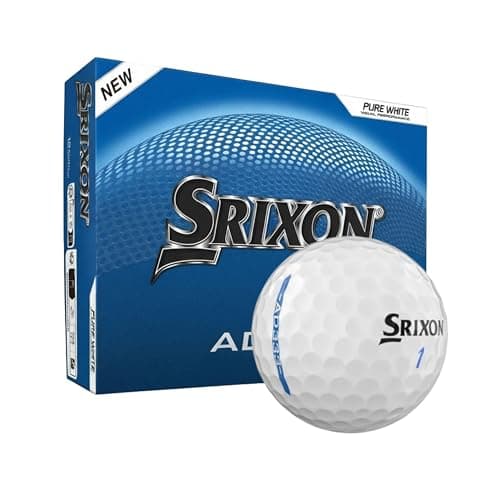
Srixon AD333 Golf Balls
Soft, straight, durable and affordable: the ideal all-round ball for a developing game.
Price checked live · updated 14 October 2026 · we may earn a commission
The top 5, ranked
 Our pick · Best OverallSrixon AD333 Golf BallsSoft, straight, durable and affordable: the ideal all-round ball for a developing game.Why we picked it ↓£19.49Buy on Amazon● In stock
 Best BudgetWilson Ultra Distance Golf Balls (24 Ball)Two dozen per box at the lowest cost per ball: the honest buy while you are still losing a few a round.Why we picked it ↓£28.95Buy on Amazon● In stock
 Best for DistanceTaylorMade Distance+ Golf BallsA long, low-spin two-piece ball at an everyday price, for beginners chasing yards.Why we picked it ↓£21.99Buy on Amazon● In stock
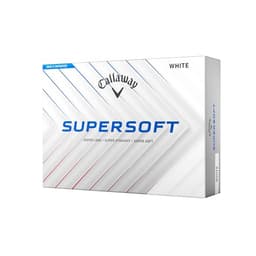 Best for Slow SwingsCallaway Supersoft Golf BallsOne of the softest, lowest-compression balls there is, easy to launch for slower swings.Why we picked it ↓£24.95Buy on Amazon● In stock
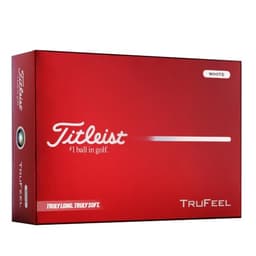 Best Step-UpTitleist TruFeel Golf BallsTitleist's softest ball: a sensible first step into the brand without paying Pro V1 money.Why we picked it ↓£24.95Buy on Amazon● In stock
Compare the specs
| # | Product | Best for | Compression | Feel | Cover | Best for | Price |
|---|---|---|---|---|---|---|---|
| 1 | Srixon AD333 Golf Balls | Best Overall | Mid | Soft | Ionomer | Most beginners | £19.49 |
| 2 | Wilson Ultra Distance Golf Balls (24 Ball) | Best Budget | Mid | Firm | Ionomer | While losing balls | £28.95 |
| 3 | TaylorMade Distance+ Golf Balls | Best for Distance | Mid | Soft | Ionomer | Distance seekers | £21.99 |
| 4 | Callaway Supersoft Golf Balls | Best for Slow Swings | Low | Very soft | Ionomer | Slower swings | £24.95 |
| 5 | Titleist TruFeel Golf Balls | Best Step-Up | Low | Soft | Ionomer | Improving golfers | £24.95 |
Swipe the table to see more →
Prices are live from Amazon and refresh through the day; last page update 14 October 2026.
Why beginners should not buy tour balls
Walk into a pro shop as a beginner and it is tempting to buy the premium ball the pros use. Don't. Here is why a tour ball is the wrong buy for a developing golfer:
- You cannot use its main benefit. A tour ball's selling point is greenside spin and control, which need a consistent, skilled short game to exploit. Until you have that, you are paying for something you cannot use.
- It can cost you distance. Firm, high-compression tour balls need a fast swing to compress. With a slower or developing swing, a soft ball often flies further.
- You will lose it. Beginners lose balls, and losing £3 balls hurts. Cheap balls let you play freely without counting the cost.
Save the tour balls for when your swing and short game can use them. For now, a soft, durable, affordable ball is genuinely the better ball for your golf. (Our main golf balls guide covers every level.)
What actually matters in a beginner ball
- Cost per ball. You will lose some, so a lower price, and bulk boxes, matter most while you are learning.
- Durability. A ball that survives cart paths, bunkers and the odd tree lasts longer and saves money.
- Forgiveness and straightness. Lower-spin distance balls can fly a touch straighter on mishits, which helps while your strike is inconsistent.
- Easy launch (soft / low compression). A soft ball you can compress at a slower swing gets airborne more easily.
- Distance. Getting the ball down the fairway matters more than stopping it on the green at this stage.
Notice what is not on the list: greenside spin. That comes later. Get these right and you have the right beginner ball.
Pick one ball and stick with it
A small tip that genuinely helps: once you have chosen a ball that suits you, play the same one consistently rather than switching between whatever you find in the rough. Different balls fly, feel and spin differently, so sticking to one removes a variable while you are learning what your swing does. Consistency in your equipment lets you learn faster from your shots.
And keep perspective: the ball matters far less than your technique. Get a sensible ball sorted, then put your real effort into lessons and practice, which is where a beginner's improvement actually comes from.
Our picks in detail
Soft, straight, durable and affordable: the ideal all-round ball for a developing game.
The UK club golfer's default ball.
The Srixon AD333 is the best all-round ball for most beginners and higher-handicappers. It is soft enough to feel good, straight and forgiving enough to flatter an inconsistent strike, and durable enough to last more than one encounter with a cart path, all at a price that does not hurt when you lose one. For a developing golfer it hits the sweet spot: proper quality and feel without the cost or the unusable spin of a tour ball.
It is a mid-compression ionomer ball, so it will not spin wedges back like a premium tour ball, but that is exactly the point, you cannot use that spin yet, and you would be paying four times more for it. As your game improves and you stop losing balls, our main golf balls guide covers the step up to softer and tour balls. For now, this is the ball that gives a learner the most golf for the least money and worry.
What we like
- Soft feel with a straight, forgiving flight
- Durable, survives the rough treatment of a learning round
- Affordable to lose
- Suits most developing swings
What we'd change
- Not a urethane tour ball for greenside spin (which you cannot use yet)
Buy this if: you want one quality, forgiving, affordable ball while you develop your game.
Two dozen per box at the lowest cost per ball: the honest buy while you are still losing a few a round.
If you are still losing several balls a round, and almost every beginner is, the sensible buy is not a nicer ball, it is a cheaper one by the box. The Wilson Ultra Distance gives you two dozen at the lowest cost per ball here, so you can feed the odd one to the lake or the trees without it stinging. It is a long, durable two-piece distance ball that flies far and shrugs off abuse, which is exactly what a learner needs.
It is firm and low on spin, so there is little feel or greenside control, but a beginner cannot use those anyway, and distance, durability and cost matter far more at this stage. There is genuinely no sense playing £3 balls while you are still finding the course. Buy these by the box, lose them without worry, and move up to a softer ball like the AD333 once you are keeping most of them.
What we like
- Two dozen per box, lowest cost per ball
- Long and very durable
- Lose them without worry
What we'd change
- Firm, minimal feel and greenside spin
Buy this if: you are still losing several balls a round and want cheap distance by the box.
A long, low-spin two-piece ball at an everyday price, for beginners chasing yards.
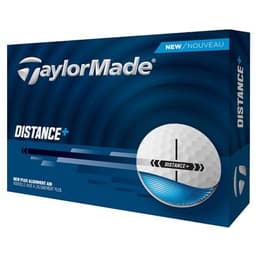
If you just want to hit it further, the TaylorMade Distance+ does what the name says: a long, low-spin, two-piece flight from a trusted brand at an everyday price. For beginners, lower spin off the driver can also mean a bit less sidespin on mishits, so it can fly a touch straighter as well as further, which is a nice bonus while your strike is still developing. It is a sensible, affordable distance ball.
Like any distance ball it is firm and offers little greenside spin, so it is about getting the ball down the fairway rather than stopping it on a sixpence, which is the right priority for a learner anyway. If you value feel more than raw yards, the AD333 or a soft ball suits better; if distance is your goal and budget matters, this is a strong, cheap pick from a big brand.
What we like
- Long, low-spin distance flight
- Lower spin can mean straighter mishits
- Trusted brand, everyday price
What we'd change
- Firm feel, minimal greenside spin
Buy this if: you mainly want more distance at an everyday price.
One of the softest, lowest-compression balls there is, easy to launch for slower swings.
Many beginners and improvers have slower swing speeds, and the Callaway Supersoft is built for exactly that. At a maker-listed compression around 38 it is one of the softest balls on the market, which means a slower swing can actually compress it and get easy launch and distance that a firmer ball would deny them. It has a lovely soft feel and a high, easy flight, and it is value-priced, so it is a brilliant match for slower-swinging learners and seniors.
It is too soft for a fast, powerful swing, but that is not who it is for. Matching the ball to your swing speed is one of the few ball choices that genuinely helps your golf, and for a slower swing a very soft ball like this is the right call. If your swing is average or quick, the AD333 or Distance+ suits better; if it is on the slower side, this is the easiest ball to get airborne and the one we would point you to.
What we like
- Very low compression, easy to launch
- Soft feel, high flight
- Great for slower swings and seniors
What we'd change
- Too soft for fast, powerful swings
Buy this if: you have a slower swing and want a soft ball that is easy to get in the air.
Titleist's softest ball: a sensible first step into the brand without paying Pro V1 money.
Once you are keeping most of your balls and want to move up a level, the Titleist TruFeel is a sensible first step into the game's most famous brand without the tour-ball price. It is Titleist's softest ball, with a soft feel and a solid, straight flight, giving an improving golfer a bit more quality and a trusted name without the cost or the demands of a Pro V1. It is the natural upgrade from a value ball.
It is still an ionomer ball rather than a urethane tour ball, so the big jump in greenside spin only comes later, when your short game can use it, and our main golf balls guide covers that step. But as a way to play a quality ball from a brand you trust, at a price that still makes sense for an improving golfer, the TruFeel is a smart move up. Buy it when you have stopped feeding balls to the lake and want a little more.
What we like
- Titleist's softest ball, trusted brand
- Soft feel, straight flight
- Quality step up without tour-ball money
What we'd change
- Still ionomer, not a urethane tour ball
Buy this if: you are keeping your balls and want a quality step up from a value ball.
How to choose, in order
- Losing several balls a round? Buy cheap distance balls by the bulk box (Ultra Distance). Don't overthink it.
- Slower swing? Play a very soft, low-compression ball (Supersoft) you can launch easily.
- Want more distance? A low-spin distance ball (Distance+) gets you yards cheaply.
- Keeping most of your balls, want quality and feel? A soft all-rounder (AD333) or a brand step-up (TruFeel).
As you improve further, our main golf balls guide covers value and premium tour balls for when your swing and short game can use them.
Common myths, corrected
- "The pros play it, so I should too." Their swing can use a tour ball; yours cannot yet. A soft value ball is the better ball for a beginner's golf.
- "An expensive ball will improve my game." It will not. Matching a sensible ball to your swing, and lessons, help far more than price.
- "Soft balls are only for seniors." No. Soft, low-compression balls suit any slower swing, which includes many beginners, and are easier to launch.
- "I need greenside spin." Not yet. You cannot use it without a consistent short game, so a durable, distance-focused ball serves you better for now.
What we’d skip
- Buying premium tour balls (like a Pro V1) as a beginner. You cannot use the greenside spin, they can cost you distance with a developing swing, and losing £3 balls hurts. A soft value ball performs better for your golf at a quarter of the price.
- Playing expensive balls while you are still losing several a round. Feed the lake cheap distance balls by the bulk box, not pricey ones. Upgrade only once you are keeping most of your shots on the course.
- Chasing greenside spin you cannot yet use. It needs a consistent short game. Until then, prioritise durability, straightness, easy launch and cost, not spin.
- Switching between random found balls every hole. Different balls fly and feel differently, which makes it harder to learn what your swing does. Pick one sensible ball and stick with it while you develop.
- Obsessing over the ball instead of your swing. The ball matters far less than technique for a beginner. Get a sensible, affordable ball sorted, then put your time and money into lessons.
Frequently asked questions
What golf balls should a complete beginner buy?
Cheap, durable, soft or distance balls, bought in bulk, not premium tour balls. Beginners lose balls, cannot yet use greenside spin, and often swing slower, so a soft value ball like the Srixon AD333, or cheap distance balls by the box while you are still losing them, serves you far better than an expensive tour ball. Prioritise cost per ball, durability, easy launch and straightness over spin and feel.
Should beginners use expensive or cheap golf balls?
Cheap, at least at first. While you are losing several balls a round, buying premium balls is money thrown into lakes and trees, and you cannot use their main benefit, greenside spin, anyway. Cheap distance balls by the bulk box are the honest buy early on. As you stop losing balls and want more feel, step up to a soft all-rounder, then later to tour balls once your short game can use them.
Do golf balls really make a difference for beginners?
Within limits, yes, but not in the way marketing suggests. Matching a soft, low-compression ball to a slower swing helps you launch it, and a lower-spin ball can fly straighter on mishits, both of which help a beginner. What does not help is paying for a tour ball's greenside spin you cannot use. So pick a sensible ball for your swing, but know that your technique matters far more than the ball, so invest in lessons.
What is the best cheap golf ball for high handicappers?
A bulk box of durable distance balls gives the lowest cost per ball, which is ideal while you are losing a few each round, and a soft value ball like the Srixon AD333 is the best all-rounder if you want more feel. Both are ionomer-covered, durable and affordable, which is exactly what a high-handicapper needs. Avoid premium tour balls: you cannot use their spin and they cost several times more.
Are soft golf balls better for beginners?
Often, yes, especially if you have a slower swing. Soft, low-compression balls are easier to compress and launch at slower speeds, so you get more height and distance than a firm ball would give you, plus a softer feel. Faster, stronger swingers can use firmer balls. So match the ball to your swing speed: many beginners swing slower and benefit from a soft ball, which is why we recommend soft options here.
When should I upgrade from beginner golf balls?
When you stop losing many balls and your short game is consistent enough to use greenside spin. At that point, moving up to a soft premium ball, then a urethane tour ball, starts to add control you can actually exploit around the greens. Until then, you are paying for performance you cannot use. A good signal is when you are regularly keeping the same ball for a full round and wanting more feel and stopping power on approach shots.
Does ball colour matter for beginners?
Only for visibility, which can genuinely help beginners. High-visibility yellow or matte-coloured balls are easier to follow in flight and find in the rough, which saves time and lost balls while your shots are less predictable. Performance is identical to a white version of the same ball, so it is purely a practical choice. If you struggle to track or find your ball, a bright colour is a sensible, no-downside pick.
How many golf balls should a beginner buy at once?
A lot, cheaply. Buy cheap distance balls by the bulk box, two dozen or more, because you will get through them while you are learning, and a low cost per ball keeps that affordable. There is no point buying small packs of expensive balls you will lose. As your ball-striking becomes more consistent and you stop losing them, you can buy smaller quantities of a better ball without it being wasteful.
Ready to choose?
Our one clear winner is the Srixon AD333 Golf Balls.