
The Best Yoga Mat (UK, 2026)
By Niko Moustoukas, Founder & Editor
Published 14 October 2026
If you want one mat for yoga that actually grips and lets you balance, buy a 6mm TPE mat with alignment guides, and the Yogii is our pick. At around 6mm it is thick enough to be kind to your knees but thin enough to stay stable in standing and balance poses, the TPE surface grips well so you are not sliding forward in downward dog, and the alignment guides help you place hands and feet, which beginners find genuinely useful. For general yoga at a sensible price, it is the sweet spot.
But a yoga mat and an exercise mat are not the same thing. If you do floor workouts, pilates or anything hard on the joints, a thicker 10mm cushioned mat is better, even though it is too soft for balance yoga. On the tightest budget a thick NBR mat is a few pounds, and a mid TPE mat is a solid all-rounder. The key, which trips a lot of people up, is matching the thickness and grip to what you actually do, which we explain below.
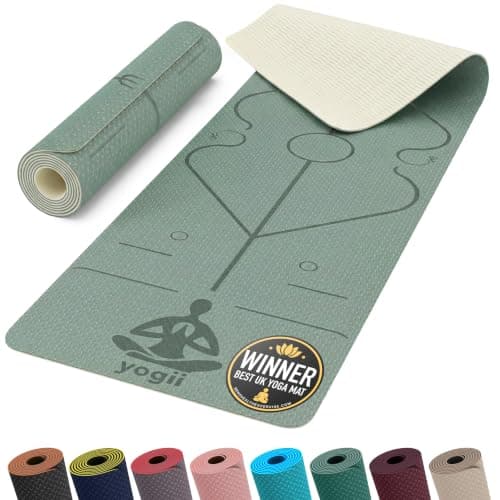
The winner · Best Overall
Yogii 6mm TPE Yoga Mat with Alignment Guides
The yoga sweet spot: 6mm of cushioning you can still balance on, a grippy TPE surface, and alignment guides to help your form.
Price checked live · updated 14 October 2026 · we may earn a commission
The top 4, ranked
 ★ Our pick · Best OverallYogii 6mm TPE Yoga Mat with Alignment GuidesThe yoga sweet spot: 6mm of cushioning you can still balance on, a grippy TPE surface, and alignment guides to help your form.Why we picked it ↓£14.99● In stockCheck price
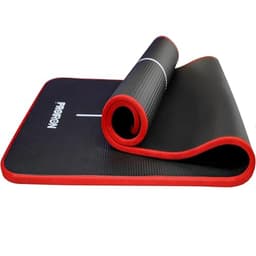 Best for Workouts & JointsPROIRON 10mm Thick NBR Exercise MatThick, cushioned and kind to joints for floor workouts and pilates, as long as you are not relying on it for balance yoga.Why we picked it ↓£24.99● In stockCheck price
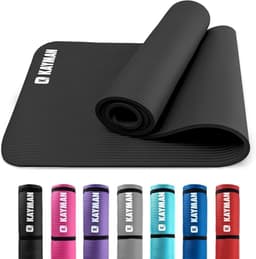 Best BudgetKAYMAN 8mm NBR Exercise & Yoga MatA thick, cushioned mat for under a tenner: the cheap way to protect your joints on the floor.Why we picked it ↓£8.99● In stockCheck price
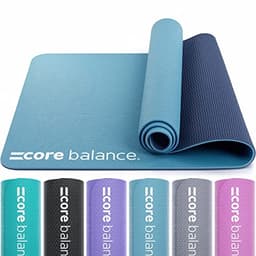 Best Value All-RounderCore Balance 6mm TPE Yoga MatA grippy 6mm TPE mat from a recognised fitness brand, a balanced do-most-things choice at a keen price.Why we picked it ↓£12.74● In stockCheck price
Compare the specs
| # | Product | Best for | Thickness | Material | Best for | Grip | Price |
|---|---|---|---|---|---|---|---|
| Yogii 6mm TPE Yoga Mat with Alignment Guides | Best Overall | 6mm | TPE | Yoga and balance | Good | £14.99 | |
| 2 | PROIRON 10mm Thick NBR Exercise Mat | Best for Workouts & Joints | 10mm | NBR foam | Floor workouts, joints | Moderate | £24.99 |
| 3 | KAYMAN 8mm NBR Exercise & Yoga Mat | Best Budget | 8mm | NBR foam | Budget floor exercise | Moderate | £8.99 |
| 4 | Core Balance 6mm TPE Yoga Mat | Best Value All-Rounder | 6mm | TPE | Mixed training | Good | £12.74 |
Prices are live from Amazon and refresh through the day; last page update 14 October 2026.
Thickness: match it to what you do
This is the decision people get wrong, lured by "extra thick" marketing. The right thickness depends entirely on what you do on the mat:
- Yoga and balance work: thinner is better, around 4 to 6mm. You need stability and a sense of the floor; on a thick, soft mat you sink and wobble in standing and balance poses. Our 6mm picks suit yoga.
- Floor workouts, HIIT and pilates: thicker is better, 8 to 10mm. Here cushioning protects your knees, elbows and spine against a hard floor, and balance matters less. Our 10mm pick suits this.
- Travel: thin and light (3 to 4mm) folds small, at the cost of cushioning.
So do not buy the thickest mat for yoga, or a thin yoga mat for burpees. If you genuinely do both and want one mat, a 6mm all-rounder is the compromise, as our value pick shows, but it is a compromise. Decide your main use first.
Grip and material: why NBR is not a yoga mat
For yoga, grip is the most important property, because sliding forward in downward dog or losing a foot in a lunge is both annoying and unsafe. And this is where the thick cheap "yoga" mats mislead: those big-cushion NBR foam mats are comfortable but slippery, which makes them exercise mats, not yoga mats.
- PVC: grippy, durable and cheap, the traditional yoga material, but not the eco or latex-free choice.
- TPE (our yoga picks): lighter, more eco-friendly, grips well for most yoga, though less durable than PVC over years.
- NBR foam (the thick exercise mats): very cushioned and cheap, but slippery and best kept for floor workouts, not balance yoga.
- Natural rubber (premium brands like Liforme and Yogi Bare): the best grip and feel, eco-friendly, but heavy, pricey and contains latex. The choice for serious yogis.
So for yoga, prioritise a grippy surface (TPE, PU-topped or natural rubber) over raw cushioning. For floor workouts, cushioning (thick NBR) matters more than grip.
Our picks in detail
Yogii 6mm TPE Yoga Mat with Alignment Guides
The yoga sweet spot: 6mm of cushioning you can still balance on, a grippy TPE surface, and alignment guides to help your form.
A well-reviewed TPE yoga mat.
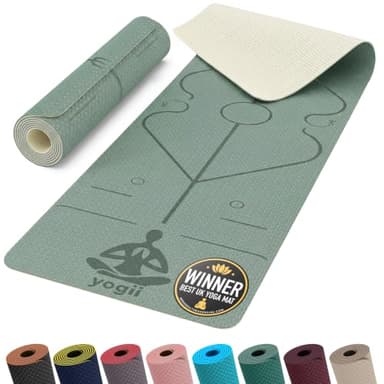
For actual yoga, this Yogii hits the balance that matters. At 6mm it cushions your knees and spine without being so thick that you wobble in standing and balance poses, which is exactly where over-thick mats let people down. The TPE surface grips well, so your hands and feet stay put in downward dog and planks rather than sliding forward, and TPE is lighter and more eco-friendly than PVC. The printed alignment guides are a real help for beginners learning where to place hands and feet.
It is not the thickest for pure floor-based joint cushioning, and TPE is less bomb-proof over years of heavy use than PVC or natural rubber, so it is a mid-life mat rather than an heirloom. Serious yogis who want the ultimate grip eventually look at premium natural-rubber mats. But for the vast majority doing yoga at home, the grip, the balance-friendly thickness and the alignment guides make it the one to buy, at a price that does not sting.
What we like
- 6mm: cushioned but stable for balance poses
- Grippy TPE surface, no sliding in downward dog
- Alignment guides help beginners
- Lighter and more eco than PVC
What we'd change
- Not the thickest for pure floor cushioning
- TPE less durable than PVC or rubber long term
Buy this if: you want a grippy, balance-friendly mat for general yoga.
PROIRON 10mm Thick NBR Exercise Mat
Thick, cushioned and kind to joints for floor workouts and pilates, as long as you are not relying on it for balance yoga.
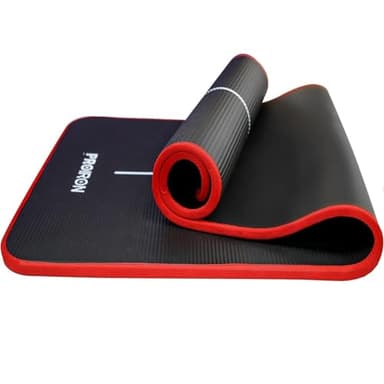
For home workouts, HIIT, pilates and anything with your knees, elbows or spine pressing into the floor, cushioning is king, and this PROIRON gives you a generous 10mm of NBR foam to protect your joints. On a hard floor, the difference between a thin mat and a thick cushioned one for sit-ups, planks and kneeling work is the difference between comfortable and sore, and this is squarely the exercise-mat end of the spectrum.
Here is the honest caveat that the listings blur: a thick soft NBR mat is poor for balance yoga, because you sink in and wobble, and NBR foam is more slippery than a proper yoga surface. So buy this for floor-based exercise and cushioning, not for downward dog and tree pose. It is larger and bulkier to roll and carry too. Within its job, protecting your joints during floor workouts, it is excellent value; for yoga, the thinner grippy mat is the right tool.
What we like
- Thick 10mm cushioning, kind to joints
- Great for floor workouts, HIIT and pilates
- Good value for the cushioning
What we'd change
- Too soft and slippery for balance yoga
- Bulky to roll and carry
Buy this if: you do floor workouts or pilates and want maximum joint cushioning.
KAYMAN 8mm NBR Exercise & Yoga Mat
A thick, cushioned mat for under a tenner: the cheap way to protect your joints on the floor.
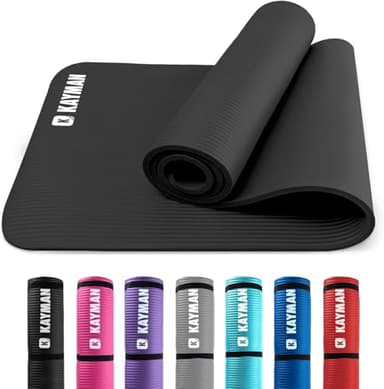
If you just want a cushioned mat to work out on and spend as little as possible, the KAYMAN does the job for around £9. At 8mm of NBR foam it gives solid joint protection for floor exercises, stretching and general home workouts, comes with a carry strap, and is an easy, low-risk first mat. For someone starting out who is not sure how much they will use it, it is hard to argue with the price.
The compromises are the NBR ones: it is cushioned but on the slippery side for balance yoga, and the foam is less durable than TPE or rubber, so heavy daily use will wear it faster. Treat it as a cheap, comfortable floor mat rather than a precision yoga surface. For budget floor cushioning and general exercise, it is honest value; if yoga grip and balance matter, the thinner TPE mat is the better buy even at a little more.
What we like
- Very cheap thick cushioned mat
- Good joint protection for floor work
- Includes a carry strap
What we'd change
- Slippery for balance yoga
- NBR foam wears faster than TPE or rubber
Buy this if: you want the cheapest cushioned mat for general floor workouts.
Core Balance 6mm TPE Yoga Mat
A grippy 6mm TPE mat from a recognised fitness brand, a balanced do-most-things choice at a keen price.
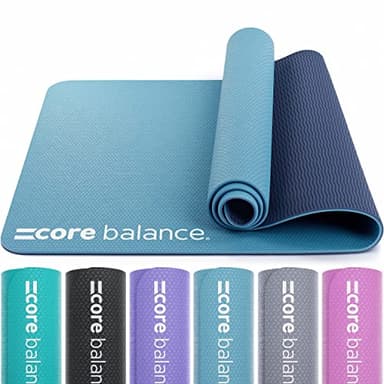
The Core Balance sits in the useful middle: a 6mm TPE mat that grips well enough for yoga yet cushions enough for general exercise, from a recognised UK fitness brand, at a keen price. The 6mm thickness and TPE surface make it a sensible one-mat compromise if you do a bit of everything, some yoga, some stretching, some floor work, and do not want to buy two mats. It is light and rolls up neatly for storage or carrying.
It is a jack of all trades, so it is not quite as grippy as a premium yoga mat nor as cushioned as a thick exercise mat, and TPE has the usual durability ceiling. But if your training is mixed and you want one decent mat that handles most of it without overspending, it is a smart, balanced pick. If you know you mainly do yoga, or mainly do floor workouts, the specialists above suit those better.
What we like
- Grippy 6mm TPE, good for mixed training
- Recognised brand at a keen price
- Light and rolls up neatly
What we'd change
- Jack of all trades, master of none
- TPE durability ceiling
Buy this if: you do a bit of everything and want one decent mat for the money.
What else to check
- Size, if you are tall. Standard mats are around 173 to 183cm; taller people should check the length so hands and feet are not off the ends.
- Grip, again, for yoga especially. Reviews mentioning sliding are a red flag for a yoga mat.
- Durability. PVC and natural rubber outlast TPE and NBR foam; if you practise daily, a tougher material earns its keep.
- Weight and roll size if you carry it to classes; thick NBR mats are bulky, thin travel mats pack small.
- Latex, if you have an allergy: natural rubber contains it, while TPE and PVC do not.
- Easy to clean, since mats get sweaty; a closed-cell surface wipes down more hygienically than open-cell foam.
Common myths, corrected
- "Thicker is always better." No. Thick is better for floor-workout cushioning but worse for yoga balance, where you sink and wobble. Match thickness to use: thin for yoga, thick for floor work.
- "A thick foam mat is a good yoga mat." Usually not. Thick NBR foam mats are cushioned but slippery, which makes them exercise mats. For yoga you want grip, from TPE, PVC or rubber, over raw cushioning.
- "You need an expensive mat." For general yoga and workouts, no: a good TPE or NBR mat is cheap and does the job. Premium natural-rubber mats are for serious yogis who want the ultimate grip and feel.
- "Any mat suits any height." No. Taller people run off the ends of a standard mat; check the length if you are tall so your hands and feet stay on it.
- "TPE and NBR are the same eco-friendly thing." They differ. TPE grips better and is the yoga-friendlier eco option; NBR is cheaper and more cushioned but slippery. Pick by use, not by the word "eco".
What we’d skip
- Buying the thickest mat for yoga. A thick, soft mat makes balance poses wobbly and unstable. For yoga, a thinner 4 to 6mm mat with good grip beats a plush 10mm one every time.
- A thin yoga mat for floor workouts on a hard floor. Your knees, elbows and spine will suffer. For floor exercise, HIIT and pilates, thick 8 to 10mm cushioning is the right tool.
- A slippery NBR foam mat for actual yoga. It is comfortable but you will slide in downward dog and lunges. NBR mats are exercise mats; for yoga, choose a grippy TPE, PVC or rubber surface.
- An expensive natural-rubber mat if you are a beginner doing occasional yoga. A cheap grippy TPE mat is plenty to start. Premium rubber mats reward serious, frequent yogis who want the best grip and feel.
- Ignoring length if you are tall. Standard mats leave taller people with hands or feet off the ends, which is uncomfortable and unstable. Check the dimensions before buying.
Frequently asked questions
What thickness yoga mat should I buy?
Match it to what you do. For yoga and balance work, a thinner 4 to 6mm mat gives the stability and ground contact you need. For floor workouts, HIIT and pilates, a thicker 8 to 10mm mat cushions your joints against a hard floor. Buying the thickest mat for yoga is the common mistake, because you sink and wobble in balance poses.
Is a thick foam exercise mat a good yoga mat?
Usually not. Thick NBR foam mats are cushioned and cheap but slippery, so you slide in downward dog and lunges, which makes them exercise mats rather than yoga mats. For yoga, grip matters most, so choose a grippy TPE, PVC or natural-rubber surface over raw cushioning, even if it is thinner.
What is the best material for a yoga mat?
For grip and value, TPE is a great all-rounder, lighter and more eco than PVC. PVC is grippy, durable and cheap but not the eco or latex-free choice. Natural rubber grips best and feels premium but is heavy, pricey and contains latex. NBR foam is cushioned but slippery, better for floor workouts than yoga.
Yoga mat or exercise mat: what is the difference?
A yoga mat is thinner and grippy, built for stability and traction in poses. An exercise mat is thicker and more cushioned, built to protect your joints during floor workouts, and is often more slippery. They are not interchangeable: use a grippy thinner mat for yoga and a thick cushioned mat for floor exercise.
Do I need an expensive yoga mat?
Not to start or for general use. A good TPE mat grips well and cushions enough for most people at a low price. Premium natural-rubber mats like Liforme or Yogi Bare reward serious, frequent yogis who want the ultimate grip and feel, but they are heavy, pricey and contain latex, so they are not necessary for beginners.
What size yoga mat do I need if I am tall?
Check the length, as standard mats are around 173 to 183cm and taller people can run off the ends, which is uncomfortable and unstable in poses. Longer mats are available for taller users. Width is usually fine for most people, but if you want more room, extra-wide mats exist too.
How do I keep a yoga mat clean?
Wipe it down after sweaty sessions with a damp cloth and a mild mat cleaner or diluted gentle soap, and let it air-dry fully before rolling it up, so it does not go away damp and smell. Closed-cell surfaces wipe down more hygienically than open-cell foam, which can absorb sweat. Avoid harsh chemicals that degrade the surface.
Is TPE or NBR better?
It depends on use. TPE grips better and is the yoga-friendlier, more eco option, if less durable than PVC. NBR foam is cheaper and more cushioned, which suits floor workouts, but it is slippery for balance yoga. For yoga, choose TPE; for cushioned floor exercise on a budget, NBR is fine.
Ready to choose?
Our one clear winner is the Yogii 6mm TPE Yoga Mat with Alignment Guides.