
The Best Stand Mixer (UK, 2026)
By Niko Moustoukas, Founder & Editor
Published 14 October 2026
If you bake regularly and want a stand mixer that will last, buy a proper branded machine, and the Kenwood is our pick. It has the weight and motor to handle stiff bread dough without labouring or walking across the worktop, comes with the three tools that matter, a K-beater for cakes and batters, a whisk for cream and meringues, and a dough hook for bread, and plugs into Kenwood's attachment ecosystem if you later want a mincer or pasta roller. For a serious home baker, it is the buy-it-once choice.
But be honest about how much you bake. If it is a couple of times a year, a stand mixer is expensive overkill and a hand mixer does the job for a fraction of the price and space. If you bake often but cannot stretch to a Kenwood, a budget mixer with a big bowl handles cakes and light doughs well, just not heavy bread day in, day out. Below we help you decide whether you need one, and what power and bowl size to look for if you do.
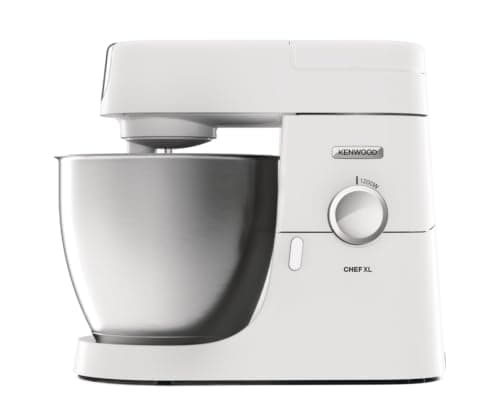
The winner · Best Overall
Kenwood Stand Mixer (K-beater, Whisk, Dough Hook)
The weight, motor and attachment ecosystem of a proper stand mixer that will last decades: the one to buy if you bake regularly.
Price checked live · updated 14 October 2026 · we may earn a commission
The top 4, ranked
 ★ Our pick · Best OverallKenwood Stand Mixer (K-beater, Whisk, Dough Hook)The weight, motor and attachment ecosystem of a proper stand mixer that will last decades: the one to buy if you bake regularly.Why we picked it ↓£229.90● In stockCheck price
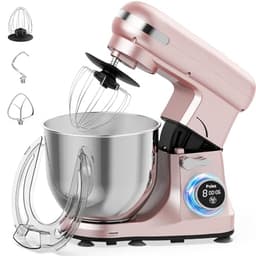 Best BudgetMoraRise Stand Mixer (6.5L, 1400W)A big 6.5L bowl and strong 1400W motor for around £60: a lot of mixer for the money.Why we picked it ↓£59.99● In stockCheck price
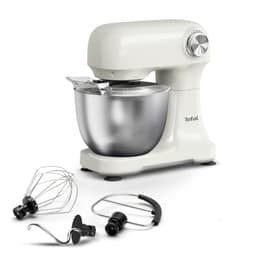 Best CompactTefal Bake Easy Stand Mixer (Compact)A smaller, lighter stand mixer from a trusted brand, for modest kitchens and everyday baking.Why we picked it ↓£87.99● In stockCheck price
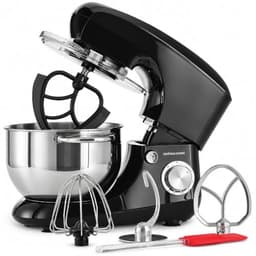 Best Mid-RangeAndrew James Stand Mixer (5.5L, 1300W)A large 5.5L bowl and 1300W motor from an established budget brand: a solid middle-ground buy.Why we picked it ↓£67.99● In stockCheck price
Compare the specs
| # | Product | Best for | Bowl | Power | Tools | Best for | Price |
|---|---|---|---|---|---|---|---|
| Kenwood Stand Mixer (K-beater, Whisk, Dough Hook) | Best Overall | ~5L | High | Beater, whisk, dough hook | Regular and serious bakers | £229.90 | |
| 2 | MoraRise Stand Mixer (6.5L, 1400W) | Best Budget | 6.5L | 1400W | Beater, whisk, dough hook | Budget, big batches, light-medium baking | £59.99 |
| 3 | Tefal Bake Easy Stand Mixer (Compact) | Best Compact | Compact | Mid | Beater, whisk, hook | Small kitchens, everyday baking | £87.99 |
| 4 | Andrew James Stand Mixer (5.5L, 1300W) | Best Mid-Range | 5.5L | 1300W | Beater, whisk, hook | Mid-range, regular baking | £67.99 |
Prices are live from Amazon and refresh through the day; last page update 14 October 2026.
Do you actually need a stand mixer?
Be honest before you spend, because a stand mixer is a big, pricey machine that either earns its space or gathers dust:
- Buy one if you bake regularly, cakes, bread, biscuits, meringues, whipping cream, where hands-free mixing and the power to knead dough save real time and effort.
- Skip it if you bake occasionally. If it is a couple of cakes a year, a hand mixer does the job for a fraction of the price and tucks in a drawer. A stand mixer bought for rare use is expensive worktop clutter.
A stand mixer is a brilliant tool for the right person and a waste of money and space for the wrong one. Match the purchase to how much you genuinely bake, not to how much you imagine you will.
Power and weight: what actually matters for bread
- For cakes, batters and whisking, almost any stand mixer has enough power. This is the easy stuff.
- For bread dough, power and weight matter. Stiff dough is hard work: a light, underpowered mixer labours, overheats and literally "walks" across the worktop as it struggles. A heavier, more powerful machine stays planted and kneads properly.
- Heavier is usually better, counter-intuitively. The weight keeps the mixer stable under load. Very light machines are a sign of a cheaper build that will struggle with dough.
So if you mainly bake cakes, a budget mixer is fine. If you bake bread often, prioritise a heavy, powerful machine, which is where the premium brands earn their price.
Bowl size, tools and attachments
- Bowl size: around 4.5 to 5L is the standard sweet spot for most home baking; 6.5L suits big or double batches. Too small and you are mixing in rounds; too big and small quantities do not reach the beater well.
- The three core tools: a flat beater (cakes, batters, creaming), a whisk (cream, egg whites, meringues) and a dough hook (bread). Make sure all three are included.
- Attachment hub: premium mixers (Kenwood, and others) have a power outlet that drives extra attachments, mincers, pasta rollers, spiralizers, turning the mixer into a multi-tasker. Only worth paying for if you will actually buy and use those attachments.
Our picks in detail
Kenwood Stand Mixer (K-beater, Whisk, Dough Hook)
The weight, motor and attachment ecosystem of a proper stand mixer that will last decades: the one to buy if you bake regularly.
A benchmark home stand mixer.
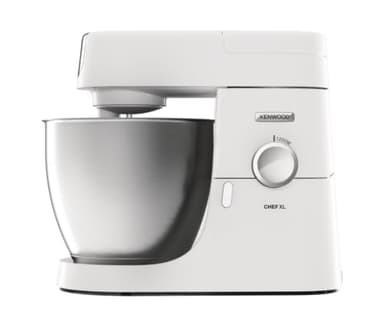
The Kenwood is the stand mixer most serious home bakers should buy. It has the heft and motor that cheaper mixers lack, so it kneads stiff bread dough without straining or juddering across the worktop, and it comes with the three core tools, the K-beater for cakes and batters, a whisk for cream and meringues, and a dough hook for bread. Crucially it plugs into Kenwood's attachment hub, so the same machine can later take a mincer, pasta roller and more, which turns it into a long-term kitchen workhorse.
It is a real investment and a big, heavy machine to house, so it only makes sense if you bake often enough to use it. But that is exactly who it is for, and for a regular baker it pays back in years, often decades, of reliable service and holds its value far better than a cheap mixer that wears out. If you bake rarely, this is too much machine; if baking is a real part of your life, it is the buy-it-once pick.
What we like
- Heavy, powerful: handles stiff bread dough
- K-beater, whisk and dough hook included
- Attachment ecosystem (mincer, pasta, more)
- Built to last decades
What we'd change
- A real investment
- Large and heavy to store
Buy this if: you bake regularly and want a powerful mixer that lasts decades.
MoraRise Stand Mixer (6.5L, 1400W)
A big 6.5L bowl and strong 1400W motor for around £60: a lot of mixer for the money.
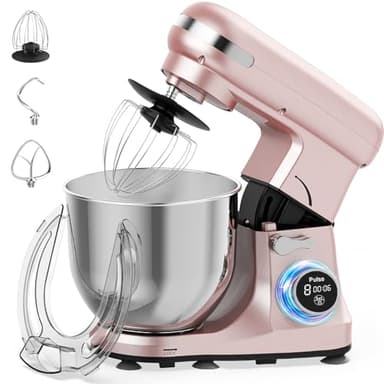
If you bake often but cannot justify Kenwood money, the MoraRise gives you a large 6.5L bowl and a strong 1400W motor for around £60, which is a lot of capacity and power for the price. The big bowl handles large cake batches and double batches of biscuits, the motor copes with everyday cakes, batters and lighter doughs, and it comes with the usual beater, whisk and dough hook. For value-focused home bakers it covers most of what people actually make.
The honest limits are build and longevity: budget mixers are not as solidly made as the premium machines, can struggle and move with very stiff bread dough, and will not take a branded attachment ecosystem. But for cakes, whisking and light-to-medium baking, it does the job well and cheaply, and the large bowl is genuinely useful. If you make a lot of heavy bread or want a lifetime machine, stretch to the Kenwood; for affordable regular baking, this is strong value.
What we like
- Big 6.5L bowl and 1400W motor
- Around £60, great value
- Beater, whisk and dough hook included
What we'd change
- Less solidly built, can move with stiff dough
- No branded attachment ecosystem
Buy this if: you bake often on a budget and want a big bowl and plenty of power.
Tefal Bake Easy Stand Mixer (Compact)
A smaller, lighter stand mixer from a trusted brand, for modest kitchens and everyday baking.
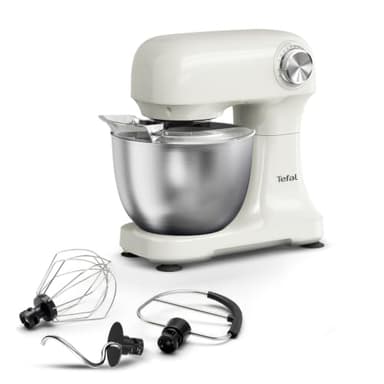
If worktop and cupboard space is tight, the Tefal Bake Easy is a more compact, lighter stand mixer that still gives you the hands-free convenience from a brand you can trust. Its smaller footprint suits modest kitchens where a big Kenwood would dominate, and it handles the everyday baking most people do, cakes, batters, whisking cream and meringues, with the standard set of tools, without being a heavy machine to lift out and store.
Being compact and lighter, it is less suited to large batches and heavy, repeated bread dough than the big, heavy mixers, which stay more planted under load. But for everyday cakes and bakes in a smaller kitchen, it is a sensible middle ground between a cheap no-name machine and a full-size premium one, with Tefal reliability behind it. If you bake in bulk or make a lot of bread, size up; for compact everyday baking, this fits.
What we like
- Compact, lighter, easy to store
- Trusted Tefal brand
- Good for everyday cakes and whisking
What we'd change
- Less suited to big batches
- Lighter under heavy bread dough
Buy this if: you want a compact, trusted-brand mixer for everyday baking.
Andrew James Stand Mixer (5.5L, 1300W)
A large 5.5L bowl and 1300W motor from an established budget brand: a solid middle-ground buy.
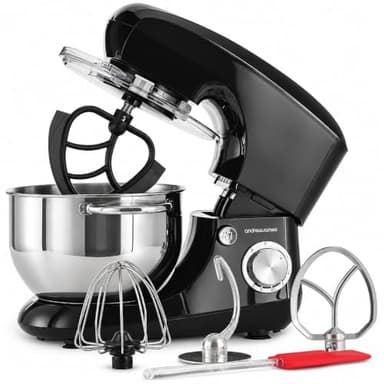
The Andrew James sits sensibly between the cheapest machines and the premium ones: a generous 5.5L bowl, a 1300W motor and an established budget-kitchen brand behind it, for a mid price. The big bowl and decent power handle family cake batches, whisking and lighter doughs comfortably, and it comes with the usual beater, whisk and dough hook, so it is a capable all-rounder for someone who bakes regularly but does not need a lifetime professional machine.
As with any sub-premium mixer, the build is not in Kenwood territory and very stiff bread dough is harder work, so it is not the one for serious daily bread baking. But for the regular home baker who wants a large bowl and reliable performance on cakes, bakes and lighter doughs without spending big, it is a well-judged middle ground. If you want maximum durability and attachments, the Kenwood is the step up; for value with a big bowl, this is a strong pick.
What we like
- Large 5.5L bowl, 1300W motor
- Established budget brand
- Capable all-rounder for regular baking
What we'd change
- Not premium build
- Harder work with very stiff dough
Buy this if: you want a big-bowl mixer with decent power at a mid price.
Common myths, corrected
- "Everyone who bakes needs a stand mixer." No. Occasional bakers are better served by a cheap hand mixer. A stand mixer earns its place only with regular use.
- "A light mixer is easier to live with." For storage, maybe, but under load a light mixer walks and struggles with dough. Weight means stability, which matters for bread.
- "More watts always means better." Power helps with dough, but build quality and weight matter just as much. A well-built machine outperforms a flimsy higher-wattage one under real load.
- "You need the attachment hub." Only if you will use the extra attachments. If you just bake, the three standard tools are all you need, and you need not pay for the ecosystem.
What we’d skip
- Buying a stand mixer if you only bake occasionally. It is a big, pricey machine that gathers dust with rare use. A hand mixer does the job for a fraction of the price and space, so only buy a stand mixer if you bake regularly.
- Choosing a light, cheap mixer for heavy bread baking. Underpowered, lightweight machines labour, overheat and walk across the worktop with stiff dough. If you bake bread often, prioritise a heavy, powerful mixer, which is where the premium brands earn their price.
- Paying for an attachment hub you will never use. The mincer and pasta-roller ecosystem is great if you want it, but pointless if you only bake. If the standard beater, whisk and dough hook are all you need, do not pay extra for the hub.
- Buying the wrong bowl size. Too small and you mix in rounds; too big and small quantities do not reach the beater well. Around 4.5 to 5L suits most home baking, with 6.5L for big or double batches.
- Assuming more watts alone means a better mixer. Power helps with dough, but build quality and weight matter just as much for stability and longevity. A solid, heavier machine beats a flimsy higher-wattage one under real load.
Frequently asked questions
Do I need a stand mixer or will a hand mixer do?
It depends how much you bake. A stand mixer is worth it if you bake regularly, cakes, bread, meringues, whipping, because hands-free mixing and the power to knead dough save real time and effort. If you bake only occasionally, a hand mixer does the job for a fraction of the price and tucks away in a drawer. A stand mixer bought for rare use is expensive worktop clutter.
What power does a stand mixer need for bread?
More than for cakes. Almost any stand mixer handles cakes, batters and whisking, but stiff bread dough is hard work and needs a powerful, heavy machine that stays planted rather than labouring, overheating and walking across the worktop. If you bake bread often, prioritise power and weight, which is where premium mixers earn their price. For light baking, a budget mixer with modest power is fine.
Why are stand mixers so heavy, and is that bad?
Weight is actually a good thing. A heavy mixer stays stable and planted when kneading stiff dough, whereas a light, cheap machine judders and literally moves across the worktop as it struggles. So while a heavy mixer is more of a lift to store, that weight means it can handle dough properly. A suspiciously light stand mixer usually signals a cheaper build that will struggle with heavy loads.
What bowl size stand mixer should I get?
Around 4.5 to 5L is the standard sweet spot for most home baking, big enough for family cakes and bread without being unwieldy. A 6.5L bowl suits large or double batches if you bake in bulk. Avoid going too small, which means mixing in rounds, or too big, where small quantities do not reach the beater well. Match the bowl to how much you typically bake at once.
What attachments come with a stand mixer?
The three core tools are a flat beater for cakes, batters and creaming, a whisk for cream, egg whites and meringues, and a dough hook for bread, and you should make sure all three are included. Premium mixers also have an attachment hub, a power outlet that drives extras like mincers, pasta rollers and spiralizers, which is worth paying for only if you will actually buy and use those attachments.
Are expensive stand mixers like Kenwood worth it?
If you bake a lot, especially bread, usually yes. The extra money buys durability that lasts decades, the power to knead stiff dough without straining, an attachment ecosystem, and strong resale value, so the lifetime cost is closer to a budget mixer than the sticker suggests. If you bake lighter and less often, a budget mixer does the job for far less, just do not expect it to knead heavy dough daily for twenty years.
Can a stand mixer knead bread dough?
Yes, with a dough hook, and it is one of the best reasons to own one, taking the hard work out of kneading. But stiff dough demands a powerful, heavy machine; a light, underpowered mixer labours and moves around under the load. If bread is a big part of your baking, choose a sturdy, powerful mixer. For occasional bread, even a budget machine manages, just more slowly and with more fuss.
What is the difference between a stand mixer and a food processor?
A stand mixer mixes, whisks and kneads, cakes, batters, meringues, cream and bread dough, hands-free in a bowl. A food processor chops, slices, grates and makes pastry with blades and discs, for prep rather than aeration and kneading. They overlap a little, but a mixer is for baking tasks that need beating, whisking and kneading, while a processor is for cutting and prep. Keen bakers who also prep a lot sometimes own both.
Ready to choose?
Our one clear winner is the Kenwood Stand Mixer (K-beater, Whisk, Dough Hook).