
The Best Skipping Rope (UK, 2026)
By Niko Moustoukas, Founder & Editor
Published 14 October 2026
If you want one skipping rope for fitness, buy a tangle-free speed rope, and the Blukar is our pick. The thin PVC cord and ball-bearing handles spin fast and smoothly without kinking or tangling, it adjusts to any height in seconds, and it costs about the same as a coffee. For general cardio, footwork and the occasional double-under, a good speed rope is all the vast majority of people ever need, and spending more rarely buys a better workout.
If you want the absolute cheapest, a basic adjustable rope does the job for a few pounds; and if you skip hard and daily, a sturdier premium rope lasts longer under heavy use. But with skipping, the rope is the easy part. Below we cover the two things that make or break it: sizing the rope to your height correctly, and skipping on a surface and in footwear that protects your knees and ankles.
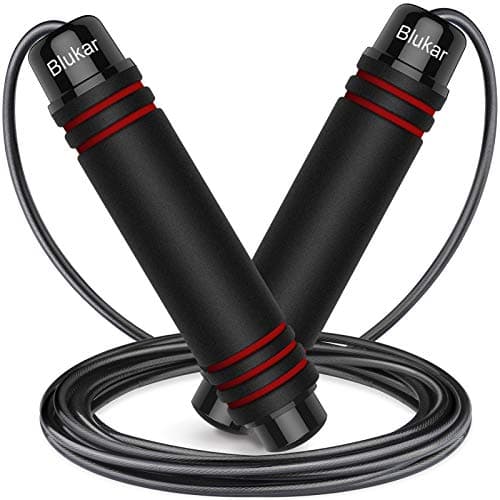
The winner · Best Overall
Blukar Speed Skipping Rope (Tangle-Free)
A tangle-free ball-bearing speed rope that adjusts to any height, for about the price of a coffee.
Price checked live · updated 14 October 2026 · we may earn a commission
The top 4, ranked
 ★ Our pick · Best OverallBlukar Speed Skipping Rope (Tangle-Free)A tangle-free ball-bearing speed rope that adjusts to any height, for about the price of a coffee.Why we picked it ↓£5.94● In stockCheck price
 Best BudgetAmazon Basics Adjustable Jump RopeA simple, reliable adjustable rope for a few pounds: the no-frills choice.Why we picked it ↓£4.95● In stockCheck price
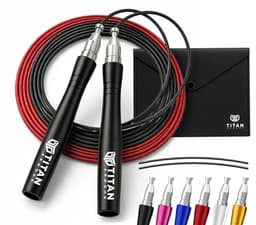 Best for Heavy UseTitan Armour Adjustable Speed Skipping RopeA sturdier, better-built rope for people who skip hard and daily and want it to last.Why we picked it ↓£22.99● In stockCheck price
 Also Worth ItWastou Speed Jump RopeA well-rated alternative speed rope with comfortable handles if the Blukar is out of stock.Why we picked it ↓£7.99● In stockCheck price
Compare the specs
| # | Product | Best for | Type | Cord | Adjustable | Best for | Price |
|---|---|---|---|---|---|---|---|
| Blukar Speed Skipping Rope (Tangle-Free) | Best Overall | Speed rope | Thin PVC, ball bearings | Yes | Most people, cardio and double-unders | £5.94 | |
| 2 | Amazon Basics Adjustable Jump Rope | Best Budget | Basic adjustable | PVC | Yes | Budget, general fitness | £4.95 |
| 3 | Titan Armour Adjustable Speed Skipping Rope | Best for Heavy Use | Premium speed rope | Durable cable | Yes | Heavy, daily use | £22.99 |
| 4 | Wastou Speed Jump Rope | Also Worth It | Speed rope | Thin PVC, ball bearings | Yes | Alternative speed rope | £7.99 |
Prices are live from Amazon and refresh through the day; last page update 14 October 2026.
Why a skipping rope is such good value
A skipping rope is about the best cardio-per-pound you can buy. It burns calories efficiently, gets your heart rate up fast, improves coordination, footwork and rhythm, packs into a pocket, and works anywhere with a bit of head height and floor space. For well under a tenner it does a job that costs hundreds in machines, which is why boxers and athletes have used one forever.
The honest limits:
- It is high impact. Repeated jumping loads the knees and ankles, so it is not ideal if you have joint problems, and surface and footwear matter (below).
- It has a learning curve. The first sessions are stop-start while you find the rhythm. That is normal; a week or two in, it clicks.
- The rope is the cheap part. Sizing it right and skipping on a sensible surface matter far more than which rope you buy.
How to size a skipping rope
A badly sized rope is the number one reason people struggle, and it is easy to fix because almost every rope here adjusts:
- Stand on the middle of the rope with one foot and pull the handles straight up.
- The handles should reach roughly between your armpits and chest. Mid-chest is a good all-round length; nearer the armpits suits faster, more experienced skipping.
- Too long and the rope drags and catches your feet; too short and you clip your head and have to crouch. Adjust until it sits right, then trim or store the excess per the rope's instructions.
- Taller people and beginners generally want a little more length; shorten it as your technique improves and you want a faster turn.
Surface, footwear and technique
- Skip on a forgiving surface. Wood, rubber matting or a gym/exercise mat are kind to your joints and to the rope. Avoid barefoot on concrete, which is hard on knees and ankles and shreds a thin cord.
- Wear trainers with some cushioning, not bare feet or socks, to protect your joints from the repeated impact.
- Turn the rope with your wrists, not big arm swings. Small, relaxed wrist circles keep it efficient and let you go for longer.
- Keep jumps low, just an inch or two off the floor, landing softly on the balls of your feet with soft knees. Big bouncy jumps tire you out and pound your joints.
- Build up gradually. Short intervals with rests to start; the impact adds up, so ease into longer sessions over a couple of weeks.
Our picks in detail
Blukar Speed Skipping Rope (Tangle-Free)
A tangle-free ball-bearing speed rope that adjusts to any height, for about the price of a coffee.
A best-selling speed rope.
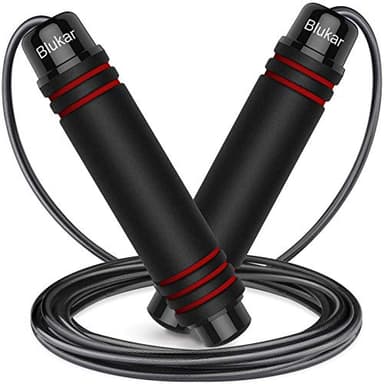
The Blukar is the skipping rope most people should buy. The ball-bearing handles let the thin PVC cord spin fast and smoothly, so it turns cleanly for steady cardio and is quick enough for double-unders when you want them, and the tangle-free design means it does not kink into a knotted mess mid-session, which is the single most annoying thing a cheap rope can do. It adjusts to any height in seconds, so it fits the whole household.
It is a lightweight speed rope, so it is not a weighted rope for building arm and shoulder work, and the thin cord will wear faster on rough concrete than a thick cable would. But for the core job, efficient cardio, footwork and coordination at home or in the park, it spins better than ropes costing several times more. For about the price of a coffee, it is the easy pick, and the money you save is better spent on a mat to skip on.
What we like
- Ball-bearing handles spin fast and smoothly
- Tangle-free, does not kink mid-session
- Adjusts to any height in seconds
- Very cheap, often under £6
What we'd change
- Lightweight, not a weighted rope
- Thin cord wears faster on rough concrete
Buy this if: you want a fast, tangle-free rope that just works, for very little money.
Amazon Basics Adjustable Jump Rope
A simple, reliable adjustable rope for a few pounds: the no-frills choice.
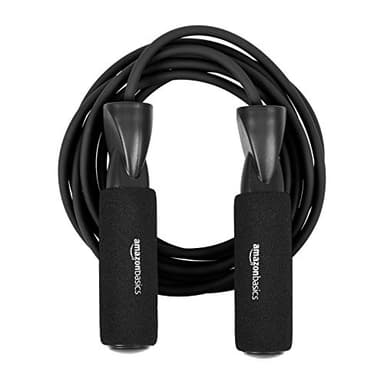
If you want the cheapest rope that will not let you down, the Amazon Basics jump rope is a safe, boring, sensible buy. It is a plain adjustable rope with comfortable handles that does exactly what a skipping rope should: turns, adjusts to your height and survives regular use, with the reassurance of easy returns if anything is off. For general fitness skipping where you are not chasing speed records, it is all you need.
It is not a fast speed rope and it is not weighted, so it will not spin quite as quickly for double-unders or add arm intensity. But for steady cardio and getting started, those are features most beginners do not use anyway. If you later get serious about speed work, the Blukar spins faster for barely more money; as a dependable, dirt-cheap first rope, this is hard to fault.
What we like
- Very cheap and dependable
- Comfortable handles, adjustable length
- Easy returns if anything is wrong
What we'd change
- Not a fast speed rope
- Not weighted
Buy this if: you want the cheapest reliable rope to get started with.
Titan Armour Adjustable Speed Skipping Rope
A sturdier, better-built rope for people who skip hard and daily and want it to last.
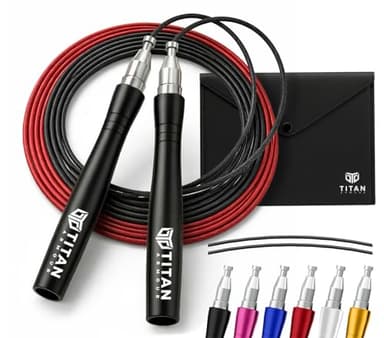
If you skip a lot, hard sessions, most days, maybe in a garage or gym, a cheap rope eventually frays or loosens, and a better-built rope like the Titan Armour earns its higher price in durability. The handles and bearings are more substantial, the cord and fittings are made for repeated heavy use, and it adjusts cleanly, so it keeps spinning smoothly long after a bargain rope would have given up. For committed skippers it is a buy-once rope.
For occasional or beginner use it is more rope than you need, and at over £20 it costs several times what a perfectly good speed rope does. But durability is a real feature if you skip daily, and replacing cheap ropes repeatedly adds up. If you are just starting or skip now and then, save the money and get the Blukar; if skipping is a core part of your training, this is the one that lasts.
What we like
- Sturdier build for heavy, daily use
- Substantial handles and bearings
- Buy-once durability for committed skippers
What we'd change
- Several times the price of a basic rope
- More than occasional users need
Buy this if: you skip hard most days and want a rope that lasts.
Wastou Speed Jump Rope
A well-rated alternative speed rope with comfortable handles if the Blukar is out of stock.
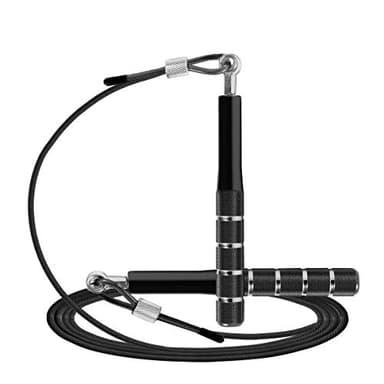
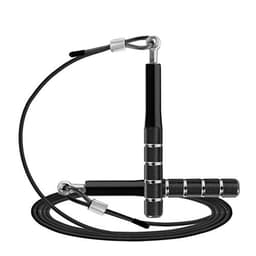
The Wastou is a strong alternative speed rope and a sensible back-up if our main pick is unavailable. It spins fast on ball-bearing handles, the grips are comfortable for longer sessions, and it adjusts easily, covering the same ground as the Blukar: efficient cardio, footwork and double-unders for not much money. If you prefer its handles or it happens to be cheaper on the day, you are not losing anything.
It sits in the same lightweight-speed-rope category, so the same caveats apply, it is not weighted and the thin cord prefers a smooth surface to rough concrete. There is no strong reason to pick it over the Blukar unless price or stock pushes you there, but it is a genuinely good rope, which is exactly what you want from a second option rather than a token also-ran.
What we like
- Fast ball-bearing spin
- Comfortable handles for longer sessions
- Solid back-up to the main pick
What we'd change
- No real advantage over the Blukar
- Lightweight, not weighted
Buy this if: our main pick is out of stock or you prefer these handles.
Speed, basic or weighted?
- Speed ropes (our pick) are thin and light with ball-bearing handles that spin fast. Best for cardio, footwork and double-unders, and what most people should buy.
- Basic ropes are plain and cheap, fine for steady general skipping where you are not chasing speed. The budget option.
- Weighted ropes have heavier handles or cords that add arm, shoulder and grip work and give more feedback so the timing is easier to feel. Worth it if you specifically want upper-body involvement or find light ropes hard to control; not necessary for pure cardio.
For the vast majority, a good speed rope covers everything. Only reach for weighted if you want the extra arm work or struggle to feel a light rope's rhythm.
Do you need a "smart" counting rope?
You will see ropes with digital counters and app connectivity for a lot more money. They count your jumps and sync to a phone, which some people enjoy. But a counter does not make you fitter, the cord and bearings on a cheap speed rope spin just as well, and the electronics are another thing to break or run out of battery.
If logging numbers genuinely motivates you, fine. For everyone else, a simple speed rope and a clock or a count in your head does the same job for a fraction of the price. Spend the difference on a mat to skip on, which actually improves the experience.
What we’d skip
- Skipping barefoot on concrete. It is hard on your knees and ankles and shreds a thin cord. Wear cushioned trainers and skip on wood, rubber matting or an exercise mat.
- Using a badly sized rope. Too long and it drags and trips you; too short and you crouch and clip your head. Stand on the middle and adjust so the handles reach roughly armpit to chest height before you start.
- Paying for a "smart" counting or app-connected rope. The counter does not make you fitter, and the electronics just add cost and things to break. A simple speed rope spins just as well for a fraction of the price.
- Big arm swings and high bouncy jumps. Turn the rope with small wrist circles and keep jumps an inch or two off the floor, landing softly on the balls of your feet. Big movements tire you out and pound your joints.
- Going hard from day one. Skipping is high impact and has a learning curve, so build up with short intervals and rests over a couple of weeks rather than one long session that leaves your calves and joints wrecked.
Frequently asked questions
Is skipping good exercise?
Yes, it is one of the most effective and cheapest forms of cardio there is. It raises your heart rate quickly, burns calories efficiently, and improves coordination, footwork and rhythm, all from a rope that costs under a tenner and packs into a pocket. The main caveat is that it is high impact, so surface, footwear and building up gradually matter for your joints.
What size skipping rope do I need?
Stand on the middle of the rope with one foot and pull the handles straight up: they should reach roughly between your armpits and chest. Mid-chest is a good all-round length, nearer the armpits suits faster experienced skipping. Almost every rope adjusts, so size it to your height before the first session rather than fighting a rope that is too long or short.
Speed rope or weighted rope?
A speed rope is thin and light with fast-spinning ball-bearing handles, best for cardio, footwork and double-unders, and the right choice for most people. A weighted rope adds arm, shoulder and grip work and makes the timing easier to feel, which helps if you want upper-body involvement or struggle to control a light rope. For pure cardio, a speed rope is all you need.
What surface should I skip on?
A forgiving surface like wood, rubber matting or an exercise mat, which protects your knees and ankles and is kinder to the rope. Avoid skipping barefoot on concrete, which is hard on your joints and wears out a thin cord quickly. Wear cushioned trainers rather than bare feet or socks to absorb the repeated impact.
Is skipping bad for your knees?
It is high impact, so it loads the knees and ankles more than low-impact cardio. Done sensibly, with cushioned trainers, a forgiving surface, low soft jumps and a gradual build-up, most people are fine. If you have existing knee or ankle problems, treat it as high impact and get advice or choose a lower-impact option; the pounding is real if your technique or surface is poor.
How long should I skip for?
Start short. A few minutes of intervals with rests is plenty when you are learning, because the impact and the coordination both take adjusting to. Build up over a couple of weeks towards longer continuous sessions or structured intervals. Ten to fifteen minutes of skipping is a solid cardio session once you are comfortable; quality of movement beats grinding out long sloppy sessions.
Why does my skipping rope keep tangling?
Usually either a cheap cord that kinks or a rope that is the wrong length for you. A tangle-free speed rope with ball-bearing handles largely solves the kinking, and sizing the rope correctly stops it catching your feet and bunching. Store it loosely coiled rather than knotted, and let the cord hang to un-kink before you start.
Do I need an expensive or "smart" skipping rope?
No. A simple tangle-free speed rope spins just as well as a dear one for a fraction of the price, and smart counting ropes add cost and electronics without making you fitter. Only pay more for genuine durability if you skip hard and daily, or for a weighted rope if you specifically want arm work. For most people, a cheap speed rope is the right buy.
Ready to choose?
Our one clear winner is the Blukar Speed Skipping Rope (Tangle-Free).