
The Best Nappy Bin (UK, 2026)
By Niko Moustoukas, Founder & Editor
Published 14 October 2026
If you want a nappy bin that controls smell without quietly charging you for refills forever, buy the Ubbi Stainless Steel. It takes a normal bin bag, no special cassettes, so once you have bought it there is no ongoing cost, and it seals odour brilliantly with a rubber gasket and a sliding lid in a steel body that does not absorb smells or stain. It costs more upfront than the cassette bins, and that is exactly the point: over the years of nappies it works out cheaper, because you are not feeding it branded refills.
If you would rather spend little now and do not mind the running cost, the Tommee Tippee Twist & Click seals each nappy in film for the best per-nappy odour control, the Angelcare Classic XL is a cheap high-capacity option, and the Korbell adds a hands-free foot pedal. But before you buy a bargain bin, do the one piece of maths almost nobody does, below: the cost of its refills over two and a half years. It changes the answer.
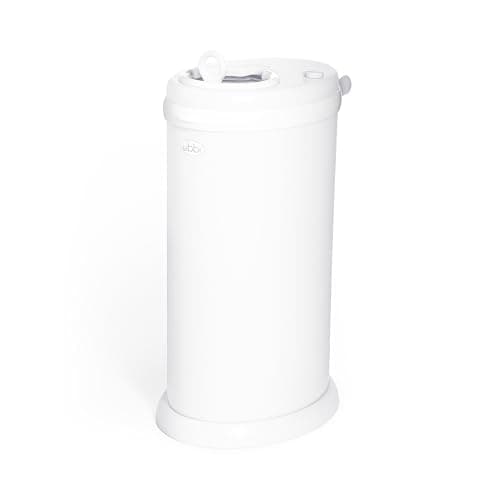
The winner · Best Overall
Ubbi Stainless Steel Nappy Bin
The one that takes a normal bin bag: brilliant odour sealing in a steel body, with no refill cassettes to buy ever again.
Price checked live · updated 14 October 2026 · we may earn a commission
The top 5, ranked
 ★ Our pick · Best OverallUbbi Stainless Steel Nappy BinThe one that takes a normal bin bag: brilliant odour sealing in a steel body, with no refill cassettes to buy ever again.Why we picked it ↓£79.99● In stockCheck price
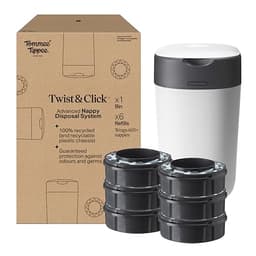 Best Odour ControlTommee Tippee Twist & Click (Sangenic) Nappy BinThe best per-nappy odour sealing: each nappy is twisted into antibacterial film, as long as you accept the ongoing refill cost.Why we picked it ↓£34.99● In stockCheck price
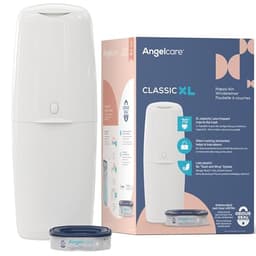 Best ValueAngelcare Classic XL Nappy BinA cheap, high-capacity bin that holds up to 70 nappies with a simple no-twist liner, for low upfront spend.Why we picked it ↓£15.00● In stockCheck price
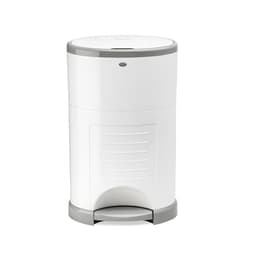 Best Hands-FreeKorbell Eco Plus 26L Nappy BinA large foot-pedal bin with biodegradable liner rolls (and the option of normal bags), for hands-free, greener disposal.Why we picked it ↓£74.99● In stockCheck price
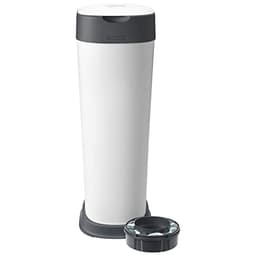 Best Large CapacityTommee Tippee Twist & Click XL Nappy BinThe cassette bin’s odour sealing in a bigger body, for fewer empties, if you accept the ongoing refills.Why we picked it ↓£34.99● In stockCheck price
Compare the specs
| # | Product | Best for | Type | Ongoing cost | Odour control | Body | Price |
|---|---|---|---|---|---|---|---|
| Ubbi Stainless Steel Nappy Bin | Best Overall | Normal-bag | None | Very good | Stainless steel | £79.99 | |
| 2 | Tommee Tippee Twist & Click (Sangenic) Nappy Bin | Best Odour Control | Cassette/refill | Yes, ongoing | Excellent | Plastic | £34.99 |
| 3 | Angelcare Classic XL Nappy Bin | Best Value | Refill liner | Yes, ongoing | Good | Plastic | £15.00 |
| 4 | Korbell Eco Plus 26L Nappy Bin | Best Hands-Free | Pedal, liner roll | Some, flexible | Good | Plastic | £74.99 |
| 5 | Tommee Tippee Twist & Click XL Nappy Bin | Best Large Capacity | Cassette/refill | Yes, ongoing | Excellent | Plastic | £34.99 |
Prices are live from Amazon and refresh through the day; last page update 14 October 2026.
Do you even need a nappy bin?
Honestly, no, not a special one. A nappy bin is a convenience, and there are perfectly good free or cheap alternatives:
- A normal lidded pedal bin in the nursery, emptied regularly, does most of the job, especially in the newborn months when breastfed-baby nappies are not very smelly.
- Nappy sacks tied tight and dropped into your outdoor bin cost pennies and skip the bin entirely.
- A dedicated nappy bin earns its place when you want to empty less often and seal smell in the room between empties, which matters more once your baby is weaning and nappies get properly smelly.
So do not feel you must buy one. If you do want the convenience of sealing odour in the nursery, read on, because the main decision, refills or not, affects what it costs you for years.
The refill trap: the hidden cost nobody does the maths on
This is the whole game, so slow down here. Most cheap nappy bins are cheap because they make their money on refills. Cassette bins like the Tommee Tippee Sangenic wrap each nappy in antibacterial film pulled from a branded cartridge, and you buy those cartridges again and again for the two and a half years or so your child is in nappies, across several thousand changes.
Do the sum before you buy a bargain bin: look up the price of its refill cassettes, work out roughly how many nappies each cassette wraps, and multiply across a couple of years. People are routinely shocked to find the refills cost more than the bin itself, several times over. The sticker price is the cheap part.
- No-refill bins (our Ubbi winner) take a normal bin bag, so after the upfront cost there is nothing more to pay. Dearer to buy, far cheaper to live with.
- Refill bins (Sangenic, Angelcare) are cheap to buy and seal odour best per nappy, but you pay for them forever in cartridges.
- Flexible bins (Korbell) use liner rolls but can take a normal bag, so you control the cost.
There is no single right answer, but there is a right way to choose: decide with the running cost in front of you, not just the shelf price.
What else to weigh up
- Odour control. Individual-wrap cassette bins seal best per nappy; a good steel bin with a rubber seal and sliding lid (the Ubbi) is close behind without refills. A cheap swing-lid bin is the weakest.
- Capacity. Bigger bins mean fewer empties, which matters most in the newborn frequent-change phase. Weigh that against the floor space.
- One-handed or hands-free use. You will often be operating it with a baby in one arm, so a one-handed mechanism or a foot pedal is genuinely useful.
- Material. Steel does not absorb smells or stain over years; plastic can discolour and hold odour eventually.
- Emptying and cleaning. Check how easily it empties and wipes out, because it will need cleaning.
Our picks in detail
Ubbi Stainless Steel Nappy Bin
The one that takes a normal bin bag: brilliant odour sealing in a steel body, with no refill cassettes to buy ever again.
A cult favourite with a large review history.
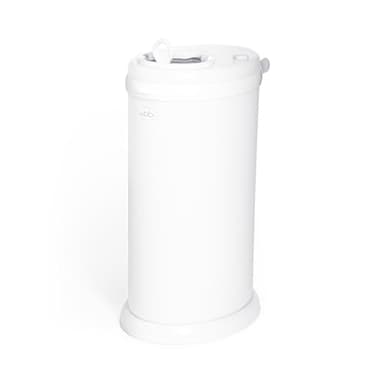
The Ubbi solves the nappy bin’s dirty secret by not having one. It takes an ordinary bin bag rather than a proprietary cassette, so after the upfront cost there is nothing more to pay, no cartridges, no lock-in. Odour control is excellent anyway: a rubber seal around the lid and a sliding (rather than swinging) lid mean air is not pushed out each time you open it, and the stainless steel body does not soak up smells or stain the way plastic bins do over years of use. It looks like a tasteful kitchen bin rather than baby kit.
It is the most expensive bin here to buy, which is the only real catch, and it does not wrap each nappy individually, so for the very smelliest toddler nappies the cassette bins seal marginally better per nappy. But run the numbers over two and a half years of refills for a cassette bin and the Ubbi is usually the cheaper choice overall, as well as the nicer object. If you want to buy once and never think about it again, this is the one.
What we like
- Takes a normal bin bag, no refill cassettes ever
- Excellent odour sealing, rubber gasket and sliding lid
- Steel body does not absorb smells or stain
- Cheaper over the nappy years, and looks good
What we'd change
- The dearest bin here to buy upfront
- Does not wrap each nappy individually
Buy this if: you want great odour control with no ongoing refill cost and a bin that lasts.
Tommee Tippee Twist & Click (Sangenic) Nappy Bin
The best per-nappy odour sealing: each nappy is twisted into antibacterial film, as long as you accept the ongoing refill cost.
One of the most-reviewed nappy bins on Amazon UK.
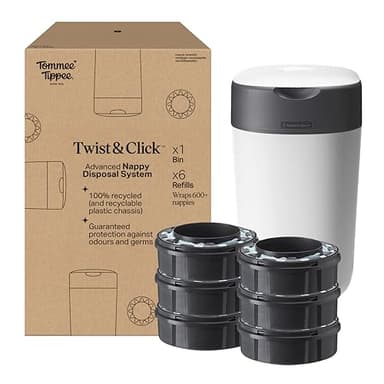
If raw odour control is your priority, the cassette bins win it, and the Tommee Tippee Twist & Click is the one most people buy. Each nappy is pushed through and individually wrapped and sealed in multi-layer antibacterial film from a refill cassette, which genuinely contains smell better than any bag-based bin, nappy by nappy. The bin is cheap to buy and simple to use one-handed, which is why it is everywhere.
The honest catch is the running cost. Those cassettes are a consumable you buy again and again for the two-plus years your child is in nappies, and over that time they can cost more than the bin several times over. It is cheap to start and dearer to live with, the opposite of the Ubbi. Buy it if you want the best odour sealing and the upfront saving matters more to you than the long-run cost; just go in with your eyes open to the refills.
What we like
- Best per-nappy odour sealing, individually wrapped
- Cheap to buy, simple one-handed use
- Antibacterial film, widely available refills
What we'd change
- Ongoing cost of refill cassettes for years
- Can cost more than the bin itself over time
Buy this if: you want the best odour sealing and are happy to keep buying refills.
Angelcare Classic XL Nappy Bin
A cheap, high-capacity bin that holds up to 70 nappies with a simple no-twist liner, for low upfront spend.
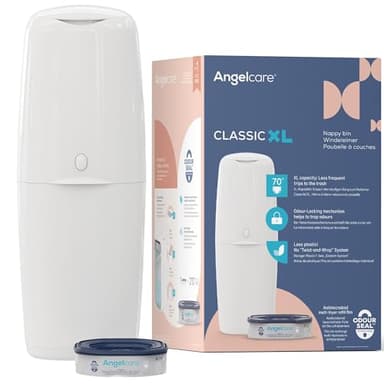
The Angelcare Classic XL is the budget-friendly high-capacity option: it holds up to around 70 nappies, so you empty it far less often, and it uses a simple no-twist liner you pull through and tie, which is less faff than a twist mechanism. For a low upfront price it is a lot of bin, and the big capacity genuinely helps in the newborn months when changes are frequent.
It still uses Angelcare refill liners, so like the Tommee Tippee it carries an ongoing cost, just a simpler, often cheaper-per-use one than individually wrapping each nappy. Odour control is good rather than best-in-class. If you want to spend little now, do not want to empty the bin constantly, and will keep an eye on refill costs, it is a sensible value pick. If you want zero ongoing cost, the Ubbi is still the long-run saver.
What we like
- High capacity, up to ~70 nappies before emptying
- Cheap upfront, simple no-twist liner
- Less frequent emptying in the newborn months
What we'd change
- Still uses refill liners (ongoing cost)
- Odour control good, not best-in-class
Buy this if: you want a cheap, big-capacity bin and will watch the refill costs.
Korbell Eco Plus 26L Nappy Bin
A large foot-pedal bin with biodegradable liner rolls (and the option of normal bags), for hands-free, greener disposal.
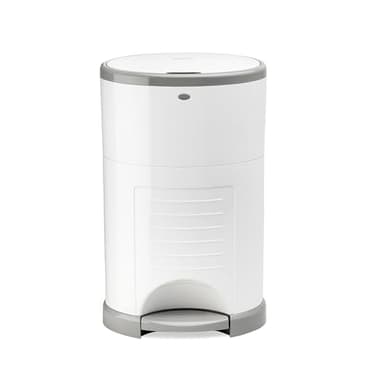
When your hands are full of baby and dirty nappy, a foot pedal is a genuine luxury, and the Korbell Eco Plus is built around one. It is a large 26-litre bin you open hands-free, it uses a continuous biodegradable liner roll you simply pull down and tie off per nappy or per batch, and it can also take a normal bin bag if you would rather, which softens the refill lock-in. The eco liners appeal if you are trying to cut single-use plastic.
The liner rolls are still a consumable, so there is some ongoing cost, though you control it by how much liner you use per change, and the normal-bag option is there as a fallback. It is bulkier than the compact cassette bins. If hands-free operation and greener liners matter to you, and you like the flexibility of not being fully locked in, this is the pick. For pure lowest-running-cost, the Ubbi with a normal bag still wins.
What we like
- Hands-free foot pedal, large 26L capacity
- Biodegradable liner rolls, or use a normal bag
- Less lock-in than pure cassette bins
What we'd change
- Liner rolls still a consumable; bulkier bin
- Not quite the odour sealing of individual wrapping
Buy this if: you want hands-free use and greener liners without full refill lock-in.
Tommee Tippee Twist & Click XL Nappy Bin
The cassette bin’s odour sealing in a bigger body, for fewer empties, if you accept the ongoing refills.
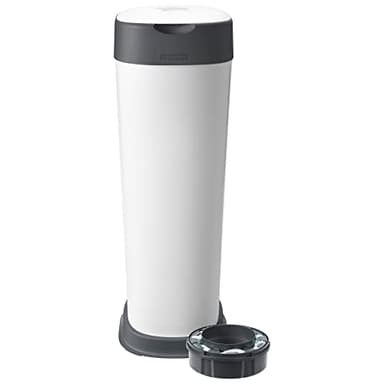
If you love the idea of the Twist & Click’s individual-wrap odour control but hate emptying the bin, the XL is the answer: the same antibacterial-film system that seals each nappy, in a larger body that holds more before it needs emptying. For a busy nursery, or parents of twins or close-in-age siblings, the extra capacity plus the best-in-class per-nappy sealing is a strong combination.
It carries exactly the same caveat as the standard Twist & Click, the refill cassettes are an ongoing cost for years, and a bigger bin gets through them no slower overall. So it is cheap to buy, excellent at odour, and something you keep feeding. If capacity and odour sealing are your priorities and you have accepted the refill model, size up to this; if the running cost bothers you, the Ubbi remains the no-refill alternative.
What we like
- Best per-nappy odour sealing, larger capacity
- Fewer empties, good for busy or multiple-child homes
- Cheap to buy
What we'd change
- Ongoing refill cassette cost, same as the standard version
- Bulkier than the standard bin
Buy this if: you want cassette odour control with fewer empties and accept the refills.
Keeping the smell down, whatever bin you buy
- Empty it before it is full, not after. The smell escalates fast once a bin is packed, especially with weaning nappies; a slightly-too-frequent empty beats a heroic full one.
- Weaning changes everything. Breastfed newborn nappies are mild; once solids start, nappies get genuinely strong, which is when odour control and capacity start to matter. Do not judge your needs by the easy early weeks.
- Keep the seal clean. Wipe the rim and lid seal regularly; trapped residue is often the lingering smell, not the bin itself.
- A normal bin can be upgraded cheaply with scented bin liners or the odd bicarbonate-of-soda sprinkle, if you decide against a dedicated nappy bin.
- Position it sensibly: near the changing area for convenience, but it does not have to live in the nursery if a landing or bathroom suits you better.
Common myths, corrected
- "The cheapest nappy bin is the cheapest option." Rarely. Cassette bins are cheap to buy and cost you for years in refills. Over the nappy years a no-refill bin is usually cheaper overall. Judge on total cost, not the shelf price.
- "You must have a special nappy bin." No. A normal lidded bin emptied regularly, or tied nappy sacks into an outdoor bin, works fine. A nappy bin is a convenience, not a necessity.
- "A pricier bin controls odour better." Not necessarily. Individual-wrap cassettes seal best per nappy, but a good steel bin with a sealed sliding lid is close, and both beat an expensive but poorly sealed swing bin.
- "The Ubbi needs special bags." It does not, which is its whole appeal; it takes a normal bin bag. Only the cassette and liner-roll bins need proprietary refills.
- "Newborn nappies need serious odour control." Breastfed newborn nappies are mild. It is weaning, several months in, that produces the smells a good bin actually earns its keep against.
What we’d skip
- Buying a cassette bin without checking the refill cost first. The cheap bin is the bait; the cartridges are where it costs you, for years. Work out the refill cost per nappy over two and a half years before committing, and compare it against a no-refill bin.
- A dedicated nappy bin at all, if a normal lidded pedal bin emptied regularly suits you. Plenty of families never buy one and manage perfectly with nappy sacks and their usual bins. It is a convenience, not a requirement.
- Cheap swing-lid bins marketed for nappies. A swinging lid pushes smelly air out every time it moves and seals poorly. If you want odour control, you want a sealed sliding lid or individual wrapping, not a swing flap.
- Oversized capacity you will not use, or scented refills if anyone in the house is sensitive to fragrance. Match the bin to your space and your nose, not the biggest or most heavily perfumed option.
- Assuming you need serious odour kit from day one. Newborn nappies are mild; you can start simple and upgrade around weaning if you find you need to, rather than overspending upfront.
Frequently asked questions
Do I really need a nappy bin?
No, it is a convenience rather than a necessity. A normal lidded pedal bin emptied regularly, or tied nappy sacks dropped into your outdoor bin, both work. A dedicated nappy bin earns its place if you want to empty less often and seal smell in the nursery between empties, which matters more once your baby is weaning.
Cassette nappy bin or normal-bag bin?
Cassette bins like the Sangenic seal odour best by wrapping each nappy, but cost you in refills for years. Normal-bag bins like the Ubbi cost more upfront but take a standard bin bag with no ongoing cost, so they are usually cheaper over the nappy years. Decide with the refill cost in front of you, not just the shelf price.
How much do nappy bin refills cost over time?
It varies by brand, but the point is that you buy them repeatedly for the roughly two and a half years and several thousand changes a child is in nappies, so they add up and can exceed the price of the bin itself several times over. Look up the cassette price and nappies per cassette, and multiply across two years before you buy.
Does the Ubbi nappy bin need special bags?
No, and that is its main appeal. It takes an ordinary bin bag, so there are no proprietary cassettes or refills to buy, which means no ongoing cost after you buy the bin. It controls odour with a rubber seal and a sliding lid in a steel body rather than by wrapping each nappy.
Which nappy bin controls smell best?
Individual-wrap cassette bins such as the Tommee Tippee Twist & Click seal odour best per nappy, because each one is twisted into antibacterial film. A good steel bin like the Ubbi, with a rubber gasket and a sliding lid, is close behind without refills. Cheap swing-lid bins are the weakest at containing smell.
How often should I empty a nappy bin?
Before it is full rather than after, because odour escalates quickly once a bin is packed, especially with weaning nappies. A higher-capacity bin lets you empty less often, which helps in the frequent-change newborn phase, but even then emptying a little early keeps the smell down better than filling it to the top.
Is a steel or plastic nappy bin better?
Steel has the edge for longevity: it does not absorb smells or stain over years of use, where plastic can discolour and eventually hold odour. Steel bins cost more, but as something you use for years and may reuse for a second child, they tend to stay fresher. Plastic cassette bins are fine if you prefer the individual-wrap system.
When does odour control actually start to matter?
Around weaning, several months in. Breastfed newborn nappies are surprisingly mild, so the early weeks flatter any bin. Once your baby starts solids, nappies get genuinely strong, which is when a well-sealing bin and decent capacity earn their keep. Do not judge your needs by the easy newborn stage.
Ready to choose?
Our one clear winner is the Ubbi Stainless Steel Nappy Bin.