
The Best Food Processor (UK, 2026)
By Niko Moustoukas, Founder & Editor
Published 14 October 2026
If you want one food processor for chopping, slicing, grating and dough, buy a mid-sized machine with a full set of attachments, and the Ninja PrecisionPro is our pick. A 2.1L bowl handles family-sized prep, the auto presets and included blades and discs cover the jobs you actually do, and Ninja builds them to last. For anyone who does enough cooking and baking to be tired of chopping by hand, it is the sensible, do-everything choice.
But be honest about what you need first. If you only ever chop herbs, onions and nuts, a cheap mini chopper does that better and takes less space than a full processor. If you want prep and smooth blending from one machine, a processor-and-blender combo covers both. And remember a food processor is for prep, not purée, that is a blender's job. Below we sort out which type you need and which attachments are worth having.
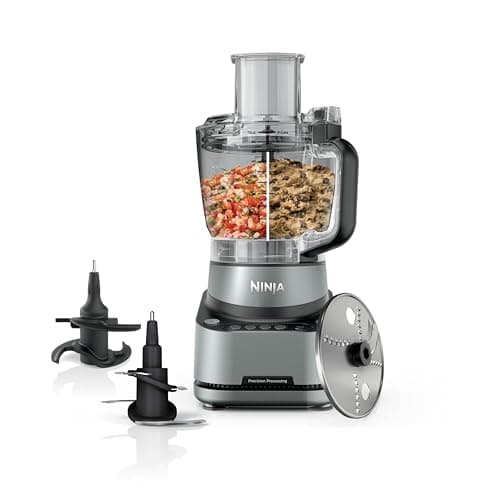
The winner · Best Overall
Ninja PrecisionPro Food Processor (2.1L)
A 2.1L full processor with chopping, slicing, grating and dough tools and auto presets: the do-everything prep machine.
Price checked live · updated 14 October 2026 · we may earn a commission
The top 5, ranked
 ★ Our pick · Best OverallNinja PrecisionPro Food Processor (2.1L)A 2.1L full processor with chopping, slicing, grating and dough tools and auto presets: the do-everything prep machine.Why we picked it ↓£84.00● In stockCheck price
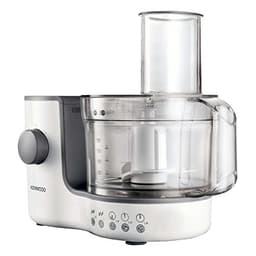 Best BudgetKenwood Compact Food Processor (1.4L)A compact, recognised-brand processor with chopping and blending for around £42.Why we picked it ↓£41.99● In stockCheck price
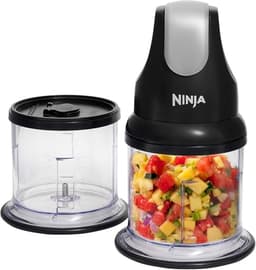 Best Mini ChopperNinja Express Chop Mini ChopperA tiny, cheap chopper for herbs, onions and nuts, if you do not need a full processor.Why we picked it ↓£29.00● In stockCheck price
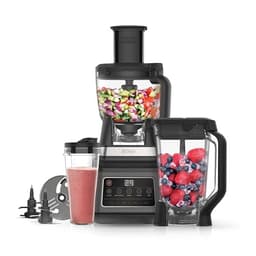 Best ComboNinja 3-in-1 Food Processor & Blender (Auto-iQ)One base that does both processing and blending, so you get prep and smooth drinks without two machines.Why we picked it ↓£159.00● In stockCheck price
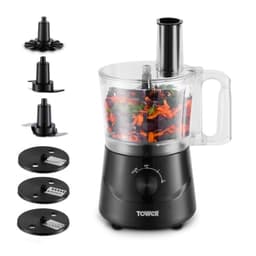 Best Big-Capacity ValueTower 1000W Food Processor (2.4L)A big 2.4L bowl and a strong 1000W motor at a budget price, for larger batches.Why we picked it ↓£44.99● In stockCheck price
Compare the specs
| # | Product | Best for | Type | Bowl | Attachments | Best for | Price |
|---|---|---|---|---|---|---|---|
| Ninja PrecisionPro Food Processor (2.1L) | Best Overall | Full processor | 2.1L | Blade, discs, dough | Regular cooks and bakers | £84.00 | |
| 2 | Kenwood Compact Food Processor (1.4L) | Best Budget | Compact processor | 1.4L | Blade, blender | Budget, small kitchens | £41.99 |
| 3 | Ninja Express Chop Mini Chopper | Best Mini Chopper | Mini chopper | Small | Chopping blade | Just chopping, small jobs | £29.00 |
| 4 | Ninja 3-in-1 Food Processor & Blender (Auto-iQ) | Best Combo | Processor + blender | Large | Bowl, jug, cups | Prep and blending, one machine | £159.00 |
| 5 | Tower 1000W Food Processor (2.4L) | Best Big-Capacity Value | Full processor | 2.4L | Blade, discs | Big batches on a budget | £44.99 |
Prices are live from Amazon and refresh through the day; last page update 14 October 2026.
Mini chopper, full processor or combo?
Getting this right saves you money and cupboard space:
- Mini chopper: small bowl, chops herbs, onions, garlic and nuts. Cheap, tiny, quick to wash. All most people actually need if chopping is the only job.
- Full food processor: larger bowl plus chopping blade, slicing and grating discs and usually a dough tool. Does the whole range of prep. Right if you cook and bake enough to use it.
- Processor + blender combo: one base that runs a processor bowl and a blender jug. Space-saving if you genuinely want both functions.
The common mistake is buying a big processor to chop the occasional onion, then leaving it in the cupboard because it is a faff to get out and clean. Be honest about how much prep you really do.
A food processor is for prep, not purée
Food processors and blenders are often confused. They are different tools:
- A food processor chops, slices, grates, mixes and makes dough, with little or no liquid. It is for prep and texture, not smoothness.
- A blender purées liquids and soft ingredients smooth, smoothies, soups, sauces, and needs some liquid.
Ask a processor to make a silky smoothie and you get a lumpy, uneven result; ask a blender to chop dry vegetables and it will not. If you want smooth drinks and soups, you want a blender; if you want to speed up chopping, slicing, grating and dough, you want a processor. A combo machine does both with the right attachment.
Which attachments actually matter
- Chopping / multi-purpose blade: the core tool, for onions, nuts, breadcrumbs, dips and mixing.
- Slicing and grating discs: the real time-savers, grate a block of cheese or slice a bag of veg in seconds. The main reason to get a full processor over a chopper.
- Dough blade: worth it if you make pastry or bread, it brings dough together fast.
- Whisk / emulsifying tool: handy for cream, egg whites and mayonnaise on some machines.
Check which attachments are included versus sold separately, and buy for the jobs you will actually do rather than the longest attachment list.
Our picks in detail
Ninja PrecisionPro Food Processor (2.1L)
A 2.1L full processor with chopping, slicing, grating and dough tools and auto presets: the do-everything prep machine.
A strong-selling full processor.
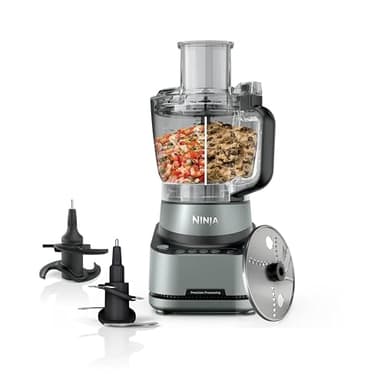
The Ninja PrecisionPro is the food processor most people should buy. The 2.1L bowl is big enough for family prep without dominating the worktop, and it comes with the blades and discs that matter: a chopping blade for onions, nuts and breadcrumbs, slicing and grating discs for veg and cheese, and a dough tool for pastry and bread. Auto presets take the guesswork out, and Ninja's build quality means it should stand up to regular use for years.
It is a proper processor, so it needs cupboard space for the base, bowl and attachments, and it costs more than a basic mini chopper. But if you cook and bake enough to be sick of chopping and grating by hand, it pays you back in time on every meal, and doing the full range of prep jobs well is exactly what it is for. If you only chop the occasional onion, a mini chopper is cheaper and enough; for real, regular prep, this is the one.
What we like
- Does chopping, slicing, grating and dough
- 2.1L bowl suits family prep
- Auto presets, quality build
- Trusted brand
What we'd change
- Needs cupboard space for base and attachments
- Overkill for occasional chopping
Buy this if: you do enough prep and baking to want chopping, slicing, grating and dough covered.
Kenwood Compact Food Processor (1.4L)
A compact, recognised-brand processor with chopping and blending for around £42.
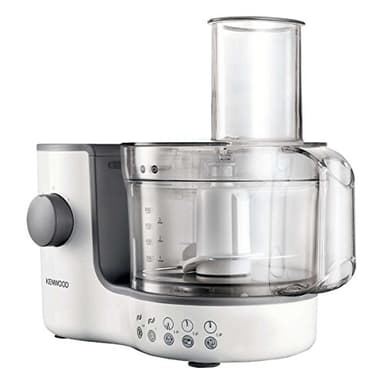
If you want a proper food processor without the size or the price of the big machines, the Kenwood Compact covers the essentials for around £42. A 1.4L bowl, chopping and mixing blades, a blending attachment and emulsifying for things like mayonnaise give you most of the everyday prep jobs in a smaller, cheaper package from a brand with a long kitchen pedigree. For smaller households and modest kitchens it is a tidy, capable choice.
The compromises are the smaller bowl, which means more batches for big prep, and a more basic set of attachments than the premium machines. But for everyday chopping, mixing and light blending it does the core work well, and Kenwood reliability at this price is reassuring. If you do a lot of batch prep or want slicing and grating discs and dough tools, step up to a bigger processor; as an affordable, trusted compact, this is strong value.
What we like
- Cheap, around £42
- Compact, trusted Kenwood brand
- Chopping, mixing and blending
What we'd change
- Small 1.4L bowl, more batches
- Basic attachment set
Buy this if: you want a capable, compact processor for the least money.
Ninja Express Chop Mini Chopper
A tiny, cheap chopper for herbs, onions and nuts, if you do not need a full processor.
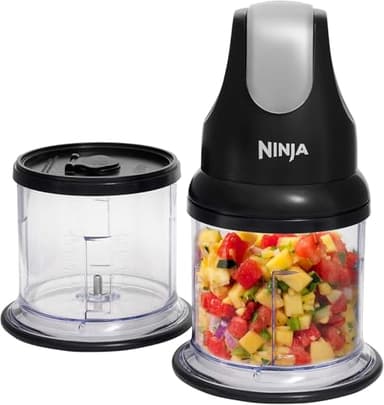
If the truth is you only ever chop herbs, onions, garlic and nuts, you do not need a full food processor, you need a mini chopper, and the Ninja Express Chop is the one. It is small, cheap and brilliant at exactly that: a few pulses turns onions, herbs or nuts into an even chop in seconds, with a tiny footprint that stores in a drawer and washes up in moments. For most people's actual day-to-day chopping, it is all the machine they need.
It is deliberately limited: a small bowl, no slicing or grating discs, no dough tool, and not for big batches or wet mixtures. But that focus is the point, it does the one common job faster and tidier than wrestling a big processor out of the cupboard. If you also want slicing, grating and dough, buy a full processor; if you just want fast, fuss-free chopping, this is the cheap, genuinely useful answer.
What we like
- Tiny, cheap, stores in a drawer
- Fast, even chopping of herbs, onions, nuts
- Quick to wash
What we'd change
- Small bowl, chopping only
- No discs, dough or big batches
Buy this if: you only chop herbs, onions and nuts and want something small and cheap.
Ninja 3-in-1 Food Processor & Blender (Auto-iQ)
One base that does both processing and blending, so you get prep and smooth drinks without two machines.
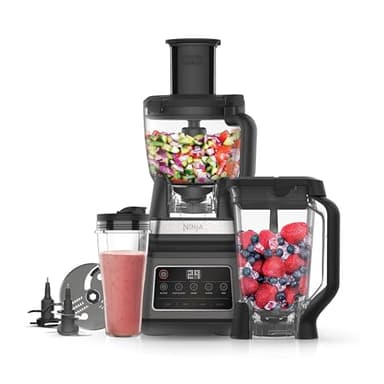
If you want both a food processor and a blender but not two appliances cluttering the kitchen, the Ninja 3-in-1 runs a processor bowl, a blender jug and single-serve cups off one powerful base with Auto-iQ programmes. That means you can chop, slice and make dough, then swap on the jug to blend smoothies and soups, all from one motor and one footprint, which is genuinely space-saving for smaller kitchens that want to do everything.
It costs more than a single-purpose machine, and a combo is a jack of two trades rather than the absolute best at either, though Ninja does both jobs well. There is also more to store with the extra attachments. But if you genuinely want both functions and value saving space and money over buying two separate machines, it is a smart buy. If you only need one function, a dedicated processor or blender is cheaper and simpler.
What we like
- Processor and blender from one base
- Saves space versus two machines
- Powerful, Auto-iQ programmes
What we'd change
- Dearer than a single-purpose machine
- More attachments to store
Buy this if: you want both processing and blending without buying two machines.
Tower 1000W Food Processor (2.4L)
A big 2.4L bowl and a strong 1000W motor at a budget price, for larger batches.
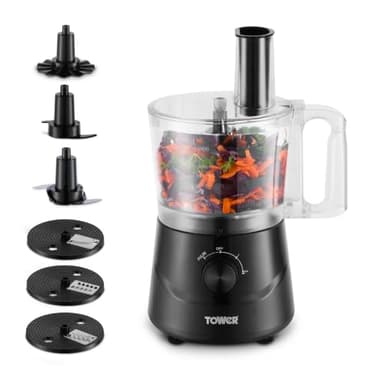
If you want a large processor for big batches without paying premium money, the Tower 1000W delivers a generous 2.4L bowl and a strong motor for around £45. The extra capacity handles bigger prep jobs, large families and batch cooking in fewer rounds, and the powerful motor copes with heavier mixtures, which is a lot of processor for the price from a recognised UK brand. For value-focused bulk prep, it makes a strong case.
As a budget machine, the attachments, controls and finish are more basic than the premium processors, and the long-term refinement of a Ninja or Kenwood is not fully matched. But the fundamentals, a big bowl and real power with two speeds and pulse, are there, and for larger-batch everyday prep it is honest value. If you want the slickest machine or the best attachment range, spend more; for maximum capacity per pound, this is it.
What we like
- Big 2.4L bowl for batches
- Strong 1000W motor
- Budget price, recognised brand
What we'd change
- Basic attachments and finish
- Less refined than premium machines
Buy this if: you want the largest bowl and most power for the least money.
What bowl size do you need?
- Small (around 1 to 1.5L / mini chopper): herbs, onions, nuts, small jobs, one or two people.
- Medium (around 2 to 2.5L): the everyday sweet spot for family prep. Our main picks.
- Large (2.5L and up): big batches, large families and batch cooking.
A bigger bowl means fewer batches but a bigger machine to store, and a large processor is awkward to fill for tiny jobs. Match it to your usual prep, with a little headroom, rather than buying the biggest.
Common myths, corrected
- "A food processor and a blender are the same." No. Processors chop, slice, grate and make dough; blenders purée with liquid. Buy the right tool, or a combo that does both.
- "More attachments means a better machine." Only if you use them. Slicing and grating discs and a dough blade earn their place; a long list of niche tools you never touch does not.
- "You need a full processor for chopping." No. If chopping is the only job, a cheap mini chopper does it better and takes far less space than a full processor.
- "Bigger is always better." No. A large bowl is awkward for small jobs and takes more storage. Match the size to your typical prep.
What we’d skip
- Buying a full food processor when you only chop the occasional onion. A cheap mini chopper does that better, stores in a drawer and washes up in seconds, where a big processor ends up unused in the cupboard because it is a faff to get out.
- Expecting a food processor to make smooth smoothies or soups. That is a blender's job. A processor chops, slices, grates and makes dough but leaves purees lumpy. Get a blender, or a combo machine, for smooth drinks and soups.
- Being swayed by a long attachment list. Slicing and grating discs and a dough blade are the ones that earn their place; niche tools you never use just add clutter. Check which attachments are actually included and buy for the jobs you do.
- Buying the biggest bowl by default. A large processor is awkward to fill for small jobs and takes more storage. Match the bowl to your usual prep, with a little headroom, rather than over-buying on capacity.
- Overlooking build quality to save a few pounds. A processor takes real force chopping and kneading, so a flimsy machine wears out or struggles. A solid motor and bowl from a trusted brand lasts far longer under regular use.
Frequently asked questions
Do I need a food processor or a mini chopper?
If you only chop herbs, onions, garlic and nuts, a mini chopper is cheaper, smaller and does that job better. A full food processor is worth it if you also want to slice, grate and make dough, and do enough cooking and baking to use it. The common mistake is buying a big processor just to chop occasionally, then leaving it in the cupboard because it is a faff to get out.
What is the difference between a food processor and a blender?
A food processor chops, slices, grates, mixes and makes dough with little or no liquid, for prep and texture. A blender purees liquids and soft ingredients smooth, for smoothies, soups and sauces, and needs some liquid. They are not interchangeable: a processor leaves purees lumpy and a blender will not chop dry veg. Buy a processor for prep, a blender for smooth drinks, or a combo for both.
Which food processor attachments are worth having?
The chopping blade is the core tool, and slicing and grating discs are the real time-savers, grating cheese or slicing veg in seconds, which is the main reason to choose a full processor over a chopper. A dough blade is worth it if you bake pastry or bread, and a whisk or emulsifying tool is handy for cream and mayonnaise. Buy for the jobs you do, not the longest list.
What size food processor should I buy?
A medium bowl of around 2 to 2.5L is the everyday sweet spot for family prep. A small bowl or mini chopper around 1 to 1.5L suits herbs, onions and small jobs for one or two people, while 2.5L and up handles big batches and large families. Bigger means fewer batches but more to store and is awkward for tiny jobs, so match it to your usual prep.
Can a food processor make dough?
Yes, if it has a dough blade and enough power. It brings pastry and bread dough together far faster than by hand, mixing and kneading in the bowl. Check that the model includes a dough tool and that the motor is up to the job, as kneading is hard work for a processor. For heavy, regular bread making, a stand mixer with a dough hook is the more specialised tool.
Is a food processor and blender combo worth it?
If you genuinely want both functions and value saving space and money over two separate machines, yes. A combo runs a processor bowl and a blender jug off one base, so you chop and slice, then blend smoothies and soups, from one footprint. The trade-off is that a combo is a jack of two trades rather than the best at either, though good ones do both well. If you only need one function, a dedicated machine is cheaper.
Are expensive food processors worth it?
Partly. Spending enough to get a solid motor, a sturdy bowl and the slicing, grating and dough attachments you will use makes a real difference to how useful and durable the machine is. Beyond that, extra money buys more presets, niche attachments and finish rather than better prep. A good mid-range processor from a trusted brand covers most people; pay more only for capacity, power or attachments you will actually use.
Why does my food processor chop unevenly?
Usually overfilling or over-processing. Too much in the bowl stops ingredients circulating past the blade, leaving some pieces whole and others mushy, so work in smaller batches. Pulsing in short bursts rather than running continuously gives a far more even chop, as it lets everything fall back onto the blade between pulses. Cutting ingredients to a roughly even size before you start also helps a lot.
Ready to choose?
Our one clear winner is the Ninja PrecisionPro Food Processor (2.1L).