
The Best Foam Roller (UK, 2026)
By Niko Moustoukas, Founder & Editor
Published 14 October 2026
If you want one foam roller for recovery, mobility and easing tight muscles after training, buy a textured mid-density roller, and the Core Balance is our pick. The textured surface targets knots and trigger points more effectively than a plain tube, the medium density is firm enough to work but not so hard it bruises, and it is from a recognised UK fitness brand for not much over a tenner. For most people rolling out tight legs, backs and shoulders, it is the sensible sweet spot.
If you are new to it or find textured rollers too intense, a smooth roller gives gentler, even pressure; on the tightest budget a basic roller is a few pounds; and for deep, advanced work a firm grid roller digs harder into stubborn knots. Below we explain smooth versus textured, how firm to go, and the areas, like your lower back and spine, that you should never roll directly, which is the part that actually matters.
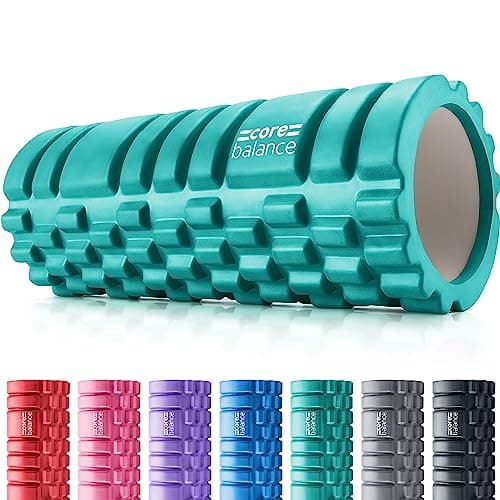
The winner · Best Overall
Core Balance Textured Foam Roller (33cm)
Textured for trigger points, medium density that works without bruising, from a recognised brand for not much over a tenner.
Price checked live · updated 14 October 2026 · we may earn a commission
The top 4, ranked
 ★ Our pick · Best OverallCore Balance Textured Foam Roller (33cm)Textured for trigger points, medium density that works without bruising, from a recognised brand for not much over a tenner.Why we picked it ↓£11.89● In stockCheck price
 Best for BeginnersCore Balance Smooth Foam Roller (45cm)Gentler, even pressure on a longer body, for beginners and anyone who finds textured rollers too much.Why we picked it ↓£14.99● In stockCheck price
 Best BudgetKAYMAN Sports Foam Roller (44.5cm)A long, decent foam roller for around £7.50: the cheap way to start rolling.Why we picked it ↓£7.50● In stockCheck price
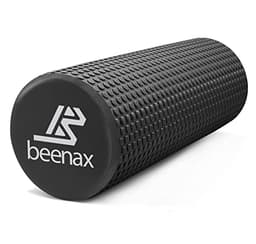 Best for Deep WorkBeenax Deep Tissue Grid Foam RollerA firm grid roller that digs harder into stubborn knots, for experienced rollers who want more intensity.Why we picked it ↓£19.99● In stockCheck price
Compare the specs
| # | Product | Best for | Surface | Length | Density | Best for | Price |
|---|---|---|---|---|---|---|---|
| Core Balance Textured Foam Roller (33cm) | Best Overall | Textured | 33cm | Medium | Most people, trigger points | £11.89 | |
| 2 | Core Balance Smooth Foam Roller (45cm) | Best for Beginners | Smooth | 45cm | Medium-soft | Beginners, gentle mobility | £14.99 |
| 3 | KAYMAN Sports Foam Roller (44.5cm) | Best Budget | Smooth | 44.5cm | Medium | Budget, general use | £7.50 |
| 4 | Beenax Deep Tissue Grid Foam Roller | Best for Deep Work | Grid, firm | Standard | Firm | Experienced, deep work | £19.99 |
Prices are live from Amazon and refresh through the day; last page update 14 October 2026.
What a foam roller does, and does not, do
Foam rolling is self-massage, pressing your own bodyweight through a roller to work into muscles and the connective tissue around them. It is widely used for recovery, warm-up, mobility and easing muscle tightness, and most people find it genuinely helps loosen tight, achy muscles and improve how freely they move, at least in the short term, for the price of a takeaway.
Keep expectations honest:
- It is a recovery and mobility aid, not a cure. It can ease tightness and soreness and help you move better; it is not a treatment for injuries or a replacement for professional care when something is actually wrong.
- It complements, not replaces, the basics: good warm-ups, sensible training and sleep do most of the recovery work; rolling is a useful addition.
- It is a cheap alternative or companion to a massage gun, with no battery, no noise and nothing to break, which is why it endures.
Smooth or textured, and how firm?
- Smooth rollers apply even pressure across the muscle. Gentler and more comfortable, ideal for beginners, larger muscle groups and general mobility. Start here if you are new or sensitive.
- Textured / grid rollers have ridges that concentrate pressure to target knots and trigger points, like a massage therapist’s thumbs. More effective on specific tight spots, but more intense. Our overall pick is a medium-textured roller as the best balance.
- Density matters as much as texture. Softer rollers are gentler and good for beginners; firmer rollers dig deeper but can bruise if overused. Build up, rather than starting on the hardest roller.
For most people, a medium-density textured roller is the sweet spot: effective on knots without being brutal. Go smooth and softer if you are new or sensitive, firm and grid if you are experienced and want deeper work.
How to use a foam roller safely
This is the part that actually matters, because rolling the wrong areas can hurt you:
- Roll muscles, not bones or joints. Target the fleshy muscle of your calves, thighs, glutes, lats and upper back, not your knees, elbows or other joints.
- Never roll your lower back directly. There is no muscle cushioning your spine and kidneys there; rolling the lower back puts pressure on the spine. Roll the upper back (with the roller across your shoulder blades) and your glutes and hips instead to ease lower-back tightness.
- Keep it off your neck and spine, and off any acute injury, swelling or bruising.
- Roll slowly, a few centimetres per second, and pause on a tight spot for a breath or two rather than sawing back and forth fast.
- It should be "good" discomfort, not sharp pain. Sharp or radiating pain means stop. Ease off if you cannot breathe normally through it.
- Little and often beats one long aggressive session. A few minutes after training or on rest days is plenty.
Our picks in detail
Core Balance Textured Foam Roller (33cm)
Textured for trigger points, medium density that works without bruising, from a recognised brand for not much over a tenner.
A best-selling textured roller.
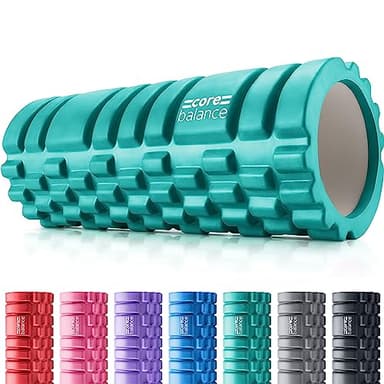
The Core Balance textured roller is the one most people should buy. The ridged surface targets knots and trigger points more precisely than a plain smooth tube, mimicking the thumbs-and-fingers of a massage, and the medium density is the sweet spot: firm enough to release tight muscles properly, but not the brutal, bruising hardness of the firmest rollers. At 33cm it is long enough for legs, glutes and upper back yet compact enough to store and travel with, from a brand with a solid reputation.
If you are brand new to foam rolling, the texture can feel intense at first, in which case a smooth roller is the gentler start; and it is not the longest roller for lying full-length along your spine. But for the core job of rolling out tight legs, hips, back and shoulders effectively, with enough bite to do something without overdoing it, this hits the balance better than either the gentlest or the most aggressive options. Buy this, learn where not to roll, and use it after training.
What we like
- Textured surface targets knots and trigger points
- Medium density: effective without bruising
- Compact 33cm, easy to store and travel
- Recognised brand, great value
What we'd change
- Texture can feel intense for complete beginners
- Not the longest for full-spine rolling
Buy this if: you want an effective all-round roller that targets knots without bruising.
Core Balance Smooth Foam Roller (45cm)
Gentler, even pressure on a longer body, for beginners and anyone who finds textured rollers too much.
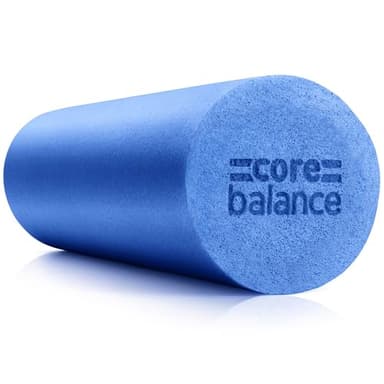
If a knobbly textured roller makes you wince, a smooth one is the kinder way in, and this longer 45cm Core Balance is a good choice. The smooth EPE foam applies even pressure across the muscle rather than concentrating it on ridges, which is more comfortable for beginners, for larger muscle groups, and for gentle warm-up and mobility work. The extra length also lets you lie along it to open the chest and support the spine during mobility drills, which a short roller cannot.
It is less targeted than a textured roller, so it will not dig into a stubborn knot the same way, and the softer, even pressure is about comfort and coverage rather than intensity. But for easing into foam rolling, for sensitive or larger muscles, and for spine-supported stretches, it is the gentler, more versatile-in-length option. Once you are used to rolling and want more bite on specific knots, the textured roller is the step up.
What we like
- Gentler, even pressure, beginner-friendly
- Longer 45cm for larger muscles and spine support
- Comfortable for warm-up and mobility
What we'd change
- Less targeted on specific knots
- Softer pressure, less intense
Buy this if: you are new to rolling or find textured rollers too intense.
KAYMAN Sports Foam Roller (44.5cm)
A long, decent foam roller for around £7.50: the cheap way to start rolling.
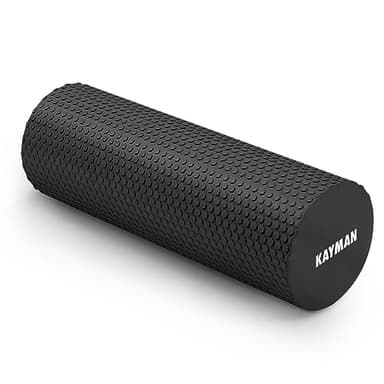
If you just want to try foam rolling without spending much, the KAYMAN does the job for around £7.50 and, usefully, is a longer 44.5cm roller, so you can lie along it and cover larger muscles despite the low price. For general recovery and mobility, rolling out tight legs and backs after training, it covers the basics well, and at this price it is an easy, low-risk way to find out whether foam rolling helps you before spending more.
The compromises are modest at this price: the foam and finish are more basic than the branded rollers, and it is a general-purpose roller rather than a specialist textured or deep one. But it is a genuinely useful tool for the cost of a couple of coffees, and plenty of people never need more. If you take to rolling and want more targeted trigger-point work, the textured roller is the upgrade; as a cheap, capable starter, this is honest value.
What we like
- Very cheap, around £7.50
- Longer 44.5cm for larger muscles
- Does the general recovery job
What we'd change
- Basic foam and finish
- General-purpose, not specialist
Buy this if: you want the cheapest decent roller to start with.
Beenax Deep Tissue Grid Foam Roller
A firm grid roller that digs harder into stubborn knots, for experienced rollers who want more intensity.
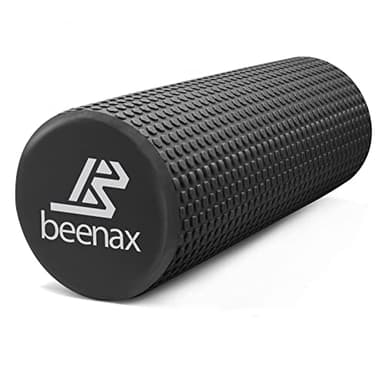
For experienced foam rollers who find medium rollers too soft, a firm grid roller like the Beenax provides the deeper, more aggressive pressure needed to work into stubborn knots and dense muscle. The grid pattern of ridges and flatter zones mimics the different pressures of a sports massage, firmer ridges to dig in, softer channels to glide, and the firm core does not compress under bodyweight the way a softer roller does, so the pressure gets through to the muscle.
That intensity is the point and the catch: it is too much for beginners and too firm for sensitive areas, and like any aggressive rolling it can bruise if you overdo it, so build up gradually and keep it off the areas you should never roll (below). But for athletes and experienced users who want a proper deep release that softer rollers cannot deliver, it is the pick. If you are new to rolling, start with the smooth or textured roller and work up to this.
What we like
- Firm grid for deep, intense release
- Does not compress under bodyweight
- Mimics sports-massage pressures
What we'd change
- Too intense for beginners and sensitive areas
- Can bruise if overdone
Buy this if: you are experienced and want a firmer, deeper release than a medium roller.
Common myths, corrected
- "Roll your lower back to ease back pain." No, do not roll the lower back directly; there is nothing cushioning the spine and kidneys there. Roll the upper back, glutes and hips instead, which often eases lower-back tightness more safely.
- "The firmer and more painful, the better." No. Aggressive rolling that leaves you bruised is counterproductive. It should be tolerable "good" discomfort; sharp pain means stop. Build up gradually rather than starting on the hardest roller.
- "Foam rolling fixes injuries." It is a recovery and mobility aid, not a treatment. It can ease tightness and soreness, but if something is actually injured, see a professional rather than rolling it.
- "An expensive roller works better." Barely. A cheap roller rolls muscles just as well. You pay a little more for a trusted brand, a textured surface or a firmer grid, not for dramatically better results.
- "Roll fast for a few seconds." Slow is better. Move a few centimetres per second and pause on tight spots; sawing back and forth quickly does little.
Foam roller or massage gun?
They do a similar job, self-massage for recovery and tight muscles, in different ways:
- A foam roller uses your bodyweight over larger areas, is cheap, needs no power, and is great for big muscle groups like legs, glutes and back. The downside is you have to get on the floor and manoeuvre into position.
- A massage gun delivers targeted percussion you can aim precisely while sitting, and reaches spots a roller cannot, but it costs more and needs charging.
Most people do not need both. If budget is tight or you want something foolproof with no battery, a foam roller is the sensible first buy, and for many it is all they ever need. A massage gun is the pricier, more targeted, more convenient option if you want it.
What we’d skip
- Rolling your lower back directly. There is no muscle cushioning the spine and kidneys there, so it puts pressure on the spine. Roll the upper back across the shoulder blades, and the glutes and hips, to ease lower-back tightness instead.
- Going straight to the firmest, most aggressive roller as a beginner. It is too intense, can bruise, and puts people off. Start smooth or medium and build up to a firm grid roller if and when you want deeper work.
- Rolling fast and sawing back and forth. Slow, controlled rolling with pauses on tight spots does far more than rapid sawing, which barely works the muscle.
- Using a foam roller on an actual injury, swelling or sharp pain. It is a recovery and mobility aid, not a treatment. If something is injured or the pain is sharp, stop and see a professional.
- Paying a premium expecting dramatically better results. A cheap roller rolls muscles just as well; you pay a little more for a trusted brand, texture or firmness, not for a different outcome.
Frequently asked questions
Do foam rollers actually work?
For recovery, warm-up, mobility and easing tight muscles, yes, most people find them genuinely helpful, and the evidence supports short-term improvements in flexibility and soreness. They are a recovery and mobility aid rather than a cure, so they complement good warm-ups, training and sleep rather than replacing them, but for the price they are well worth owning.
Smooth or textured foam roller?
Smooth rollers give gentler, even pressure and suit beginners, larger muscles and general mobility. Textured or grid rollers have ridges that target knots and trigger points more effectively but feel more intense. A medium-density textured roller is the best all-round balance for most people; go smooth if you are new or sensitive.
How firm should a foam roller be?
Start softer and build up. Softer rollers are gentler and good for beginners; firmer rollers dig deeper into stubborn knots but can bruise if overused. A medium density suits most people, being effective without being brutal. Only move to a firm grid roller once you are experienced and want deeper, more intense work.
Can I roll my lower back with a foam roller?
No, not directly. There is no muscle cushioning the spine and kidneys in the lower back, so rolling there puts pressure on the spine. To ease lower-back tightness, roll the upper back with the roller across your shoulder blades, and roll your glutes and hips, which are often the real source of lower-back tension.
How do I use a foam roller properly?
Roll the fleshy muscle, not joints or bones, slowly at a few centimetres per second, pausing on tight spots for a breath or two rather than sawing quickly. It should be tolerable "good" discomfort, not sharp pain. Keep it off your lower back, spine, neck and any injury, and do a few minutes little and often rather than one aggressive session.
Foam roller or massage gun?
Both are self-massage tools. A foam roller is cheap, needs no power and is great for large muscle groups using your bodyweight, though you have to get on the floor. A massage gun is pricier and needs charging but gives targeted percussion you can aim while sitting. Most people do not need both; a foam roller is the sensible first buy.
What size foam roller should I get?
A standard 30 to 45cm roller suits most people and is easy to store and travel with. Longer rollers let you lie along your spine for chest-opening and back-supported mobility work and feel more stable, while shorter ones are more portable and targeted. For general recovery, a mid-length roller around 33 to 45cm covers most needs.
Is foam rolling supposed to hurt?
It should feel like tolerable, satisfying "good" discomfort on a tight muscle, not sharp or radiating pain. A little tenderness on knots is normal; sharp pain, or pain that makes you hold your breath, means ease off or stop. Rolling aggressively enough to bruise is counterproductive, so build up gradually rather than chasing pain.
Ready to choose?
Our one clear winner is the Core Balance Textured Foam Roller (33cm).