
The Best Electric Toothbrush (UK, 2026)
By Niko Moustoukas, Founder & Editor
Published 14 October 2026
If you want one electric toothbrush that does everything that matters, buy a mid-range model with a pressure sensor and a timer, and the Philips Sonicare ProtectiveClean 4300 is our pick. It has the two features that genuinely protect and clean your teeth, a pressure sensor that warns when you press too hard and a built-in two-minute timer, cleans brilliantly with sonic vibration, and costs a fraction of the flagships. For the vast majority of people, this is all the toothbrush you need.
If you prefer Oral-B's round oscillating head, the Smart 6 is the equivalent; Oral-B's newer iO range adds a gentler feel and a pressure light; and the iO8 flagship is lovely but, honestly, overkill. The research is clear that electric beats manual, but the cleaning benefit plateaus quickly, so extra modes, apps and displays add cost without adding much clean. Below we explain the two features that matter, oscillating versus sonic, and why the ongoing brush-head cost matters more than the handle price.
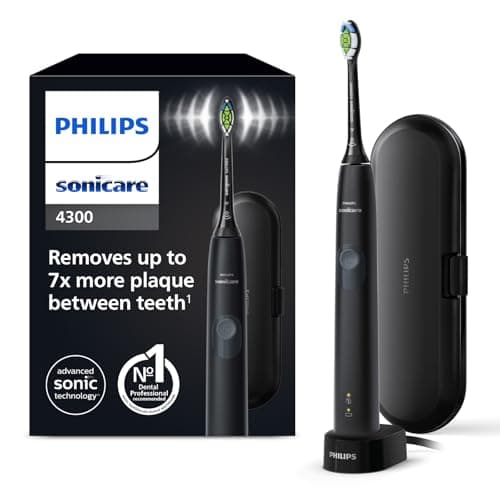
The winner · Best Overall
Philips Sonicare ProtectiveClean 4300
A pressure sensor, a two-minute timer and excellent sonic cleaning for a fraction of flagship money: all the toothbrush most people need.
Price checked live · updated 14 October 2026 · we may earn a commission
The top 4, ranked
 ★ Our pick · Best OverallPhilips Sonicare ProtectiveClean 4300A pressure sensor, a two-minute timer and excellent sonic cleaning for a fraction of flagship money: all the toothbrush most people need.Why we picked it ↓£64.94● In stockCheck price
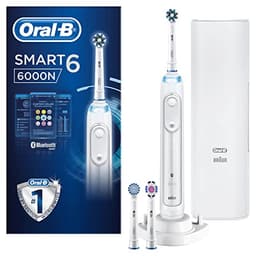 Best Oscillating (Oral-B)Oral-B Smart 6 Electric ToothbrushOral-B's round oscillating head with a pressure sensor and timer, if you prefer that feel.Why we picked it ↓£90.51● In stockCheck price
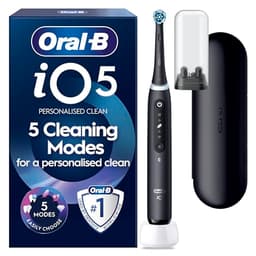 Best Modern FeelOral-B iO5 Electric ToothbrushOral-B's quieter, gentler iO technology with a pressure light, at the sensible end of the iO range.Why we picked it ↓£94.89● In stockCheck price
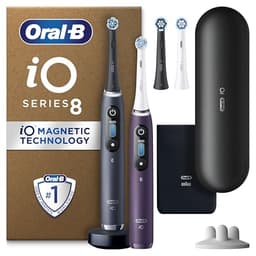 Best Premium (If You Must)Oral-B iO8 Electric Toothbrush (2-Pack)The flagship iO feel, a colour display and every feature, lovely but genuinely overkill for most.Why we picked it ↓£299.99● In stockCheck price
Compare the specs
| # | Product | Best for | Type | Pressure sensor | Timer | Best for | Price |
|---|---|---|---|---|---|---|---|
| Philips Sonicare ProtectiveClean 4300 | Best Overall | Sonic | Yes | Yes | Most people | £64.94 | |
| 2 | Oral-B Smart 6 Electric Toothbrush | Best Oscillating (Oral-B) | Oscillating | Yes | Yes | Oral-B preference | £90.51 |
| 3 | Oral-B iO5 Electric Toothbrush | Best Modern Feel | iO (oscillating) | Smart light | Yes | Gentler modern feel | £94.89 |
| 4 | Oral-B iO8 Electric Toothbrush (2-Pack) | Best Premium (If You Must) | iO (oscillating) | Yes, display | Yes | Premium feel, two people | £299.99 |
Prices are live from Amazon and refresh through the day; last page update 14 October 2026.
Electric vs manual: is it worth it?
Yes. Research consistently shows that electric toothbrushes remove more plaque and reduce gum disease (gingivitis) more effectively than manual brushes over time, largely because they do the brushing motion for you and most include a timer so you brush long enough. For most people, switching from a manual to any decent electric brush is a genuine upgrade in oral health.
But two caveats keep it honest:
- Technique still matters most. A good electric brush used well beats an expensive one used badly. Angle it at the gumline, cover every surface, and let the brush do the work without scrubbing.
- The handle price is not the whole cost. Replacement brush heads are an ongoing expense, factor them in (more below).
The only two features that really matter
Ignore the long spec lists. Two features do the real work:
- Pressure sensor. This is the big one. Brushing too hard damages gums (causing them to recede) and wears enamel, and most people press harder than they realise. A pressure sensor warns you to ease off, protecting your teeth and gums. Prioritise this above everything.
- Two-minute timer. It keeps you brushing for the dentist-recommended two minutes, usually with 30-second nudges to move around your mouth. Most people under-brush without one.
A brush with both of these cleans and protects as well as one costing three times more. Everything beyond them, displays, apps, extra modes, is a nice-to-have, not a need.
Oscillating (Oral-B) or sonic (Philips)?
- Oscillating-rotating (Oral-B): a small round head that rotates and pulses, surrounding each tooth. The familiar "dentist" feel for many.
- Sonic (Philips Sonicare): a brush-shaped head that vibrates at very high frequency, driving fluid between teeth. A smoother, buzzier feel.
Both clean excellently, and the research does not crown a clear winner, so it largely comes down to personal preference on feel. Try to pick the one whose feel you will actually enjoy and use twice a day, that matters more than the oscillating-versus-sonic debate.
Our picks in detail
Philips Sonicare ProtectiveClean 4300
A pressure sensor, a two-minute timer and excellent sonic cleaning for a fraction of flagship money: all the toothbrush most people need.
A best-selling mid-range brush.
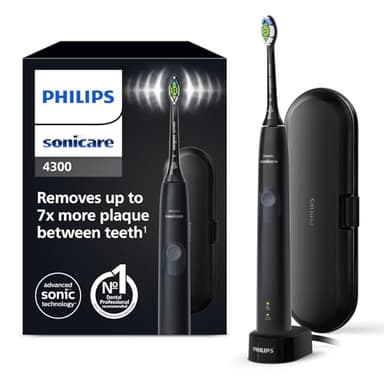
The Sonicare 4300 is the electric toothbrush most people should buy because it has the two things that actually matter and skips the things that do not. The pressure sensor warns you when you brush too hard, which protects your gums from recession and your enamel from wear, the built-in timer keeps you brushing the dentist-recommended two minutes, and the sonic action cleans excellently. It does all of this for well under half the price of the flagships.
It keeps it simple, so there is no colour display, app or long list of modes, and that is the point: those extras add cost, not clean. The cleaning benefit of an electric brush plateaus quickly, and this is comfortably past that plateau. If you specifically prefer Oral-B's round oscillating head, the Smart 6 is the equivalent; if you want a gentler modern feel, the iO range steps up. But for the best balance of real cleaning, the features that protect your teeth and a sensible price, this is the pick.
What we like
- Pressure sensor protects gums and enamel
- Built-in two-minute timer
- Excellent sonic cleaning
- Fraction of flagship price
What we'd change
- No display or app (which is fine)
- Genuine Sonicare heads cost more over time
Buy this if: you want everything that actually matters without paying flagship prices.
Oral-B Smart 6 Electric Toothbrush
Oral-B's round oscillating head with a pressure sensor and timer, if you prefer that feel.
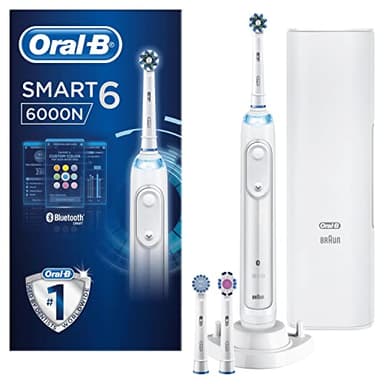
If you prefer Oral-B's approach, the round, oscillating-rotating head that many people are used to from the dentist's chair, the Smart 6 is the one to buy. It has the same essentials as our top pick, a pressure sensor that warns against brushing too hard and a two-minute timer, with Oral-B's small round head that surrounds each tooth and the pulsing-rotating action that some people feel cleans more thoroughly around the gumline. It is the Oral-B equivalent of our Sonicare pick.
It is app-connected, which is a nice-to-have rather than a need, the real work is done by the pressure sensor and timer. Whether you prefer this or the Sonicare largely comes down to feel: oscillating round head versus sonic vibration, both clean excellently and the research does not crown a clear winner. If you like the familiar Oral-B round-head feel, buy this; if you prefer sonic or want to spend a little less, the Sonicare 4300 is our overall pick.
What we like
- Oral-B round oscillating head
- Pressure sensor and two-minute timer
- Surrounds each tooth at the gumline
What we'd change
- App is a nice-to-have, not essential
- Oral-B heads cost more over time
Buy this if: you prefer Oral-B's round oscillating head and its gumline feel.
Oral-B iO5 Electric Toothbrush
Oral-B's quieter, gentler iO technology with a pressure light, at the sensible end of the iO range.
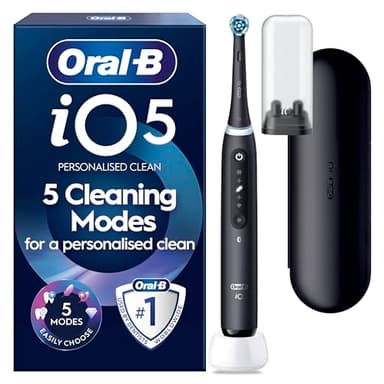
The Oral-B iO5 brings the brand's newer iO technology, a quieter, smoother, gentler brushing feel with a magnetic drive, to the more sensible end of the iO price range. It adds a Smart Pressure light that glows green when you are brushing with the right pressure and red when too hard, which is a clearer, more intuitive version of the pressure sensor, plus the two-minute timer. For people who find older electric brushes buzzy and harsh, the iO feel is a genuine, noticeable upgrade.
It costs more than the Sonicare 4300 and Smart 6 for broadly the same core cleaning, so you are paying for the nicer feel and the clearer pressure light rather than dramatically cleaner teeth. But if a gentler, quieter, more refined brushing experience appeals, and it does to a lot of people, the iO5 delivers it without stepping up to the flagship's price. If you just want effective cleaning cheaply, the 4300 is enough; for the modern iO feel at a fair price, this is the pick. (Stock can be limited.)
What we like
- Quieter, gentler iO feel
- Smart Pressure light (green/red)
- Two-minute timer
What we'd change
- Dearer for similar core cleaning
- Stock can be limited
Buy this if: you want Oral-B's quieter, gentler iO feel at a sensible price.
Oral-B iO8 Electric Toothbrush (2-Pack)
The flagship iO feel, a colour display and every feature, lovely but genuinely overkill for most.
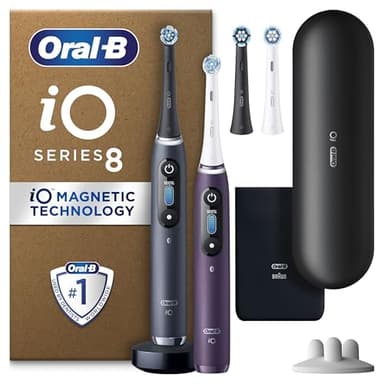
The Oral-B iO8 is the flagship: the smoothest, quietest iO brushing feel, a colour display, a precise pressure sensor, multiple cleaning modes and app connectivity, here as a two-handle pack. If you want the best-feeling electric toothbrush and the full set of features, or you are kitting out two people, it is a genuinely lovely thing to use and wants for nothing. It is the top of the range for a reason.
But be honest with yourself about value: the actual cleaning is not dramatically better than the mid-range brushes, because the benefit of an electric toothbrush plateaus well below this price. The display, extra modes and app are nice but do not clean your teeth any better than a pressure sensor and a timer. Buy it if you want the premium feel and features and the two-pack suits you; if you just want excellent, protected cleaning, the Sonicare 4300 does that for a fraction of the cost.
What we like
- Smoothest flagship iO feel
- Colour display and every feature
- Two-handle pack
What we'd change
- Cleaning not dramatically better than mid-range
- Expensive, features are mostly nice-to-haves
Buy this if: you want the best feel and full features (and know it is a want, not a need).
The hidden cost: replacement brush heads
The handle is a one-off; the brush heads are forever. Genuine Oral-B and Sonicare heads are not cheap, and you should replace them roughly every three months (or sooner if the bristles splay), so over a few years the heads can cost more than the handle did.
- Factor head cost into the decision, not just the handle price. A cheap handle with pricey heads can cost more long term than a dearer handle with cheaper ones.
- Third-party compatible heads are much cheaper and fine for many people, though quality varies, check reviews.
- Do not stretch heads too long. Splayed, worn bristles clean badly, replace them on schedule.
Common myths, corrected
- "The expensive ones clean much better." No. The cleaning benefit plateaus well below flagship prices. A mid-range brush with a pressure sensor and timer cleans as well; you pay more for feel, displays and apps.
- "You need lots of cleaning modes." No. Most people use one mode. Extra modes are rarely used and do not improve everyday cleaning.
- "Press harder for a better clean." The opposite. Brushing too hard damages gums and enamel. That is exactly why a pressure sensor matters, let the brush do the work.
- "The app makes your teeth cleaner." No. App coaching is a novelty most people stop using. A timer and a pressure sensor deliver the real benefit.
What we’d skip
- Paying £200 to £300 for a flagship expecting dramatically cleaner teeth. The cleaning benefit of an electric toothbrush plateaus well below that, so a mid-range brush with a pressure sensor and timer cleans as well. You are paying for feel, a display and an app, which are wants, not needs.
- Buying a cheap electric brush with no pressure sensor. The pressure sensor is the single most important feature, it protects your gums and enamel from the over-brushing most people do. A brush without one is a false economy.
- Being swayed by extra cleaning modes and app connectivity. Most people use one mode and abandon the app. Neither improves everyday cleaning; a two-minute timer and a pressure sensor deliver the real benefit.
- Ignoring the ongoing brush-head cost. Genuine heads are pricey and need replacing every few months, so over a few years they can cost more than the handle. Factor head cost in, and consider cheaper compatible heads.
- Stretching worn brush heads to save money. Splayed, frayed bristles clean badly and can irritate gums. Replace heads roughly every three months, or sooner if they splay, to keep cleaning effective.
Frequently asked questions
Are electric toothbrushes really better than manual?
Yes. Research consistently shows electric toothbrushes remove more plaque and reduce gum disease more effectively than manual brushes over time, partly because they do the brushing motion for you and usually include a timer so you brush long enough. For most people, switching from manual to any decent electric brush is a genuine oral-health upgrade, though good technique still matters most, angle at the gumline and let the brush do the work.
Do I need an expensive electric toothbrush?
No. The cleaning benefit of an electric toothbrush plateaus well below flagship prices, so a mid-range brush with a pressure sensor and a two-minute timer cleans and protects your teeth as well as a £300 one. The extra money buys a nicer feel, a colour display, more modes and app connectivity, which are nice-to-haves, not needs. Buy a mid-range brush with the two key features and save the rest.
What features actually matter on an electric toothbrush?
Two: a pressure sensor and a two-minute timer. The pressure sensor warns when you brush too hard, protecting your gums from recession and enamel from wear, since most people press harder than they realise, which makes it the most important feature. The timer keeps you brushing the recommended two minutes. A brush with both cleans and protects as well as far pricier models; everything else is a nice-to-have.
Oral-B or Philips Sonicare, which is better?
Both are excellent and the research does not crown a clear winner, so it largely comes down to feel. Oral-B uses a small round head that oscillates and rotates to surround each tooth, the familiar dentist-chair feel, while Philips Sonicare uses a brush-shaped head that vibrates at high frequency for a smoother, buzzier feel. Pick the one whose feel you prefer and will happily use twice a day, which matters more than the technology debate.
How much do replacement brush heads cost?
Genuine Oral-B and Sonicare heads are not cheap, and you should replace them roughly every three months, so over a few years the heads can cost more than the handle did. Factor that ongoing cost into your decision rather than just the handle price. Cheaper third-party compatible heads are available and fine for many people, though quality varies, so check reviews, and never stretch worn, splayed heads to save money.
Is a pressure sensor on a toothbrush important?
Very. It is the single most valuable feature, because brushing too hard is extremely common and damages gums, causing them to recede, and wears away enamel, both of which are permanent. A pressure sensor warns you to ease off, protecting your teeth and gums. Prioritise a pressure sensor above modes, displays and apps, it does more to protect your long-term oral health than any other feature on the brush.
Do I need all the cleaning modes and the app?
No. Most people use a single everyday mode and ignore the rest, and the app coaching is a novelty most abandon after a couple of weeks. Neither improves your everyday cleaning. The genuine benefit comes from the pressure sensor and the two-minute timer, so do not pay a premium for a long mode list or connectivity. A simple brush with the two key features is all most people need.
How often should I replace an electric toothbrush head?
Roughly every three months, or sooner if the bristles start to splay and lose their shape, which happens faster if you brush hard. Worn, frayed bristles clean badly and can irritate your gums, so replacing on schedule keeps the brush effective. Set a reminder, or buy heads that fade a colour indicator as they wear. It is tempting to stretch them to save money, but it undermines the whole point of a good brush.
Ready to choose?
Our one clear winner is the Philips Sonicare ProtectiveClean 4300.