
The Best Blender (UK, 2026)
By Niko Moustoukas, Founder & Editor
Published 14 October 2026
If you want one blender for smoothies, soups and the odd bit of ice, buy a mid-power machine with a glass jug, and the Tefal Blendforce II is our pick. At 800W it has the muscle to crush ice and frozen fruit that cheaper blenders choke on, and the glass jug resists the scratching, staining and smell that plastic jugs pick up over time. For the everyday mix of smoothies, soups and sauces most households make, it hits the sweet spot of power and durability without overspending.
What you need really comes down to what you blend. For soft fruit smoothies and soups only, a cheaper, lower-power blender is plenty; if you want grab-and-go single servings, a jug-plus-cup machine blends straight into a travel cup; and if you crush frozen fruit daily or make nut butters, a high-power blender is worth it. Below we explain how much power you actually need, glass versus plastic jugs, and why a blender is not a food processor.
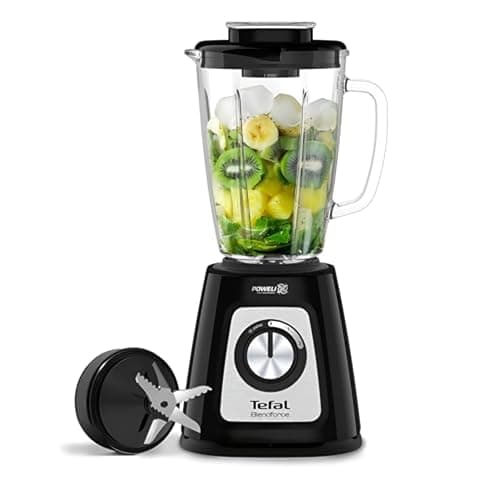
The winner · Best Overall
Tefal Blendforce II Blender (800W, Glass Jug)
An 800W motor that crushes ice in a 2L glass jug that will not scratch, stain or smell: the sensible all-rounder.
Price checked live · updated 14 October 2026 · we may earn a commission
The top 4, ranked
 ★ Our pick · Best OverallTefal Blendforce II Blender (800W, Glass Jug)An 800W motor that crushes ice in a 2L glass jug that will not scratch, stain or smell: the sensible all-rounder.Why we picked it ↓£52.00● In stockCheck price
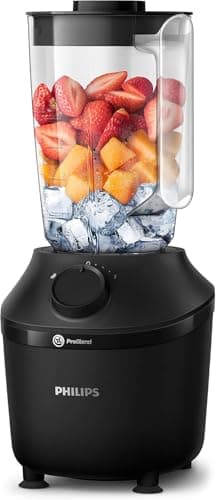 Best BudgetPhilips Blender 3000 Series (450W, 1.9L)A cheap, recognised-brand blender for soft smoothies and soups, if you do not need to crush much ice.Why we picked it ↓£24.99● In stockCheck price
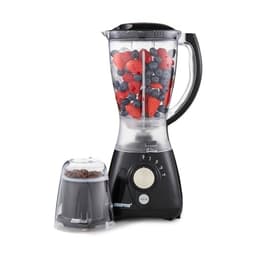 Best for Grab-and-GoGEEPAS 2-in-1 Jug Blender & Smoothie MakerA jug blender plus a to-go smoothie cup, so you can blend a single serving and take it out.Why we picked it ↓£23.95● In stockCheck price
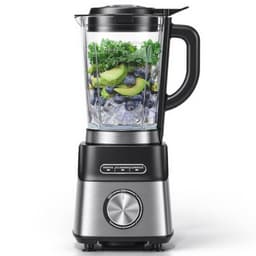 Most PowerfulAMZCHEF 1200W Smoothie BlenderA 1200W motor with stainless blades for crushing frozen fruit, ice and nut butters.Why we picked it ↓£69.99● In stockCheck price
Compare the specs
| # | Product | Best for | Power | Jug | Capacity | Best for | Price |
|---|---|---|---|---|---|---|---|
| Tefal Blendforce II Blender (800W, Glass Jug) | Best Overall | 800W | Glass | 2L | Everyday smoothies, soups, ice | £52.00 | |
| 2 | Philips Blender 3000 Series (450W, 1.9L) | Best Budget | 450W | Plastic | 1.9L | Budget, soft smoothies and soups | £24.99 |
| 3 | GEEPAS 2-in-1 Jug Blender & Smoothie Maker | Best for Grab-and-Go | 550W | Plastic + to-go cup | 1.5L | Single-serve, grab-and-go | £23.95 |
| 4 | AMZCHEF 1200W Smoothie Blender | Most Powerful | 1200W | Check listing | Large | Frozen fruit, nut butters | £69.99 |
Prices are live from Amazon and refresh through the day; last page update 14 October 2026.
How much power do you actually need?
Power is the spec that decides whether a blender suits you, and it is simple:
- Under ~500W: fine for soft fruit smoothies, cooked soups, sauces and batters. Will struggle with lots of ice and frozen fruit.
- Around 600 to 900W: the everyday sweet spot. Handles ice and frozen fruit as well as soft blending. Right for most households.
- 1000W and up: crushes frozen fruit effortlessly, makes nut butters and very smooth blends. Worth it only if you do that regularly.
The classic mistake is buying a cheap low-watt blender and expecting it to crush ice, then being disappointed. Match the power to what you blend: soft only, buy cheap; ice and frozen regularly, buy power.
Glass jug or plastic?
- Glass does not scratch, cloud, stain from turmeric and berries, or hold onto garlic and curry smells. It stays clean-looking and neutral-tasting for years. The downsides are weight and fragility.
- Plastic is lighter, cheaper and less likely to crack, which suits grab-and-go and clumsier kitchens. But it scratches, stains and picks up odours over time.
If the blender lives on the worktop and gets daily use, glass is the nicer long-term choice. If you want light, cheap and shatterproof, especially for a blend-and-go cup, plastic makes sense.
A blender is not a food processor
They are often confused, and buying the wrong one leads to disappointment:
- A blender blends liquids and soft or cooked ingredients into something smooth: smoothies, soups, sauces, batters, milkshakes. It needs some liquid to work.
- A food processor chops, slices, grates, mixes and makes dough with little or no liquid. It is for prep, not purée.
If you want smooth drinks and soups, buy a blender. If you want to chop vegetables, make breadcrumbs or dough, or slice and grate, you want a food processor. Some tasks overlap, but asking a blender to chop dry ingredients, or a processor to make a silky smoothie, ends badly.
Our picks in detail
Tefal Blendforce II Blender (800W, Glass Jug)
An 800W motor that crushes ice in a 2L glass jug that will not scratch, stain or smell: the sensible all-rounder.
A strong-selling mid-power blender.
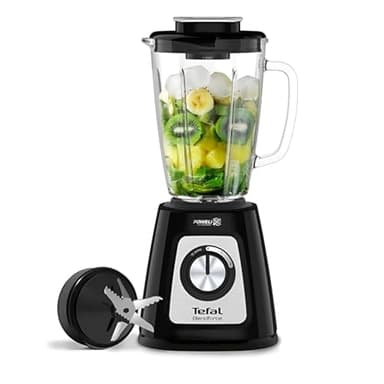
The Tefal Blendforce II with the glass jug is the blender most people should buy. At 800W it has enough power to crush ice and blend frozen fruit smoothly, not just purée soft bananas, which is where cheaper sub-500W blenders stall. The 2L glass jug is the other reason it is our pick: glass does not scratch, cloud, stain from turmeric and berries, or hold onto garlic and curry smells the way plastic does, so it still looks and smells clean after a year of daily use.
Glass makes the jug heavier and a little more fragile than plastic, and it is dearer than the most basic blenders. But for an everyday blender that handles ice, soups and smoothies and stays pleasant to use long term, that combination of real power and a glass jug is worth the modest premium. If you only ever blend soft fruit, a cheaper blender will do; if you crush frozen fruit daily or make nut butters, step up to a high-power model. For most people, this is the one.
What we like
- 800W crushes ice and frozen fruit
- Glass jug resists scratches, stains and smells
- Generous 2L capacity
- Trusted brand, sensible price
What we'd change
- Glass jug is heavier and more fragile
- Dearer than basic blenders
Buy this if: you want enough power for ice and a glass jug that stays clean long term.
Philips Blender 3000 Series (450W, 1.9L)
A cheap, recognised-brand blender for soft smoothies and soups, if you do not need to crush much ice.
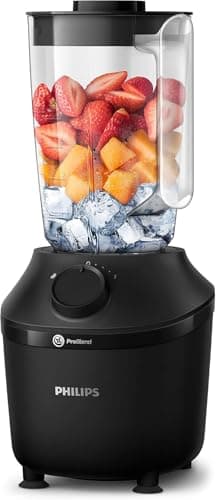
If you mostly make soft-fruit smoothies, soups and sauces and want to keep the cost down, the Philips 3000 Series does the job for around £25 from a brand you can trust. A 450W motor and a 1.9L jug are plenty for banana-and-berry smoothies, blending cooked soups smooth, and everyday sauces and batters, which is what most people actually use a blender for. For the price, it is honest, capable value.
The catch is power: at 450W it will blend soft and cooked ingredients well but will struggle with lots of hard ice and frozen fruit, labouring where the 800W Tefal breezes through. So it is the right pick if your blending is mostly soft, and the wrong one if you want daily frozen smoothies. Know which you are: for soft everyday blending on a budget, this is sensible; for ice and frozen, spend more on a higher-power machine.
What we like
- Cheap, around £25
- Recognised brand
- Fine for soft smoothies, soups and sauces
What we'd change
- Lower 450W power struggles with ice and frozen
- Plastic jug
Buy this if: you blend mostly soft fruit and soups and want to spend little.
GEEPAS 2-in-1 Jug Blender & Smoothie Maker
A jug blender plus a to-go smoothie cup, so you can blend a single serving and take it out.
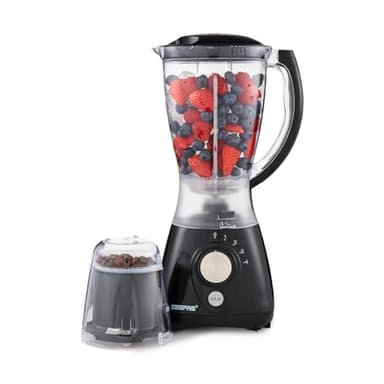
If you want single-serve smoothies you can blend and take with you, the GEEPAS 2-in-1 pairs a 1.5L jug with a to-go cup that screws onto the blade, so you blend straight into the cup, swap the blade for a lid, and head out, with no jug to wash for one drink. For busy mornings and one-person smoothies it is more convenient than decanting from a big jug, and at under £25 it is cheap for the flexibility.
It is a budget machine, so the 550W motor is better with soft fruit than lots of ice, and the build is basic rather than premium. But for the specific job of quick single servings alongside the occasional jug batch, the two-in-one design is genuinely useful and keeps washing up down. If you mainly batch-blend soups and family smoothies, a proper jug blender is better; if grab-and-go single servings are your thing, this covers both cheaply.
What we like
- Jug plus a blend-and-go cup
- Great for single-serve smoothies
- Cheap and flexible
What we'd change
- Budget 550W motor, soft fruit over ice
- Basic build
Buy this if: you want to blend single servings straight into a travel cup.
AMZCHEF 1200W Smoothie Blender
A 1200W motor with stainless blades for crushing frozen fruit, ice and nut butters.
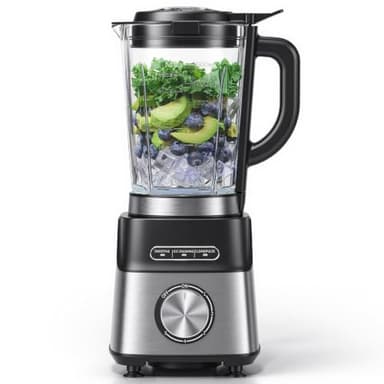
If you crush frozen fruit daily, make nut butters, or want the smoothest possible results, the AMZCHEF 1200W has the raw power the everyday blenders lack. That bigger motor and the six-leaf stainless blade power through ice, frozen berries and tougher ingredients without labouring, producing a smoother blend faster, and it can tackle jobs like nut butters and frozen smoothie bowls that a mid-power blender cannot.
All that power means it costs more, and it is a larger, more serious bit of kit than most people need for the occasional smoothie. If your blending is mostly soft fruit and soups, you will not use the extra muscle and the Tefal or Philips are better value. But for genuinely regular frozen and tough blending, the extra power is exactly what you are buying, and it makes a real difference. Buy it for frozen and nut butters, not for the odd banana smoothie.
What we like
- Strong 1200W motor
- Stainless blades crush ice, frozen fruit, nuts
- Smoother blends, faster
What we'd change
- Dearer and larger
- Overkill for soft-fruit blending
Buy this if: you crush frozen fruit daily or make nut butters.
Jug blender or personal (bullet) blender?
- Jug blender: bigger capacity for batches, family smoothies and especially soups. The versatile choice for a household. Takes more worktop and cupboard space.
- Personal / bullet blender: blends a single serving straight into a cup you drink from or take out. Compact, quick, minimal washing up. But small capacity and not for hot soups.
If you make soups and blend for more than one, get a jug (or a 2-in-1 that includes a to-go cup). If it is only ever single smoothies on the go, a personal blender is tidier and cheaper. Many households are best served by a jug blender that also comes with a travel cup.
Common myths, corrected
- "Any blender can crush ice." No. Low-watt blenders labour and stall on ice and frozen fruit. You need roughly 600W or more, ideally 800W plus, to crush ice well.
- "A blender can do a food processor's job." Not really. Blenders purée with liquid; they do not chop, slice, grate or make dough. Buy the right tool for the job.
- "More watts always means better." Only if you use the power. A 1200W blender is wasted money if you only make soft-fruit smoothies, where a mid-power machine is plenty.
- "Plastic jugs are just as good as glass." Short term, yes. Long term, plastic scratches, stains and smells where glass stays clean and neutral.
What we’d skip
- Buying a cheap, low-watt blender and expecting it to crush ice. Under roughly 500W, blenders handle soft fruit and soups but stall on ice and frozen fruit. If you want frozen smoothies, buy 800W or more from the start.
- Paying for a 1000W-plus blender if you only make soft-fruit smoothies. You will not use the extra power, and a mid-power machine does soft blending just as well for less. Match the power to what you actually blend.
- Buying a blender when you need a food processor. A blender purées with liquid; it will not chop, slice, grate or make dough. For prep work rather than smooth drinks and soups, you want a food processor instead.
- Overlooking the jug material if the blender gets daily use. Plastic scratches, stains from turmeric and berries, and holds onto smells over time. For long-term everyday use, a glass jug stays clean and neutral.
- Choosing a big jug blender if you only ever make single servings on the go. A personal or 2-in-1 blender that blends into a travel cup is tidier, quicker and cheaper for that job.
Frequently asked questions
How much power does a blender need to crush ice?
Roughly 600W or more, and ideally around 800W and up, to crush ice and blend frozen fruit smoothly rather than labouring. Blenders under about 500W are fine for soft-fruit smoothies, cooked soups and sauces but will struggle with ice. If frozen smoothies are a regular thing for you, buy a higher-power machine from the start rather than being disappointed by a cheap one.
Glass or plastic blender jug?
Glass does not scratch, cloud, stain from ingredients like turmeric and berries, or hold onto smells, so it stays clean-looking and neutral-tasting for years, at the cost of weight and fragility. Plastic is lighter, cheaper and less likely to crack but scratches, stains and picks up odours over time. For daily worktop use, glass is nicer long term; for light, shatterproof grab-and-go, plastic makes sense.
What is the difference between a blender and a food processor?
A blender purées liquids and soft or cooked ingredients into something smooth, smoothies, soups, sauces and batters, and needs some liquid to work. A food processor chops, slices, grates, mixes and makes dough with little or no liquid, for prep rather than purée. Buy a blender for smooth drinks and soups, and a food processor for chopping, slicing and dough; they are not interchangeable.
Jug blender or personal blender?
A jug blender has bigger capacity for batches, family smoothies and soups, and is the versatile household choice, but takes more space. A personal or bullet blender blends a single serving straight into a cup you take out, which is compact and quick with minimal washing up, but small and not for hot soups. Many people are best served by a jug blender that also includes a travel cup.
Can you make soup in a blender?
Yes. A jug blender blends cooked vegetables and stock into a smooth soup well, and even a modest-power blender handles cooked, softened ingredients easily since there is no ice to crush. Let very hot liquid cool a little first and fill the jug only partway, as heat and steam can build pressure and force the lid off. Some blenders also have heating elements to cook the soup too.
Are expensive high-power blenders worth it?
Only if you use the power. A 1000W-plus blender crushes frozen fruit effortlessly, makes nut butters and produces very smooth blends, which is worth it if you do that regularly. If your blending is mostly soft fruit and soups, you will not notice the difference and a mid-power blender is far better value. Buy power for frozen and tough ingredients, not for the occasional soft smoothie.
What size blender should I buy?
For a household making soups and family smoothies, a jug of around 1.5 to 2L is versatile and covers batches. For single servings on the go, a personal blender or a 2-in-1 with a to-go cup is tidier. As with any appliance, consider worktop and cupboard space too, a big jug blender is more to store, so match the capacity to how much you typically blend at once.
Why does my blender struggle with frozen fruit?
Usually not enough power. Low-watt blenders cannot drive the blades hard enough through frozen fruit and ice, so they labour, stall or leave lumps. Adding a little liquid, cutting fruit smaller and letting it soften slightly helps, but the real fix is a higher-power motor, around 800W or more, which is designed to crush frozen ingredients smoothly. If frozen blending matters, power is the spec to prioritise.
Ready to choose?
Our one clear winner is the Tefal Blendforce II Blender (800W, Glass Jug).